
Last updated September 20, 2026
Full 25-point door and opener safety check with every visit - springs, cables, rollers, tracks, and your LiftMaster or Chamberlain opener included
You get a price before we start. It does not change when the truck arrives.
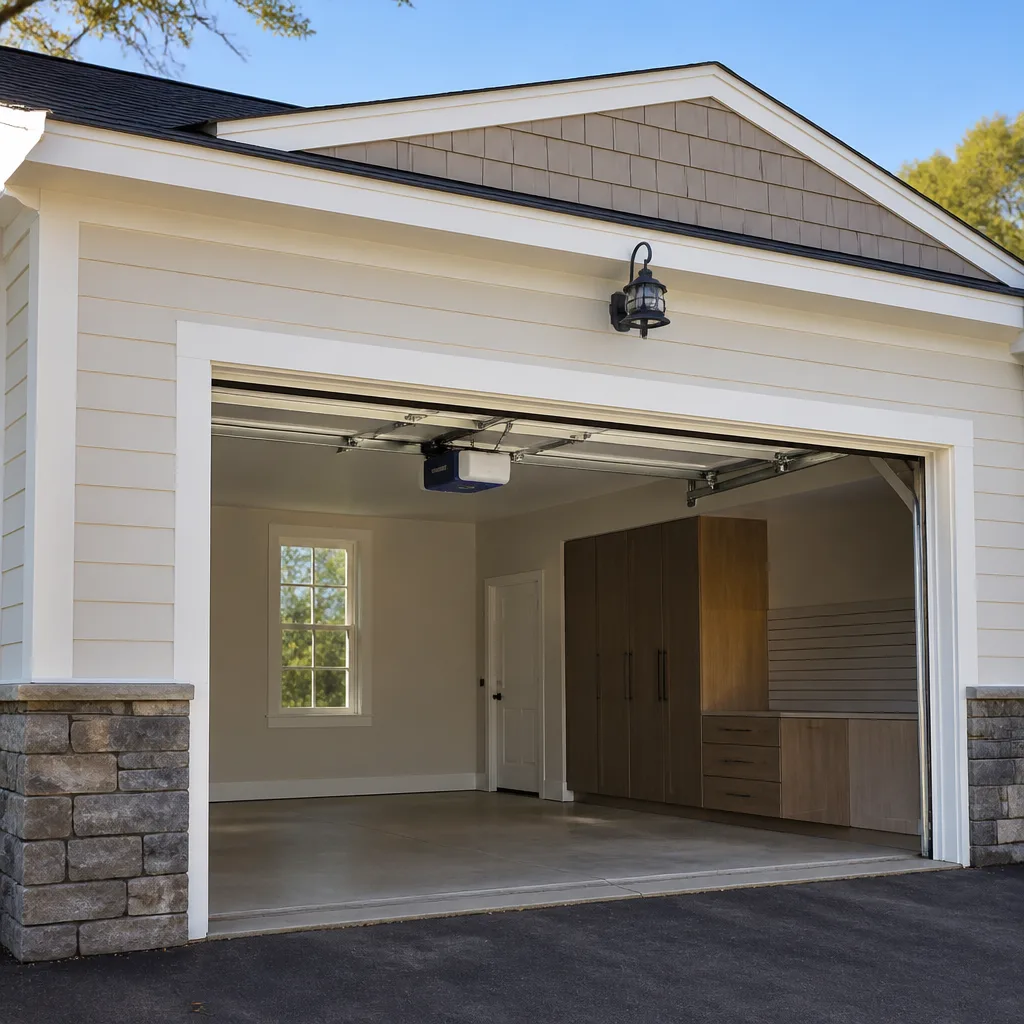
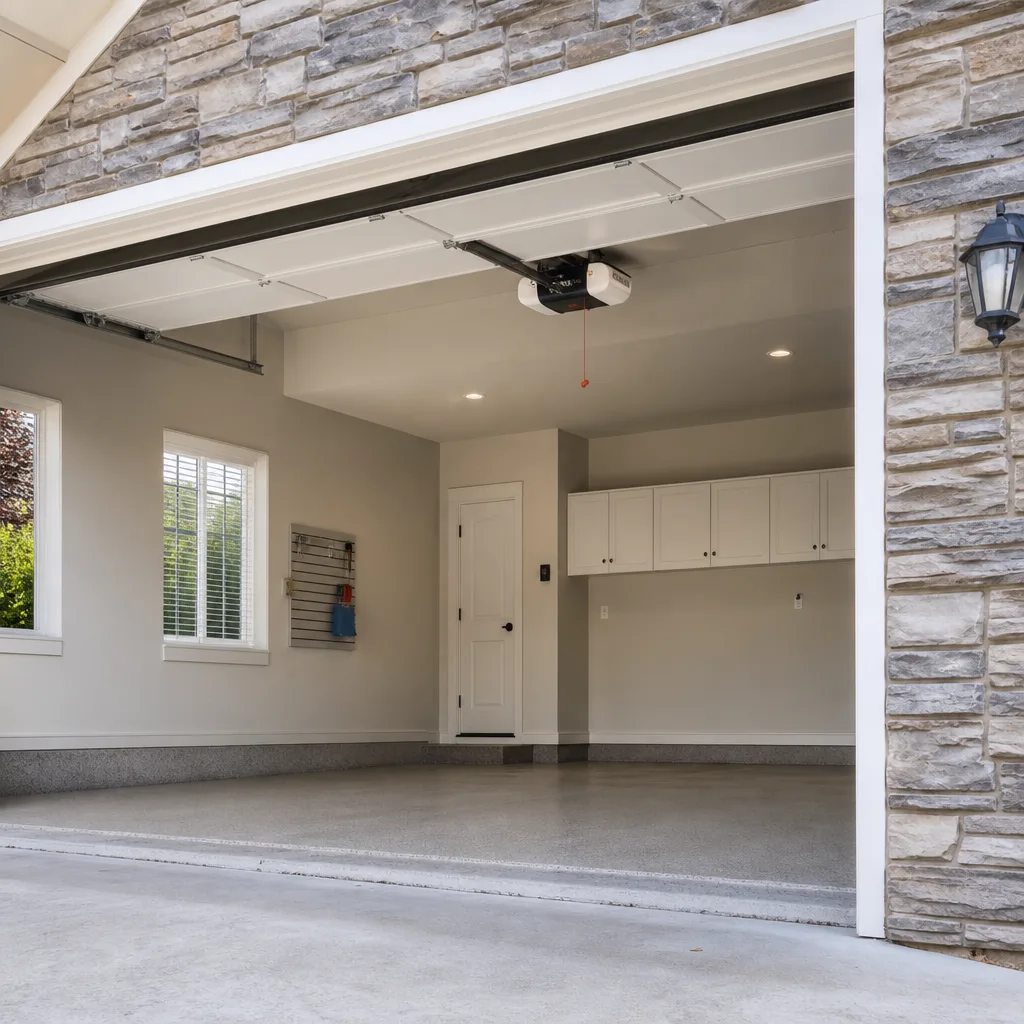
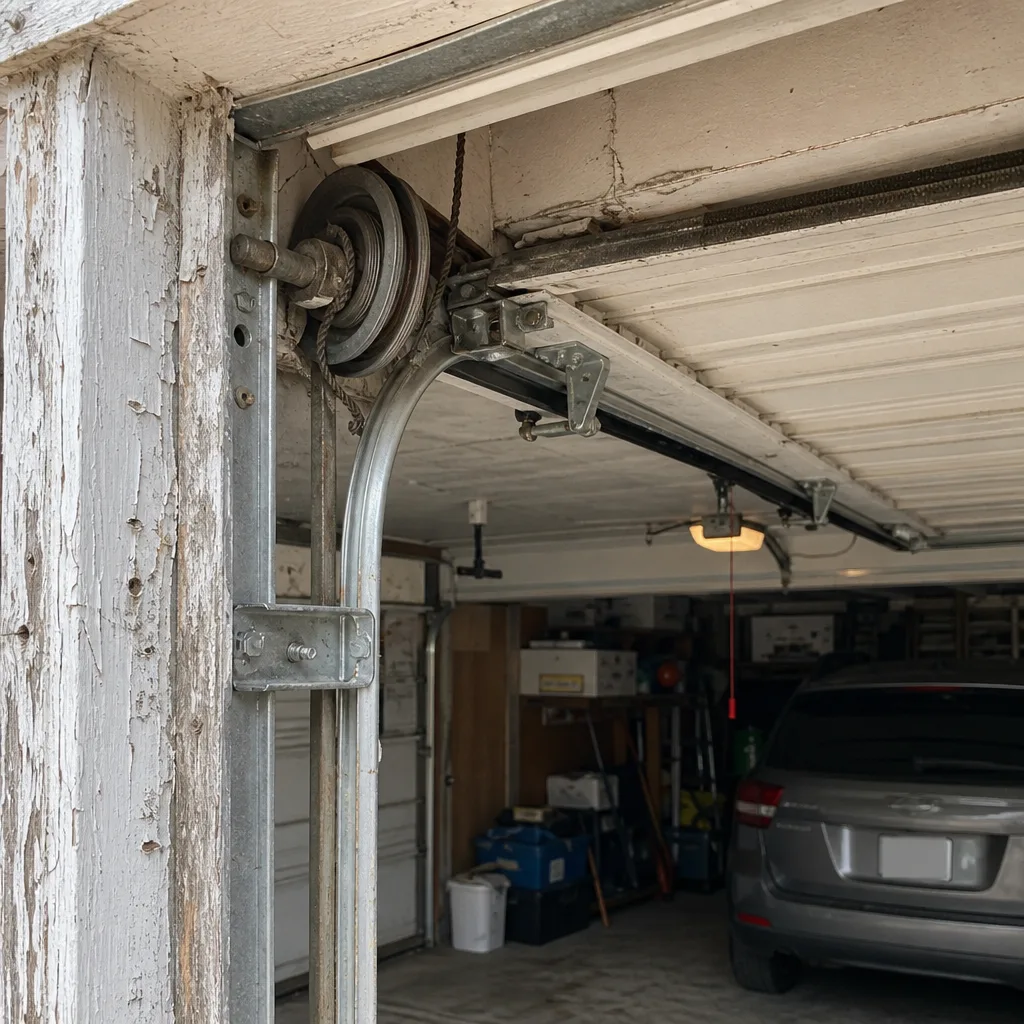 Before
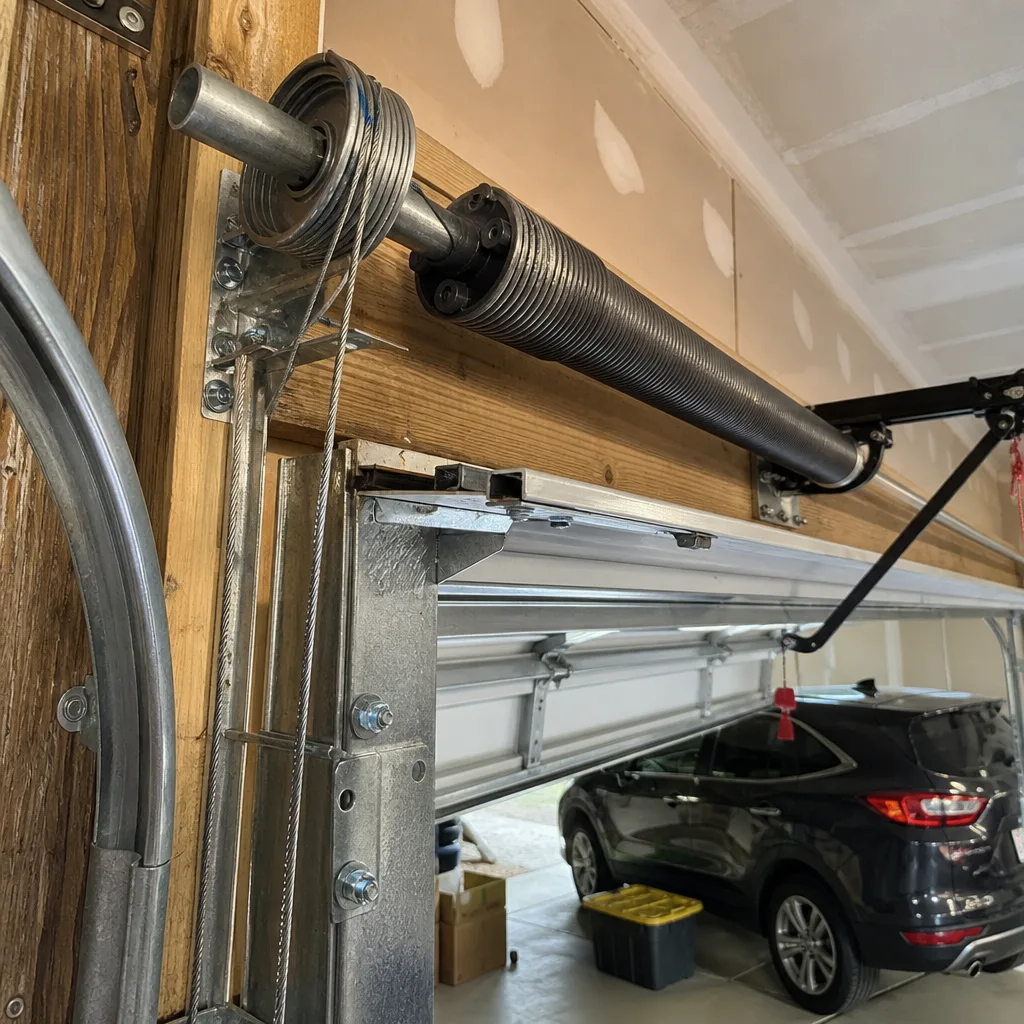 After
After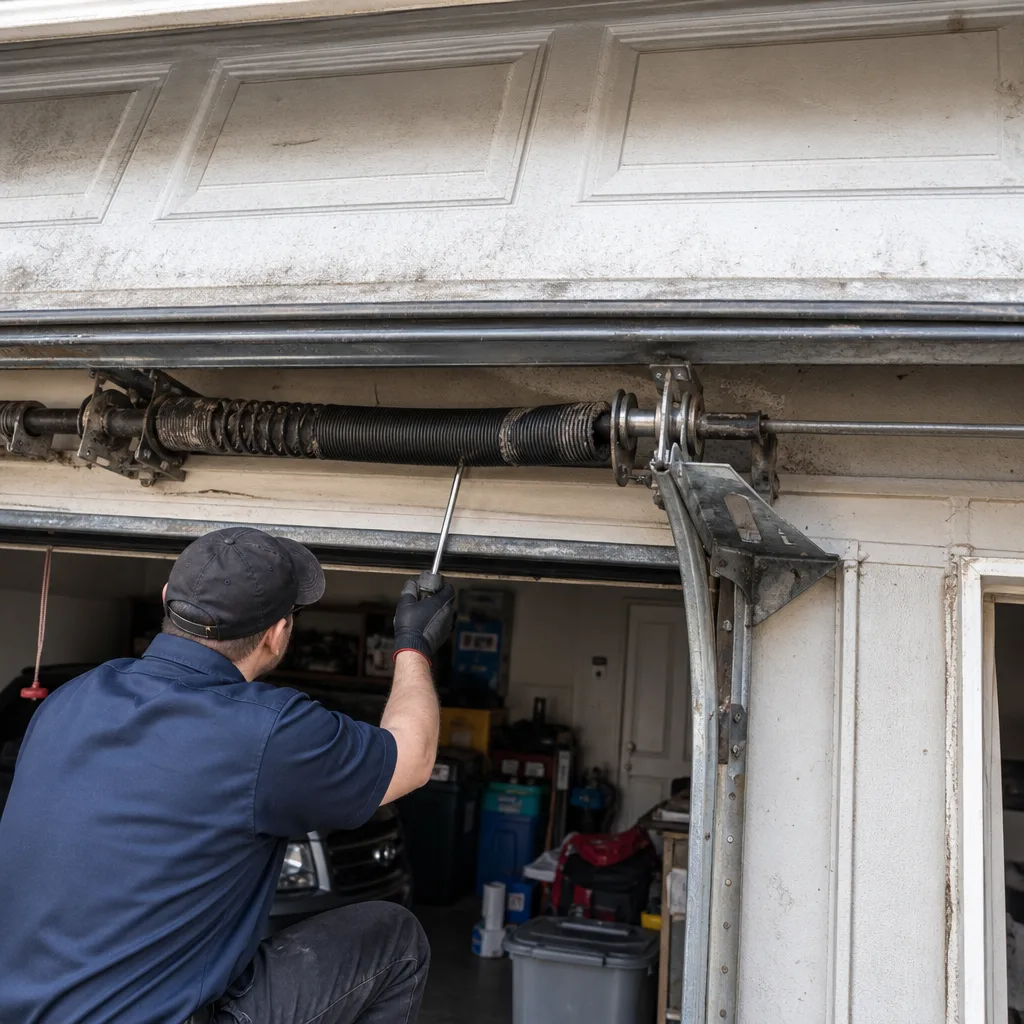 Before
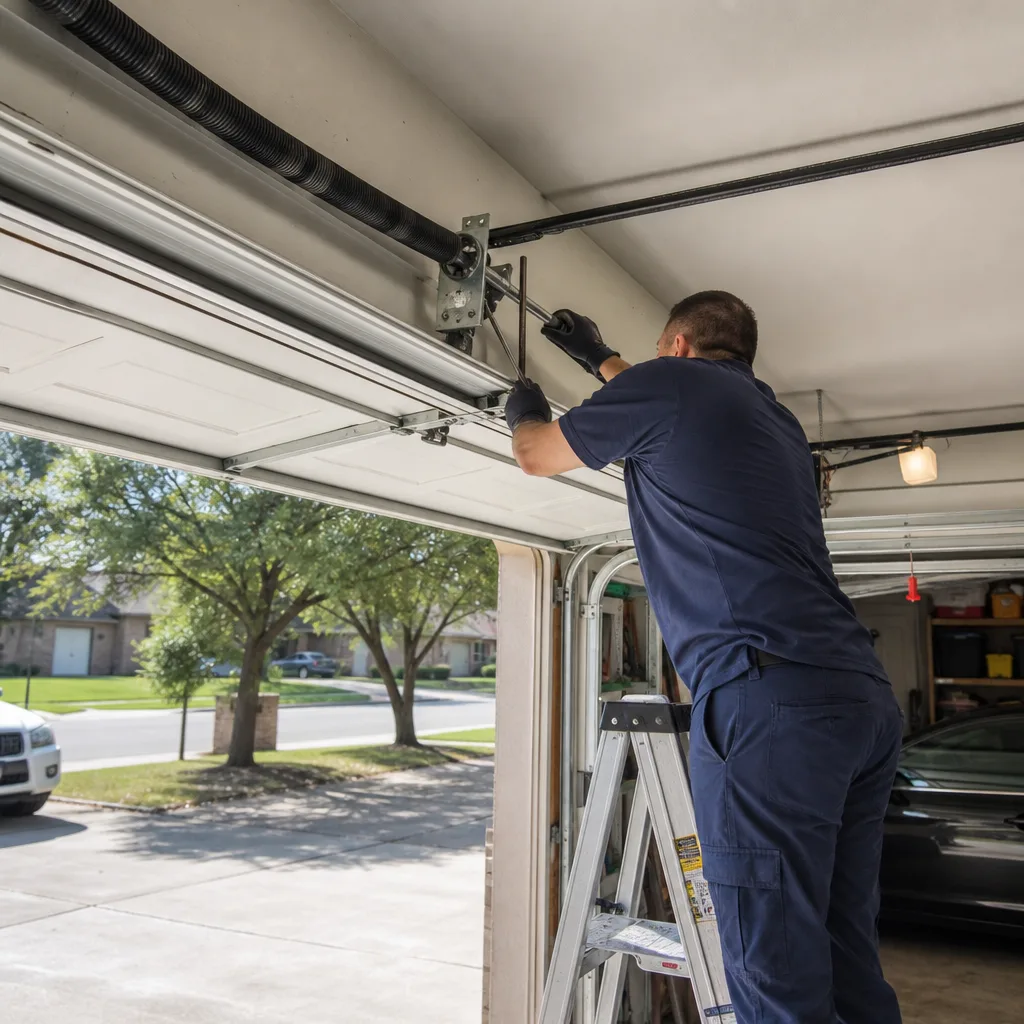 After
After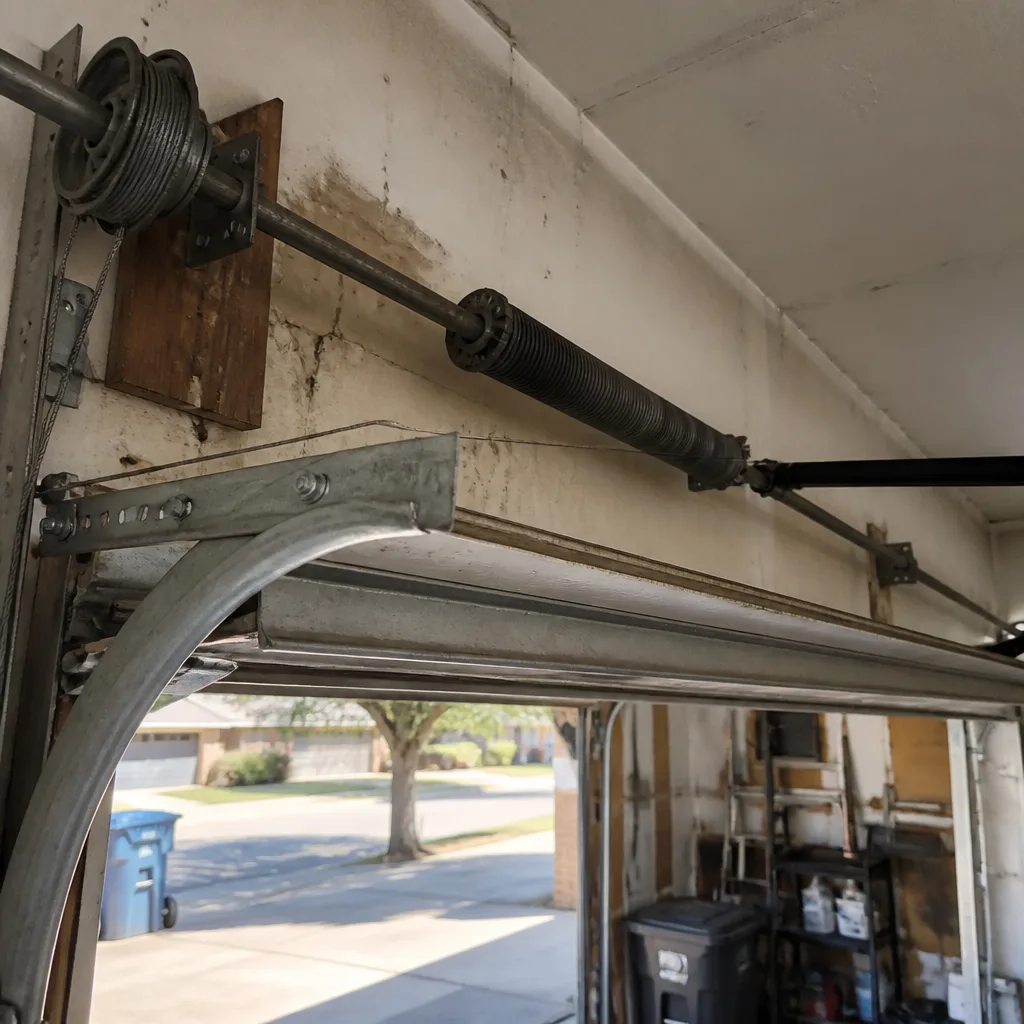 Before
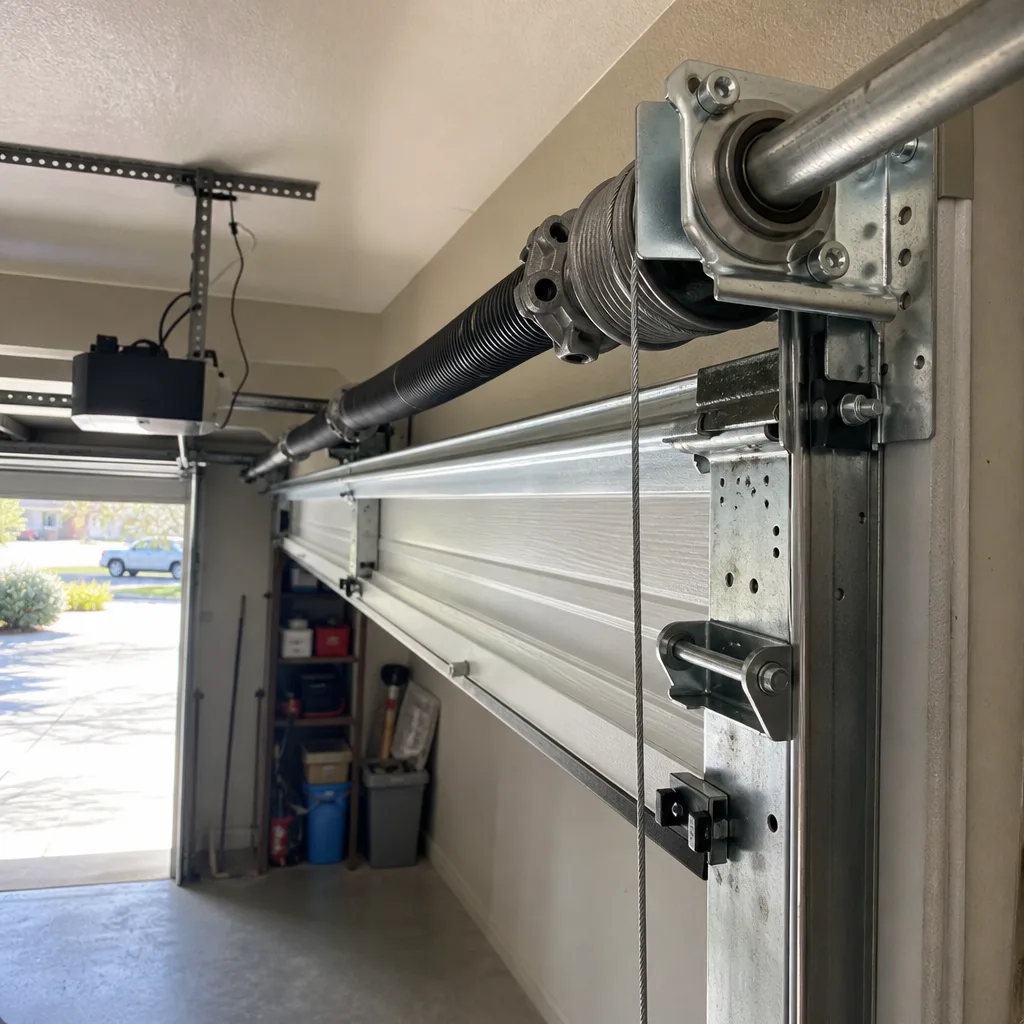 After
AfterGarage Door Warning Signs: A Frisco Homeowner’s Reference Guide
A garage door that reverses before closing is not always a sensor problem. It’s sometimes a sign the torsion spring is losing tension and the opener is detecting excess motor strain before it gives up. Replacing the photo-eye sensor in that scenario fixes nothing, and the door keeps misbehaving. This guide maps each observable symptom to its most probable cause, what it costs to fix in Frisco, and which signs you can watch for a month versus which need a same-week call. Written by the team at Servo Garage Doors Frisco home, drawing on ten years of repair records across Collin and Denton counties.
Quick Answer
The most common garage door warning signs in Frisco are a door that shudders or hesitates when opening (worn rollers or an unbalanced door), a grinding sound with no movement (stripped gear in the opener), cables that look loose or frayed (failing cable or broken spring), and a door that sits visibly uneven in the opening (spring tension loss on one side). A new pair of torsion springs in Frisco typically runs $280 to $420 installed; a replacement opener gear kit is usually $180 to $280; a full roller replacement with nylon bearings runs $140 to $220. The warning signs are cheap to diagnose and expensive to ignore, which is the entire point of this guide to garage door in Frisco.
Table of Contents
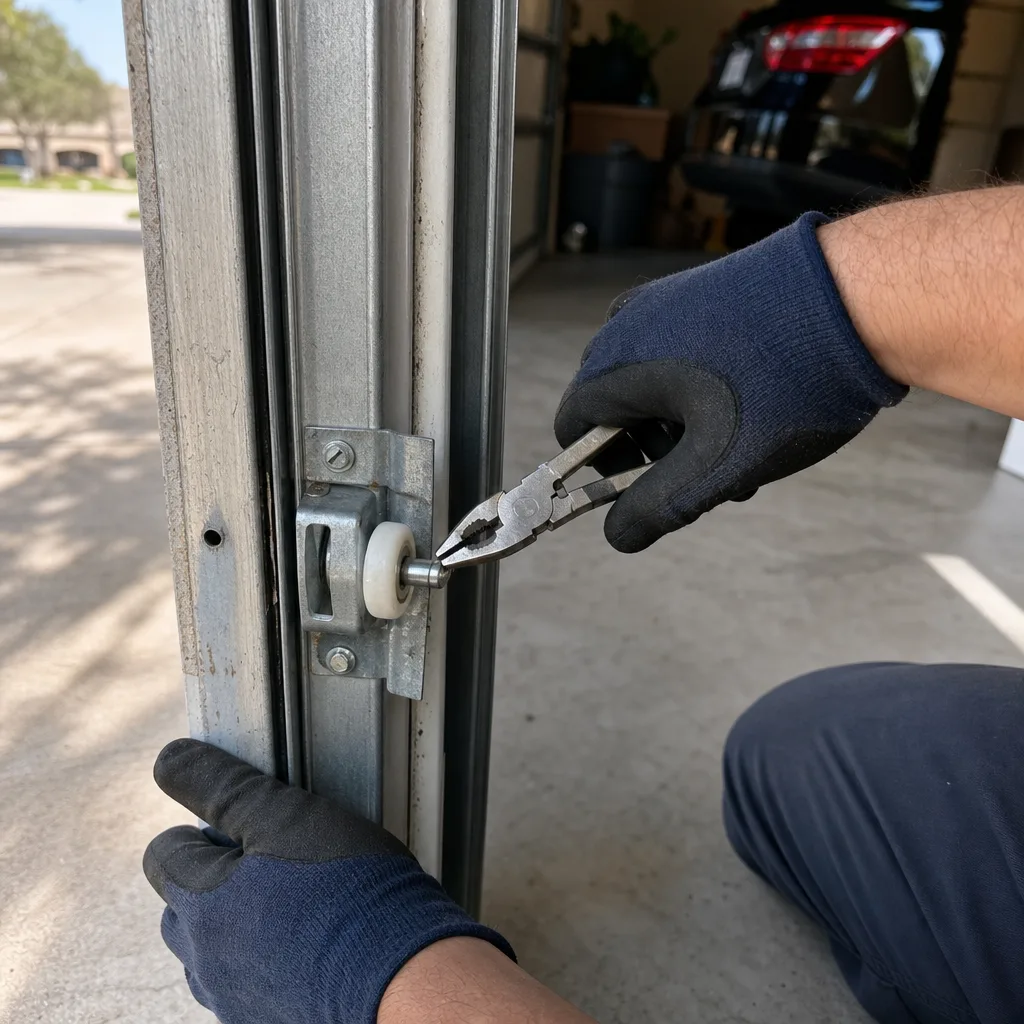
- Symptom-to-Component Diagnosis: What Each Warning Sign Points To
- Which Warning Signs Are Safety-Critical in Frisco (and Which Can Wait)
- How to Photograph and Describe a Warning Sign for an Accurate Remote Quote
- The Compounding Failure Pattern: Why One Worn Part Damages Another Within 90 Days
- Frisco Price Ranges for Common Warning-Sign Repairs
- Seasonal Warning Signs: What Frisco Climate Does to Garage Doors
- Garage Door Opener Warning Signs Most Homeowners Miss
- Common Mistakes to Avoid
- When to Call a Professional
- Frequently Asked Questions
- The Bottom Line
BeforeAfterSymptom-to-Component Diagnosis: What Each Warning Sign Points To
A warning sign is only actionable if it tells you which part is failing. “My garage door is making a noise” is not a diagnosis. “A metallic pop came from above the center of the door and now it won’t lift” is, and it points to a broken torsion spring. Here is the map we use when a Frisco homeowner calls us with a symptom.
| Symptom You Observe | Most Probable Cause | Typical Repair in Frisco |
|---|---|---|
| Door shudders, hesitates, or jerks while opening | Worn rollers with flat spots, or an unbalanced door from spring tension loss | Nylon roller replacement: $140-$220; spring rebalance: included with spring work |
| Loud bang or pop from above the door, then door won’t lift or lifts only a few inches | Broken torsion spring | $280-$420 installed for the pair |
| Grinding sound from opener, door doesn’t move | Stripped plastic drive gear inside opener | $180-$280 gear replacement; $350-$550 if opener replacement is wiser |
| Cable hangs loose, looks frayed, or has visible broken strands | Cable wear, usually accelerated by a spring that’s lost tension or a misaligned drum | $130-$200 per cable, including drum inspection |
| Door sits uneven in the opening; one side is lower | Uneven spring tension, a stretched cable, or a failing bearing in one end plate | $150-$250 correction plus any spring or cable work |
| Door reverses before touching the floor; safety sensors are clean and aligned | Opener force sensitivity set wrong, or spring tension low enough that the opener strains | $90-$140 for force and limit adjustment; spring replacement if tension is the root cause |
| Opener runs but door doesn’t move; you see a traveling metal carriage without the door attached | Disconnected or broken trolley carriage or coupler | $110-$180 |
| Loud squealing or metal-on-metal grinding near the door edges while moving | Dry or failed rollers; sometimes a bent track or a hinge with worn bushings | $90-$140 for lubrication and inspection; $140-$220 if rollers or hinges are replaced |
Each of those rows is a diagnosis, not a guess. When you hear a specific sound or see a specific movement, you can usually narrow the failing part to one or two components. That is the difference between a homeowner who gets quoted a fair repair and one who gets quoted a full replacement they didn’t need.
Which Warning Signs Are Safety-Critical in Frisco (and Which Can Wait)
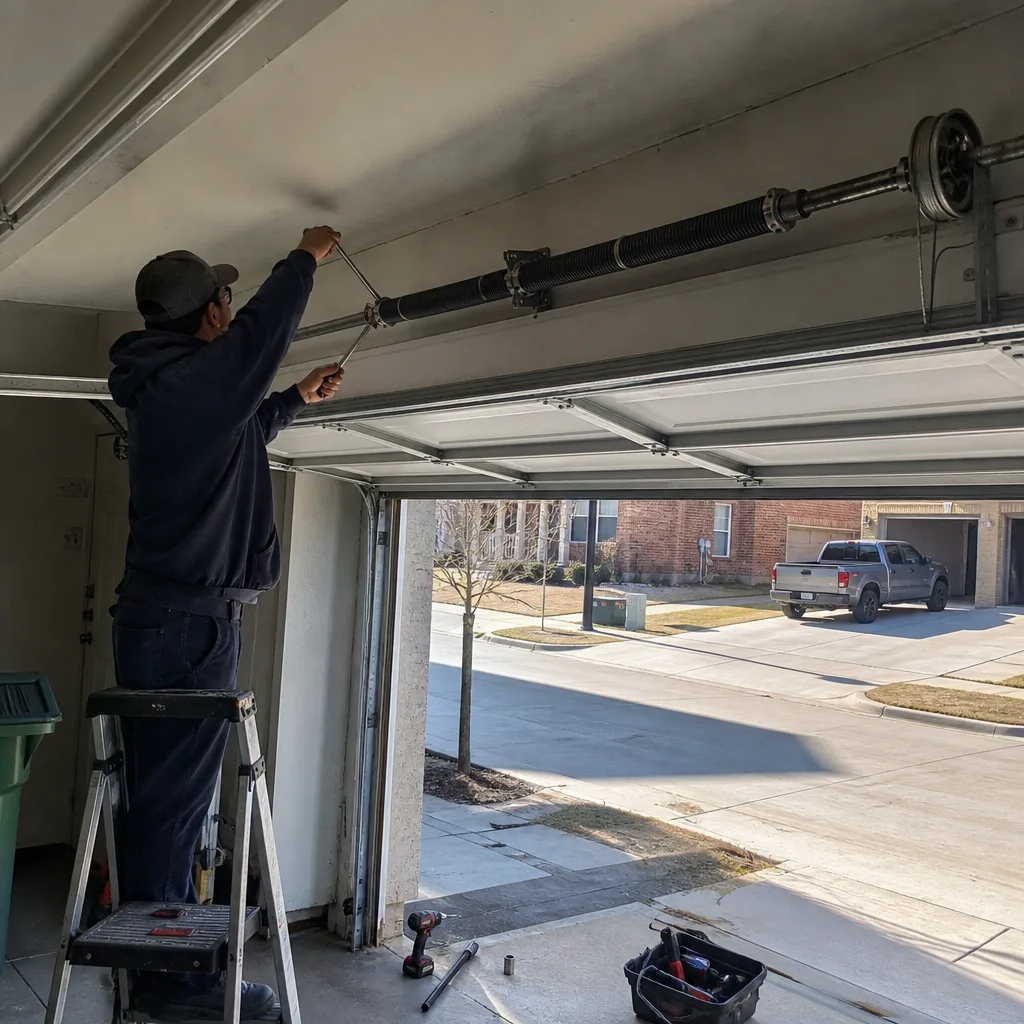
Not every warning sign is an emergency. Some can be photographed, watched, and scheduled within a month. Others mean the door is a fall hazard right now, and in a city where the garage faces the alley and kids walk past it every afternoon, that distinction matters. Here is how we sort them on the phone.
Safety-critical: act within the week
- A broken torsion spring. The spring holds the weight of the door. When it breaks, the door becomes dead weight (usually 130-200 pounds). If the cable also lets go, the door can drop. Do not manually lift a door with a broken spring.
- A frayed or hanging cable. The cables run under tension. A visible strand break means the cable is close to snapping, and when it snaps, it can lash sideways. In a tight Frisco garage, that’s a face-height hazard.
- A door that sits visibly uneven and continues to worsen. That means tension on one side is failing. The next failure is often the other side or a cable.
- An opener that reverses before the door reaches the floor, after you’ve cleaned the sensors. That means the door is not closing reliably. It may leave the garage open overnight or, worse, reverse unpredictably while someone is under it.
Watch-and-schedule: fine to monitor for 30-60 days
- Mild squeaks or rattles that don’t change and don’t affect movement. Lubricate the rollers and hinges, note the sound, and keep watching.
- A slightly slow open (takes 2-3 seconds longer than it used to). This is often dirty tracks or dry rollers. Clean and lubricate, then observe.
- Cosmetic rust on the bottom panel or hardware, especially on doors facing north or shaded by the typical Frisco two-story neighboring wall. Monitor for six months before deciding.
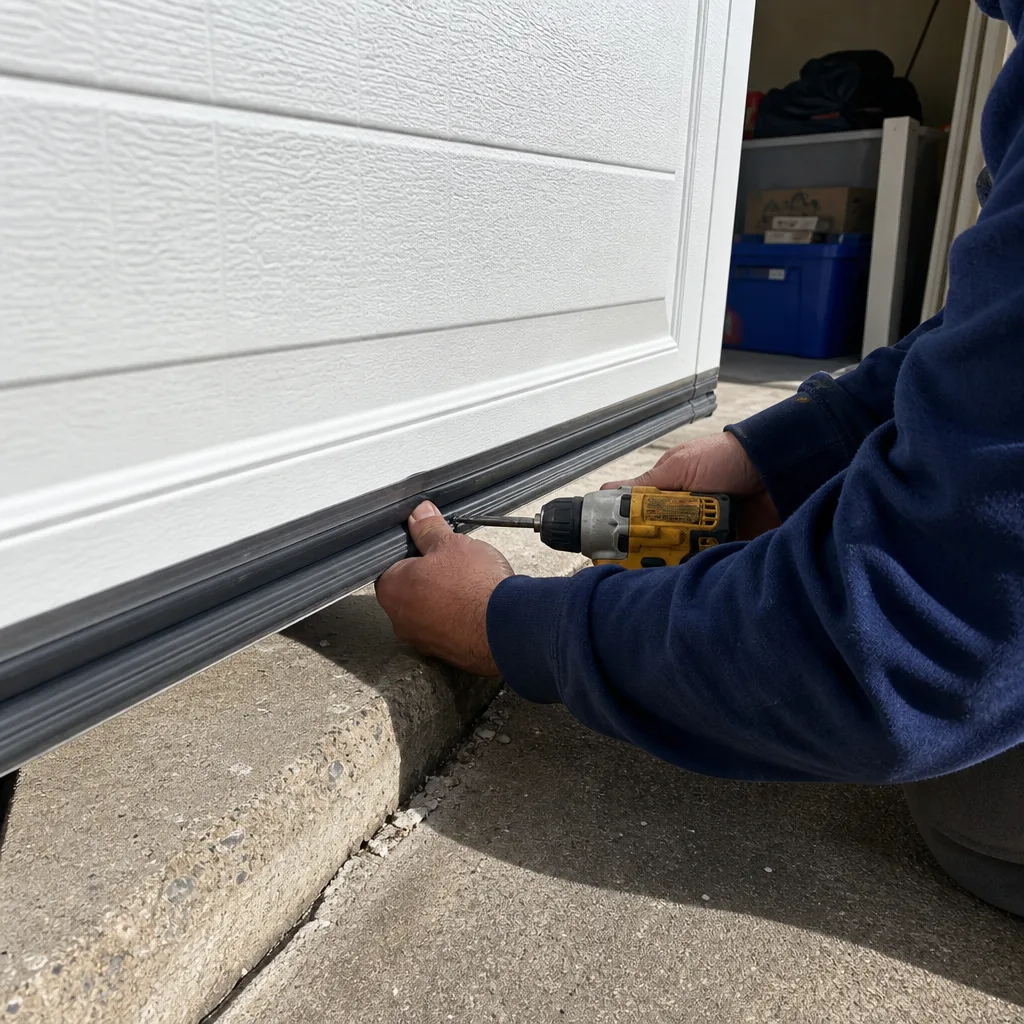
- A tiny gap at the bottom seal that lets in a sliver of light. Replace the weatherstripping when convenient; it’s a $60-$90 job and not a structure hazard.
How to Photograph and Describe a Warning Sign for an Accurate Remote Quote
Our documentation system works both ways. Before we arrive, you can give us enough evidence to quote a likely range and know which parts the technician should bring. Here is how to hire a garage door contractor in Frisco and describe what you’re seeing, step by step.
- Photograph the whole door from inside the garage, closed, standing about eight feet back. We need to see the full panel layout and whether the door sits level. Use the garage floor joint as a reference line.
- Photograph the torsion spring assembly above the center of the door. Stand on a stepstool or shoot at an angle. If there’s a visible break in the coil or a gap between two sections of the spring, that’s the photo we need. Do not reach toward the spring.
- Photograph each lift cable. The cables run vertically on both sides of the door. We’re looking for frayed strands, rust, or a cable that’s off the drum. A close-up phone photo from two feet away is enough.
- Photograph any visible damage to panels, hinges, or rollers. If a roller has a flat spot or a hinge is bent, a clear photo tells us more than a verbal description.
- Record a 10-second video of the door cycling once, from closed to open and back. Hold the phone steady, landscape, with the whole door in frame. The reveal is in how the door moves: hesitation, jerking, side-to-side drift, or a reversal before closing.
- Write down two things: when the symptom started and what changed just before it. “It started three days ago, right after a cold snap” and “It began right after I bumped the track with my car” are two different diagnoses.
With those photos, we can often tell you over the phone what the likely repair is and what the written range would look like. The technician still confirms everything on site, and the price is still quoted in writing before any work, per Clause 1 of The Haven Standard. But the truck shows up with the right parts, not with a guess and a second trip.
The Compounding Failure Pattern: Why One Worn Part Damages Another Within 90 Days
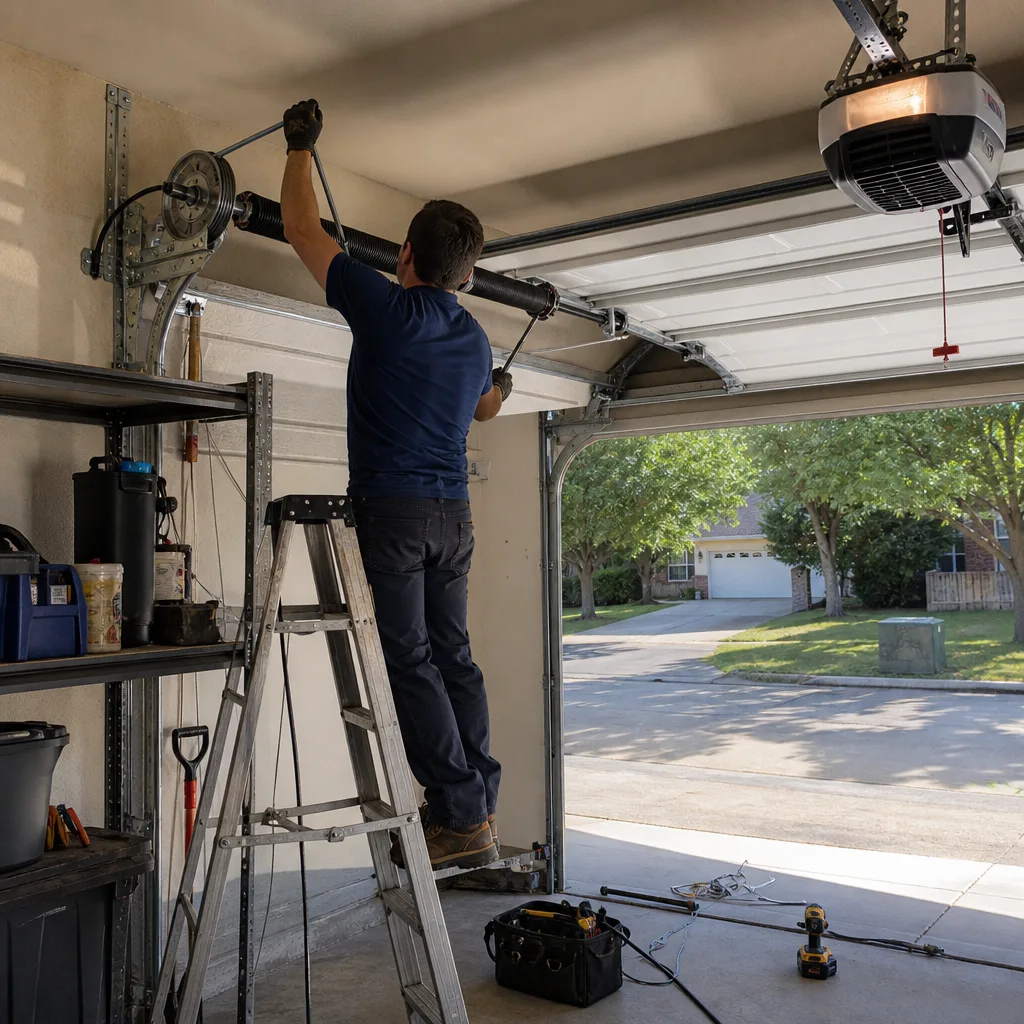
Garage doors fail in cascades. That’s the most expensive lesson we teach in Frisco, and it’s usually a lesson the homeowner could have avoided by photographing the first symptom instead of ignoring it.
Here is the pattern we see in our repair records. A roller loses its bearing. The door now has a tiny amount of lateral play, maybe an eighth of an inch. Over eight or ten weeks, that play wears a groove in the track. The groove grows until it grabs the roller, and the next time the door cycles, the track starts to pull away from the wall at one bracket. The bracket screws loosen, the track shifts, and now a door that needed a $45 roller set needs new track, new brackets, and re-hanging. The difference is $45 versus $300, plus the time the door sat misaligned.
The same cascade happens with springs. A torsion spring slowly loses tension. The opener now has to work harder on every cycle, and the plastic drive gear inside a LiftMaster or Chamberlain opener absorbs that extra force. The gear strips. Now the homeowner has a broken spring and a stripped gear, and the repair is a pair, not a single. Routinely seeing the two together in Frisco is exactly what makes us photograph the failed component and hand the customer the evidence before quoting anything. Clause 4 of The Haven Standard exists because of this pattern.
The 90-day rule to remember: a worn roller, a stiff hinge, or a dry cable almost always damages the part next to it within one season if left alone. The first symptom is the cheap one.
Frisco Price Ranges for Common Warning-Sign Repairs
Frisco pricing runs a bit tighter than the Dallas average for two reasons: the housing stock is newer (most homes built after 2005), and the doors are mostly standard 16×7 or 18×7 steel models from Clopay, Amarr, and Wayne Dalton, which means parts are consistent and we know what the jobs take. Here is what we quote, in writing, before any work starts.
Torsion spring replacement
$280 to $420 for a pair, installed. Most Frisco doors use 0.207-inch or 0.218-inch wire springs rated for 10,000 cycles, and we always replace both springs, even if only one broke. The pair is about $60 more than a single, and the labor is the same, so doing one at a time is a false economy.
Cable replacement
$130 to $200 per cable, including drum and end-plate inspection. A cable rarely fails without a reason; we find the reason before quoting, or the new cable fails the same way in six months.
Roller replacement
$140 to $220 for a full set of nylon rollers with sealed bearings, installed and lubricated. This is the most common “quiet the door” repair we do in Frisco, and it’s the one that most often stops a cascade before it starts.
Opener gear kit replacement
$180 to $280 including labor, most common on LiftMaster and Chamberlain models from 2010-2018. If the opener is older than 12 years or has other signs of wear, we’ll show you the difference and quote both options, but we won’t push a replacement.
Track and bracket realignment
$150 to $250, depending on how many brackets loosened and whether the track needs replacement or just re-securing. This is the typical fix after a track cascade, and it’s why we recommend photographing a marginal roller early.
Weatherseal replacement
$60 to $90 for the bottom seal. Not a safety issue, but it matters in Frisco summer, when a three-quarter-inch gap at the bottom of the door lets in enough 100-degree air to make the garage unusable by 2 p.m.
Seasonal Warning Signs: What Frisco Climate Does to Garage Doors
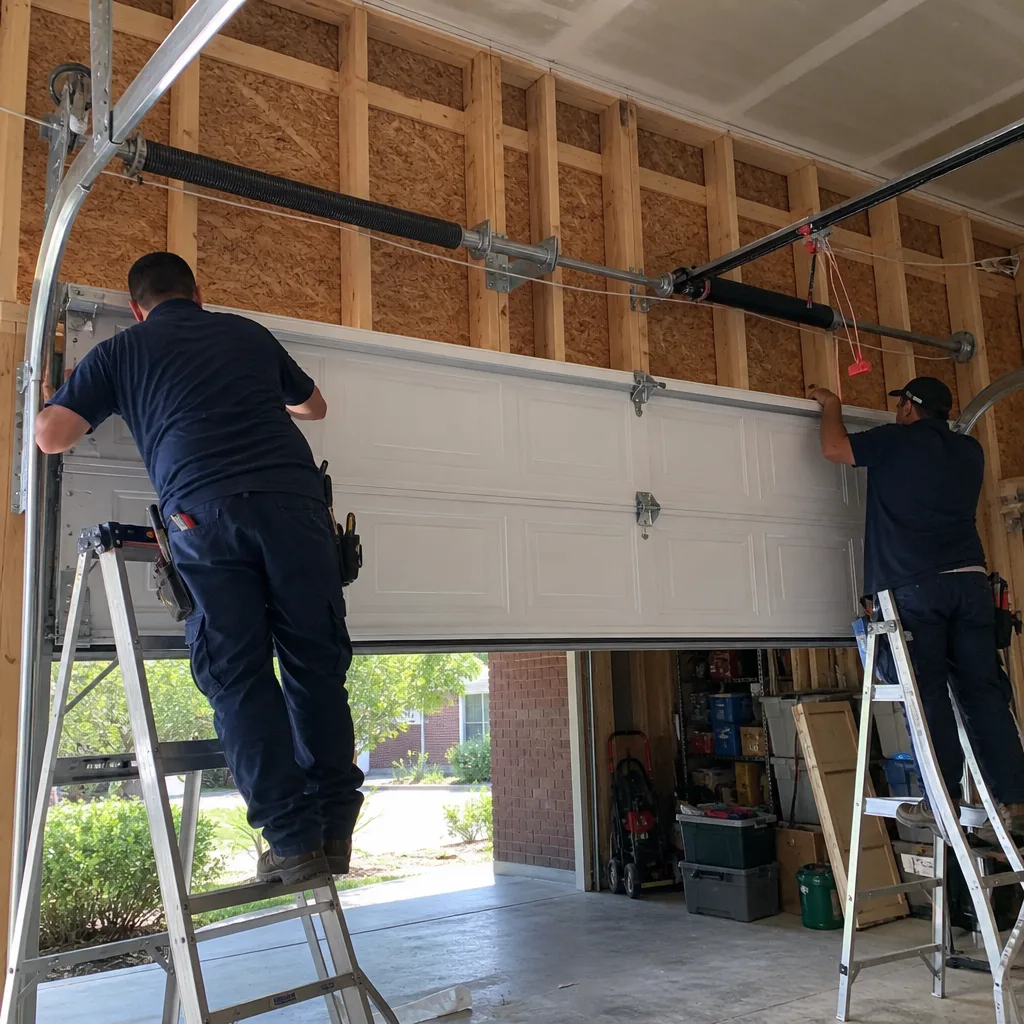
Frisco’s climate is hard on garage doors in specific, predictable ways. Collin County swings from freezing nights in January to sustained 100-degree days in August, with spring thunderstorms dropping enough humidity to condense on cold steel. Each season produces its own warning signs.
Winter: Cold contracts metal. The torsion spring loses a little tension, and the opener’s force settings, calibrated in warm weather, now read slightly off. You’ll notice the door hesitating an inch or two off the floor, or reversing unexpectedly. The first thing to check is the force adjustment; the second is the spring. Cold-weather cycling also exposes dry rollers more loudly, because the lubrication is thicker and less mobile. If January in Frisco makes your door suddenly louder, that’s the sound of rollers that were already worn.
Spring: Thunderstorm season brings humidity that condenses on metal overnight, and homeowners who park a hot car in the garage after a storm create exactly the warm-moist environment that rusts cables and hinges fastest. Look at the lift cables every April. Surface rust is normal; broken strands are not.
Summer: Sustained heat softens and warps weatherstripping, and doors with dark paint on west-facing elevations in neighborhoods like Phillips Creek Ranch or The Trails can soak enough afternoon sun to expand the top panel slightly, which makes the door scrape the track on the way down. That scrape is a warning sign, not a quirk.
Fall: The first cold front of October frequently cracks a tired torsion spring. The pattern holds year after year in our Frisco repair records: spring failures cluster in the first two weeks of October and the first two weeks of January. If your spring is seven years old or more heading into the fall, photograph it and watch it.
Garage Door Opener Warning Signs Most Homeowners Miss
Most Frisco homeowners know the sound of a dead opener. What they miss are the opener’s earlier warnings, the ones that happen weeks before failure and give you a window to fix the problem while it’s still a gear kit instead of a new motor.
The opener runs, but the door moves in small, jerky increments
That’s the drive gear slipping. On LiftMaster and Chamberlain chain-drive openers (the most common openers we service in Frisco), the gear is plastic by design, and it sacrifices itself to protect the motor. A jerky motion with a grinding undertone means the gear teeth are shearing. Fix it now: $180 to $280. Wait until it fully strips: same repair, but now the door is stuck open and your garage is exposed to the alley.
The opener light flickers or the keypad resets
That’s the logic board, the small circuit board inside the opener that interprets your signals. On older Craftsman and Raynor models, board failure is often intermittent at first, and homeowners misread it as a power surge or a bad remote. A flickering opener light with no other explanation is the board starting to fail.
The door opens halfway and stops, every time
That’s not a motor problem. That’s a limit switch or a travel adjustment that has drifted, often because the door’s balance changed as the springs aged. The opener thinks the door has reached the full travel point because the force sensors met resistance. Adjusting the limits is a $90-$140 service call. Replacing the springs is the underlying fix worth checking first.
The opener is loud but the door itself is smooth
You can separate the two by disengaging the opener (pull the red release handle) and running the door by hand. If the door glides smoothly but the opener rattles, the opener is the problem, usually a worn belt or chain. If the door resists even by hand, the door hardware is the problem and the opener noise is secondary. That one test saves a lot of misdiagnosis. For a deeper dive, see our Garage Door Opener Repair & Installation in Frisco page.
Common Mistakes to Avoid
- Replacing the photo-eye sensors when the door reverses near the floor. The sensors are clean and aligned in most cases we see in Frisco. The reversal is usually force sensitivity or spring tension. A new sensor set is $60 wasted.
- Lubricating a grinding opener. Grinding from the opener head means a stripped gear, not a dry part. Grease on a stripped gear makes a mess and changes nothing.
- Lifting the door manually after a spring breaks. A door without spring tension is a 150-pound dead weight. The emergency release handle is not a fix for a broken spring; it’s how you get hurt.
- Waiting until the door stops opening to call. The repair is usually cheaper and faster at the first symptom. A stripped gear is a same-day fix at 10 a.m.; at 7 p.m. on a holiday, the same repair costs more and leaves the garage open overnight.
- Accepting a phone quote without seeing the failed part. Any repair estimate is a guess until someone has looked at the component. We photograph the failed part and show you before quoting for a reason: you should see what you’re paying to fix.
- Replacing the whole door when hardware needs work. A 2005-era Frisco door with a tired spring and worn rollers usually has another 10 years in the panels. The door isn’t the problem; the wear items are.
- Ignoring a door that’s slightly louder than it used to be. Louder means resistance, and resistance means wear. It’s cheaper to replace dry rollers than to re-hang a door that pulled a track off the wall.
When to Call a Professional
Call a professional the day you observe a broken spring, a frayed cable, or a door that reverses before closing and won’t resolve with sensor cleaning. These are not DIY repairs. Torsion springs and lift cables work under tension that can cause serious injury if released incorrectly, and the door itself is heavy enough to cause real harm if it drops. If you’re not sure whether a warning sign is serious, photograph it and call us. We’ll look at the photo while you’re on the phone and tell you what we see. Servo Garage Doors Frisco offers free estimates in Frisco, with a flat written price and written scope before any work starts. Call (940) 290-8313 and a real person answers.
Frequently Asked Questions
Most garage doors that won’t open in Frisco cost between $180 and $420 to repair, depending on whether the failure is a stripped opener gear ($180-$280) or a broken torsion spring ($280-$420 for the pair). The price is quoted in writing before any work starts, so you know the number before the technician picks up a tool. Call (940) 290-8313 and we’ll help you identify the likely cause over the phone.
Yes, a garage door can fall if a torsion spring breaks and the cable has also failed or come off the drum. The spring normally counterbalances the door’s weight; without it, the door is dead weight, and only the cables prevent a drop. That’s why a broken spring is a safety-critical repair, and why we recommend not opening a door with a broken spring until a technician has inspected it.
A broken torsion spring usually sounds like a loud bang or pop from above the center of the door, like a heavy object dropped on a wooden floor. The door will typically refuse to lift or lift only a few inches afterward. If you hear that sound and the door won’t open, you have a spring failure, and you should leave the door closed until it’s checked.
Standard torsion springs on Frisco homes last 7 to 10 years, or about 10,000 open-close cycles. Homes that use the garage as the primary entrance (common in Frisco where the entry door is at the front but the driveway is at the rear) often cycle the door 4 to 6 times a day, which puts a 10,000-cycle spring at replacement age in roughly 7 years. If your springs are older than 7 years, photograph them and watch for a gap in the coil.
Yes, most warning-sign repairs, including broken springs, stripped gears, and frayed cables, are completed same-day in Frisco when we’re called before mid-afternoon. We carry the common parts for LiftMaster, Chamberlain, Craftsman, and Raynor openers and Clopay, Amarr, and Wayne Dalton doors on the truck, so the repair typically happens on the first visit. Call (940) 290-8313 to get us on the schedule.
No. The written price we quote covers the repair we identified, and if the technician finds an additional problem, we photograph it, show it to you, and quote the additional work in writing before touching it. You’re never surprised by an invoice that’s bigger than the quote. That’s Clause 1 of The Haven Standard, and it applies to every job in Frisco, no exception. For the full picture on what repair work looks like, read our Garage Door Repair in Frisco page.
The Bottom Line
Most garage door failures in Frisco announce themselves weeks earlier: a shudder, a squeal, a hesitation, a cable that looks a little thin. The homeowner who photographs the symptom and gets a written diagnosis is the one who pays $200 instead of $600 and keeps the door for ten more years. The homeowner who ignores it gets the cascade. If you’re seeing or hearing something that doesn’t seem right, take the photos, call us, and we’ll tell you what we see. If it’s urgent, we’ll be there today. If it can wait, we’ll tell you that too, and you’ll have the price range on the table before you decide. That’s the whole point of a warning-sign reference guide: the next step should be obvious. For full garage replacement or new construction work, see our Garage Door Installation in Frisco page.
Written by Marcus Deller, Owner at Servo Garage Doors Frisco, serving Frisco since 2015. For more guides & resources, visit our blog.