
Last updated September 20, 2026
Full 25-point door and opener safety check with every visit - springs, cables, rollers, tracks, and your LiftMaster or Chamberlain opener included
You get a price before we start. It does not change when the truck arrives.
 Before
 After
After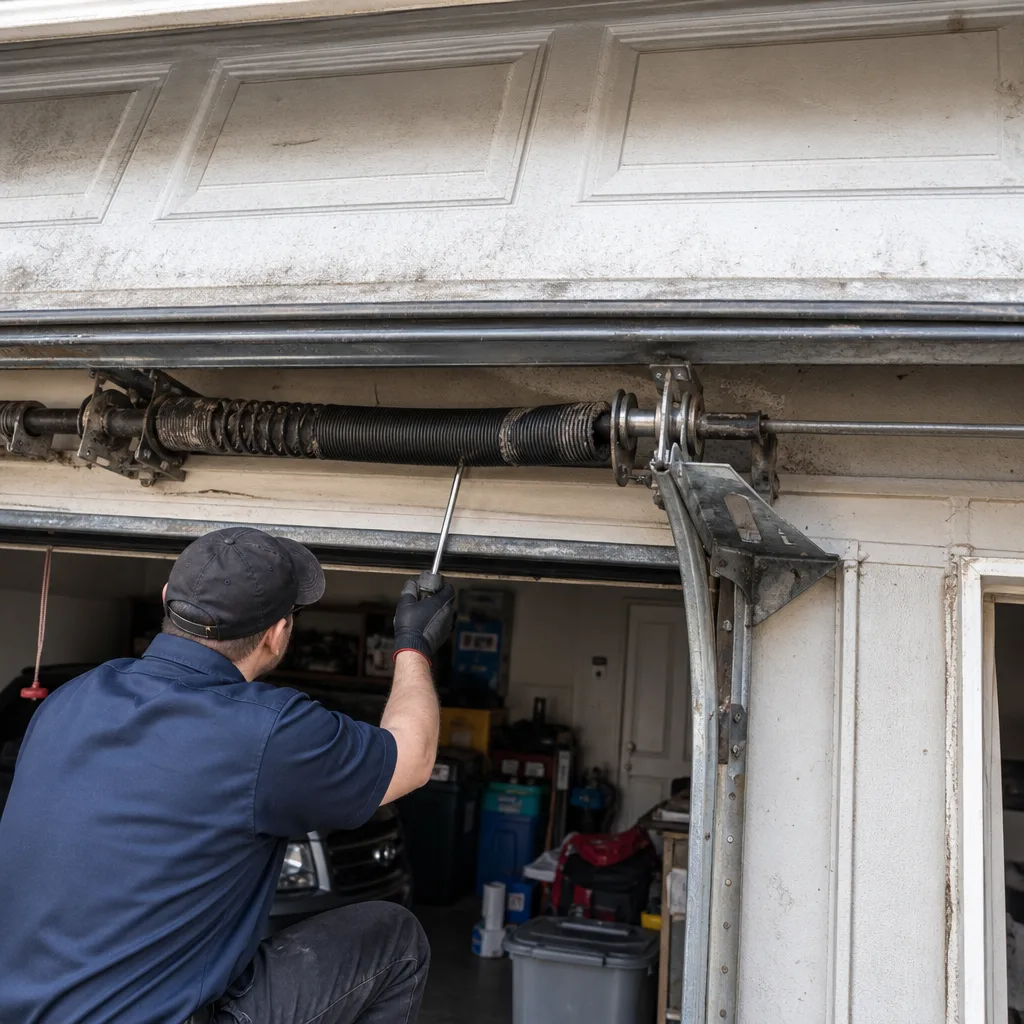 Before
 After
After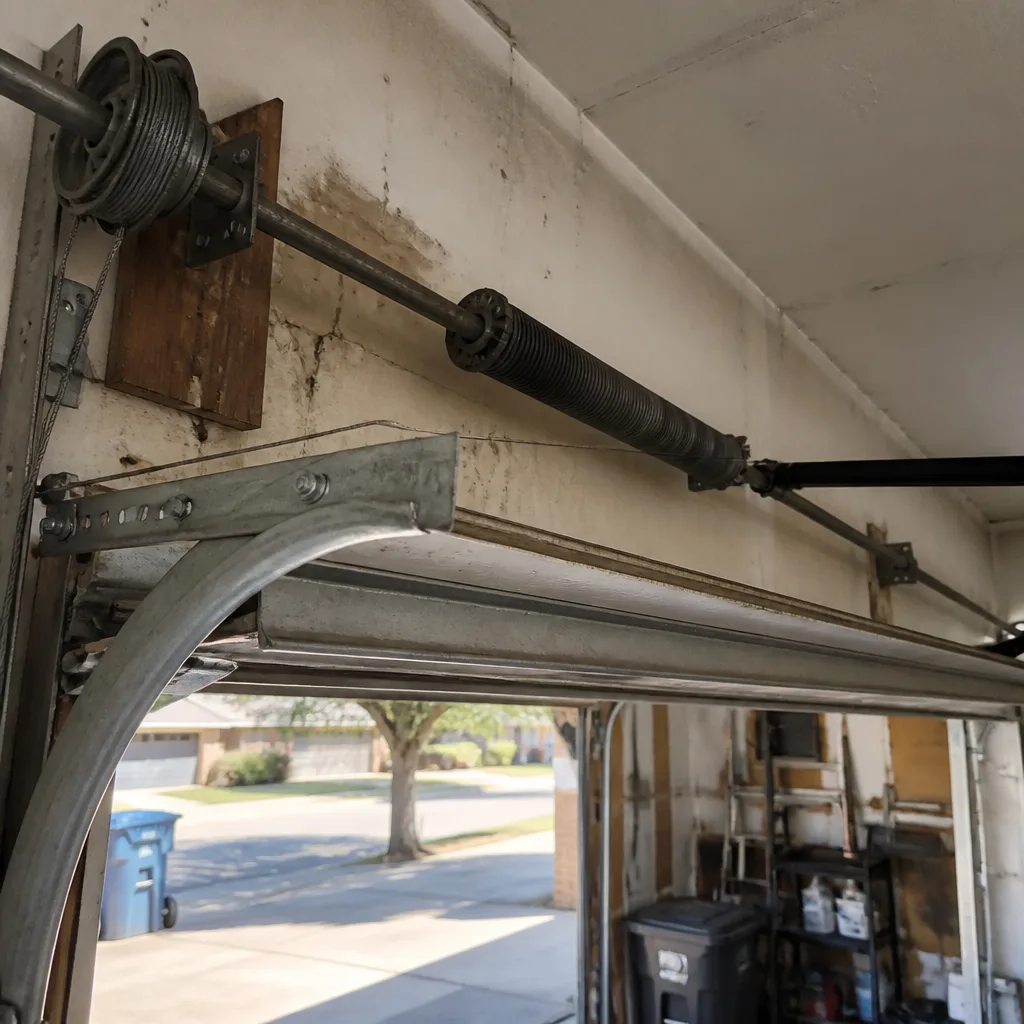 Before
 After
AfterSeasonal Garage Door Care for Frisco: Year-Round Homeowner’s Guide
Frisco recorded 47 days above 100°F in 2023. That number matters for your garage door more than any calendar date, because the grease inside your torsion springs begins thinning and migrating off the coils at sustained temperatures above 90°F. Most more guides & resources treat seasons as equal quarters of a year. Frisco doesn’t work that way. This guide is built around the two periods that actually stress your door: the heat phase from May through September, and the brief but brutal cold snaps from December through February. By the end, you’ll know exactly what wears out, when to check it, and what catching it early saves you in dollars.
Quick Answer
Seasonal garage door care in Frisco means treating summer heat as your primary maintenance trigger: re-lubricate springs and rollers every 90 days between May and September using a silicone-based lubricant rated for high heat, inspect the bottom seal for UV hardening each June, and after each winter hard freeze, check that clay-soil heave hasn’t lifted your threshold and broken the seal contact. A documented six-point check twice a year catches most failures a season before they happen.
Table of Contents
- Why Frisco’s Climate Breaks the Four-Season Model
- Heat Phase Protocol (May-September)
- Cold Snap Protocol (December-February)
- Hail and Storm Prep for Frisco’s Hail Corridor
- How to Log Seasonal Checks with Photos
- Parts That Wear Faster in Frisco (and What That Costs)
- The Twice-a-Year Maintenance Schedule
- Common Mistakes to Avoid
- When to Call a Professional
- Frequently Asked Questions
BeforeAfterWhy Frisco’s Climate Breaks the Four-Season Model
The Complete Guide to Garage Door in Frisco differs from national maintenance guides, which assume a temperate climate with four roughly equal seasons. They tell you to lubricate in spring and fall, inspect weatherstripping before winter, and expect hardware to last the manufacturer’s stated lifespan. None of that maps to Collin County. Frisco sits in a climate band where the real stress on your door comes from two concentrated periods: a five-month stretch of extreme heat, and a handful of hard freezes that arrive fast and leave just as quickly.
The heat is the bigger factor, and it’s the one most homeowners overlook. At 100°F ambient temperature, the air inside an uninsulated garage can reach 130°F or higher. The metal components on your door expand. Rubber compounds oxidize at a measurable rate. Petroleum-based lubricants thin out and drip off the surfaces they’re meant to protect. Wire rope and torsion springs operate at higher friction. Repeating that cycle for five straight months does more cumulative wear than a northern door gets in a full year.
Then comes the freeze. When a cold front drops temperatures below freezing for 48 to 72 hours, the clay-heavy soils around Frisco foundations contract, sometimes shifting the threshold slightly. A door that closed flush in October can show a visible gap under the seal in January. The cold also makes already-fatigued springs slightly more brittle. A spring that survived the summer can fail on the first morning below 25°F.
In our experience at Servo Garage Doors Frisco home, the doors most likely to fail on a January morning are the same ones that went through four or five North Texas summers without a lubrication cycle. The linkage is direct. This guide is organized around that reality, not the calendar.
Heat Phase Protocol (May-September)
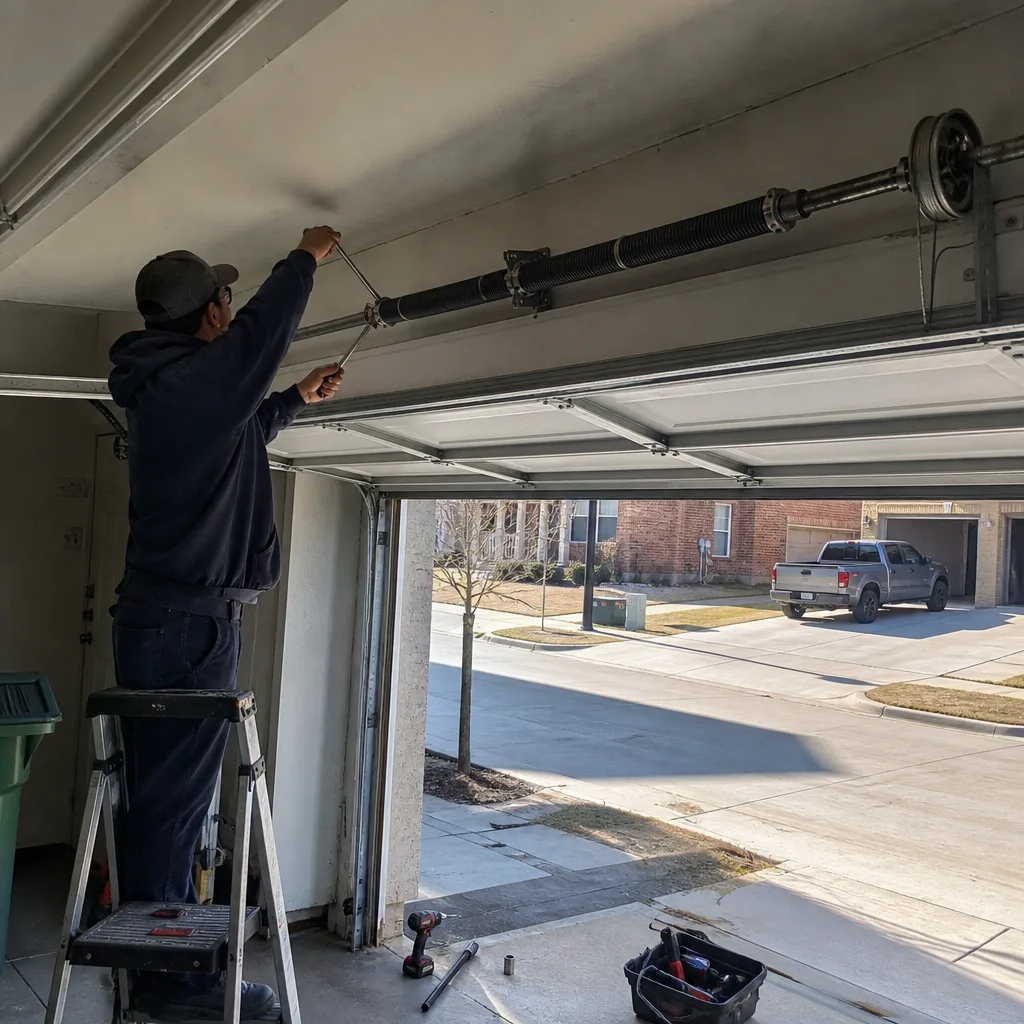
From May through September, the maintenance question isn’t whether your door needs attention. It’s whether the lubricant you applied in March is still doing anything by July. The protocol below assumes you’ll perform it once when sustained temperatures first cross 90°F, then re-check the critical points in August.
Step 1: Relubricate with the Right Product
Use a silicone-based garage door lubricant, not WD-40, not white lithium grease, and not motor oil. Silicone stays viscous at the temperatures your garage reaches in July. Petroleum products thin out and run off, leaving metal-on-metal contact. Apply to torsion springs (the coil springs above the door), hinge pivot points, roller bearings, and the opener rail. Work the door once through a full cycle after application so the lubricant distributes into the coils. In Frisco heat, we recommend a 90-day reapplication interval during the heat phase, which means early May, early August, and one final application in late October before the cold sets in.
Step 2: UV Inspect the Bottom Seal and Weatherstripping
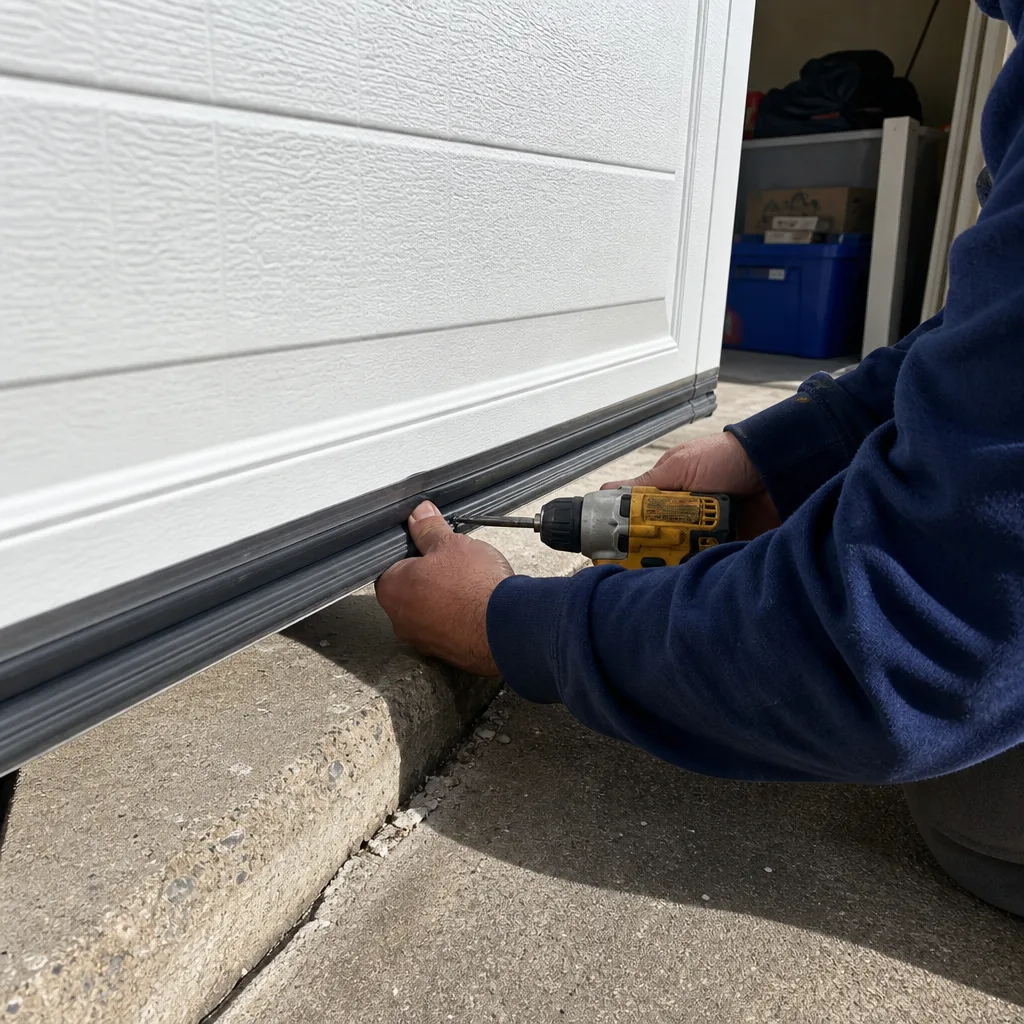
North Texas sunlight destroys rubber. The bottom seal (the rubber strip attached to the bottom edge of the door) and the weatherstripping along the frame’s exterior both harden and crack under UV exposure. Once hardened, the bottom seal stops compressing against the threshold, and the garage starts exchanging air with the outside. Check for cracks by flexing the seal with your thumb. If it cracks or remains stiff, it’s time to replace it. A new bottom seal runs $20 to $45 in materials from a hardware store, and a technician in Frisco typically charges $80 to $140 installed. The replacement takes under an hour.
Step 3: Test the Auto-Reverse Force at High Temperatures
Garage door openers use a force setting to determine how much resistance they’ll push through before reversing. Heat changes that resistance profile. Panels expand slightly, tracks shift by fractions of an inch, and a door that reversed cleanly in March can be edging toward dangerous force levels by August. Place a 2×4 flat on the ground in the door’s path and close the door on it. The door should reverse within two seconds of contact. If it doesn’t, the opener’s force setting needs adjustment. This is a 10-minute diagnostic every Frisco homeowner should run twice during the heat phase.
Step 4: Check Track Alignment
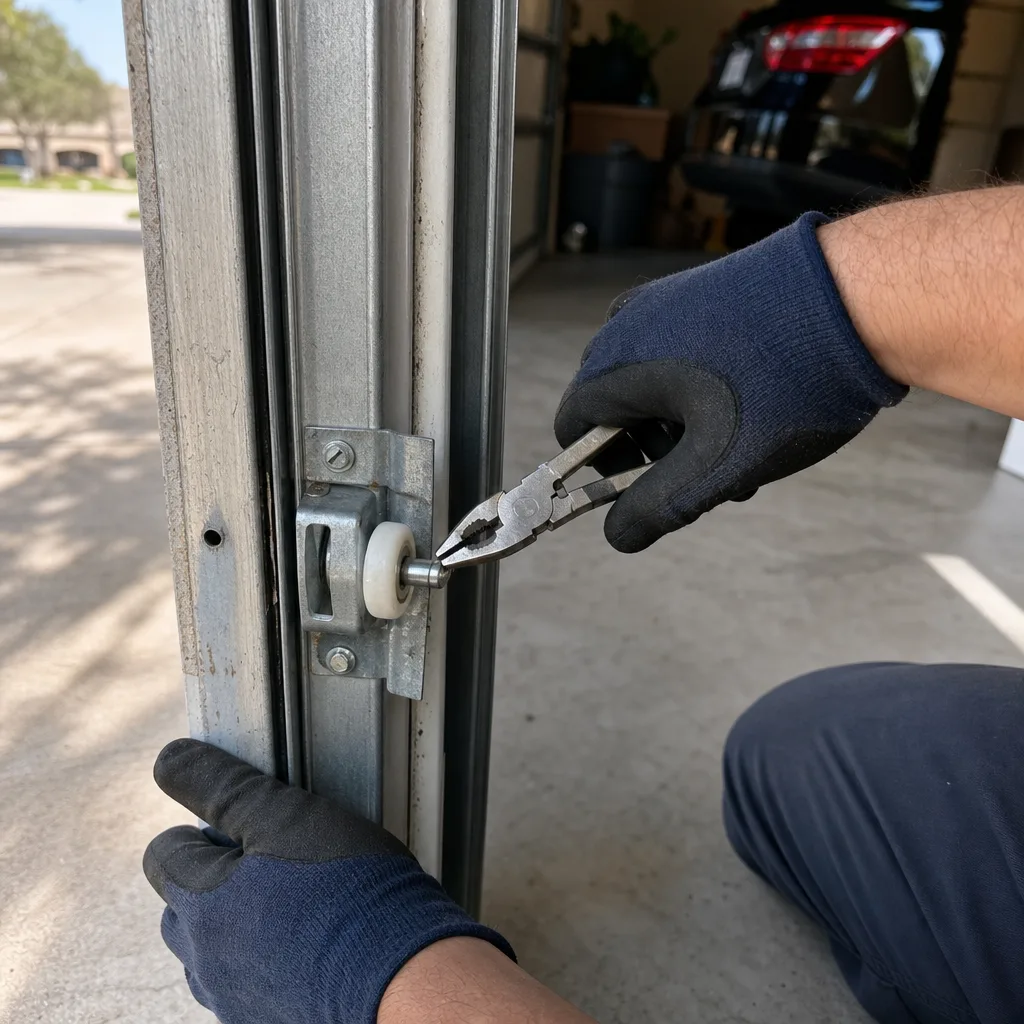
The gap between the roller and the inside of the track should be consistent along the full vertical run. Metal expansion during heat cycles gradually works the track brackets loose. A quarter-inch shift at the bottom of the track becomes a half-inch bind by the time the door reaches the curve. Look for fresh metal shavings on the track surface and any gap variance visible from eye level. If you see shine on the track edge where the roller makes contact, the alignment is drifting.
Cold Snap Protocol (December-February)
Frisco doesn’t get long winters, but the freezes it does get hit hard and fast. The protocol here is designed for the week after the first hard freeze, and then a quick re-check after any subsequent freeze event lasting more than 48 hours.
Step 1: Inspect the Threshold Seal After the First Freeze
Clay soil contracts when it freezes, and the soil under your garage slab is no exception. When the ground shifts even an eighth of an inch, the threshold can tilt slightly, and the bottom seal loses contact. Run your hand along the inside edge of the closed door at ground level on a cold morning. If you feel air moving, or if daylight is visible under the door on a sunny afternoon, the seal is compromised. The fix may be as simple as adjusting the door’s down travel limit, or as involved as re-shimming the threshold. Either way, it’s a small repair compared to the heating loss from a gap that lasts all winter.
Step 2: Listen for Spring Fatigue
Torsion springs contract in cold temperatures, which increases the stress on the metal at the same time the metal becomes slightly more brittle. A spring that has been weakened by heat-phase fatigue will frequently fail on the first morning under 25°F. Before you open the door after a hard freeze, listen. A spring that creaks loudly and unevenly, or one that shows visible gaps between coils, is nearing failure. If the spring breaks while the door is up, the door comes down under full weight with nothing to slow it. This is a serious safety hazard, and it’s the one failure mode we tell Frisco homeowners not to inspect themselves. Garage Door Repair in Frisco for a broken spring typically runs $180 to $340 including the spring, and it’s a same-visit fix when the technician carries the right gauge on the truck.
Step 3: Cycle the Opener Once Before the Morning Rush
Cold weather exposes opener problems that heat masks. Plastic gears inside the opener housing shrink slightly in cold, and if they’re worn, that shrinking is enough to cause a strip or a bind. The first cycle of the morning is the highest-risk moment. If the opener sounds different than it did in October, or if the door hesitates halfway through the cycle, stop using it and investigate. A stripped opener gear is a $150 to $250 repair in the Frisco market, but a door that falls because the opener released at the wrong moment is a different conversation entirely.
Hail and Storm Prep for Frisco’s Hail Corridor
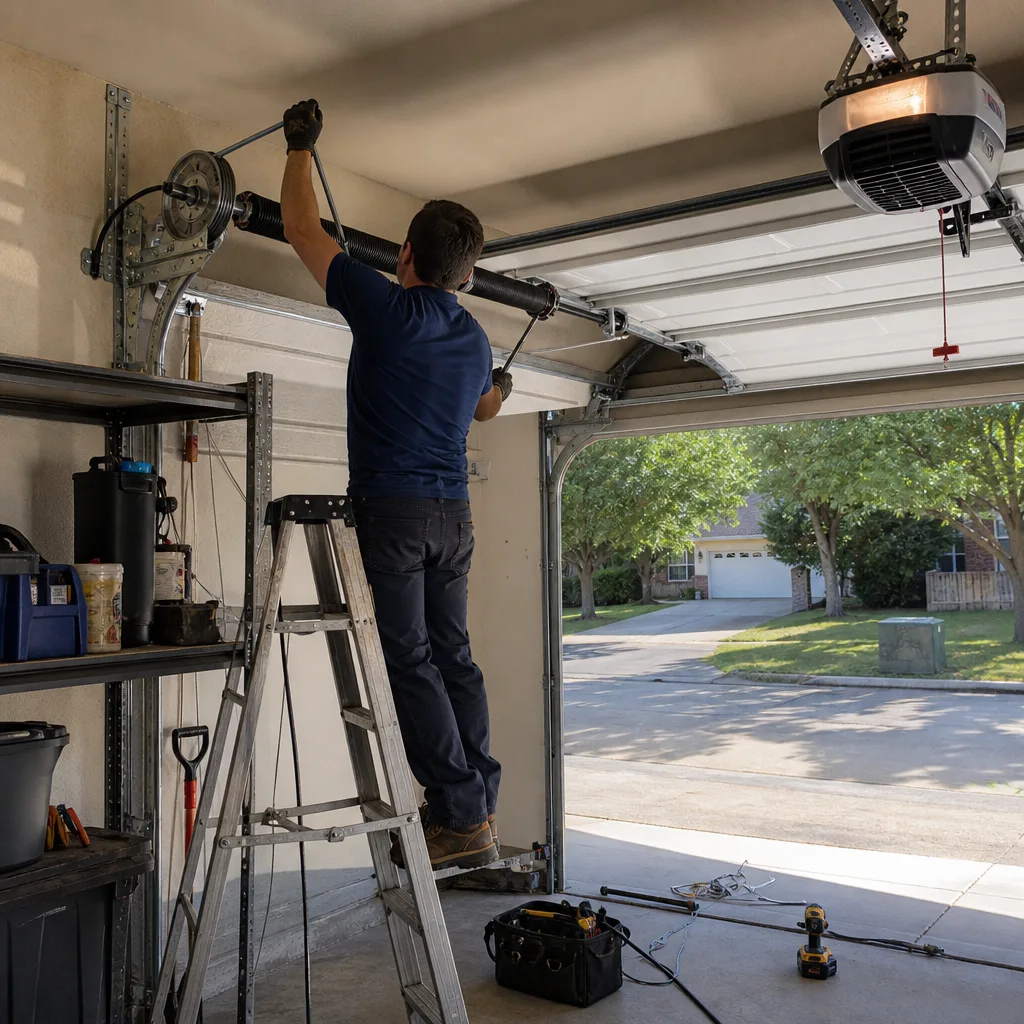
Frisco sits squarely in North Texas hail country, and a garage door takes hail impact differently than a roof does. Roof shingles absorb and spread impact. A steel garage door panel is a flat plane, and hail hits it dead on. The damage isn’t always structural, but the door’s wind load rating and panel integrity matter when the next storm comes through.
What to Check Before Storm Season
- Wind load rating. Doors sold in this region should carry a wind load rating appropriate for the county’s building code. Check the sticker on the inside edge of the door panel. If it’s missing or illegible, the door was likely installed before current code requirements, and a Garage Door Installation in Frisco with a documented wind rating is worth considering if the door is original to a pre-2015 build.
- Reinforcement bar position. If your door has a strut reinforcement bar (a horizontal metal bar across the top panel), verify it’s mounted with all fasteners present. These bars are the structural spine of a door in high wind, and a single missing fastener changes how the door distributes load.
- Track bracket tightness. Loose track brackets become a bigger problem in high wind because the door panels push against the track at pressure points. Tighten any visible lag screws, but don’t overtighten. Stripping a lag in the door frame creates a $15 problem into a $75 one.
Most Frisco homeowners don’t think about their garage door until after the hail has already fallen. But a door that’s structurally sound before the storm is a door that doesn’t need replacement after it.
How to Log Seasonal Checks with Photos
The single most useful habit a Frisco homeowner can build is a photo record of their garage door at known-good intervals. Here’s the method we recommend, and it mirrors the documented photo record we deliver on every service visit at Servo Garage Doors.
- Pick a consistent spot. Stand in the same position each time: six feet inside the garage, door closed, facing the center of the door.
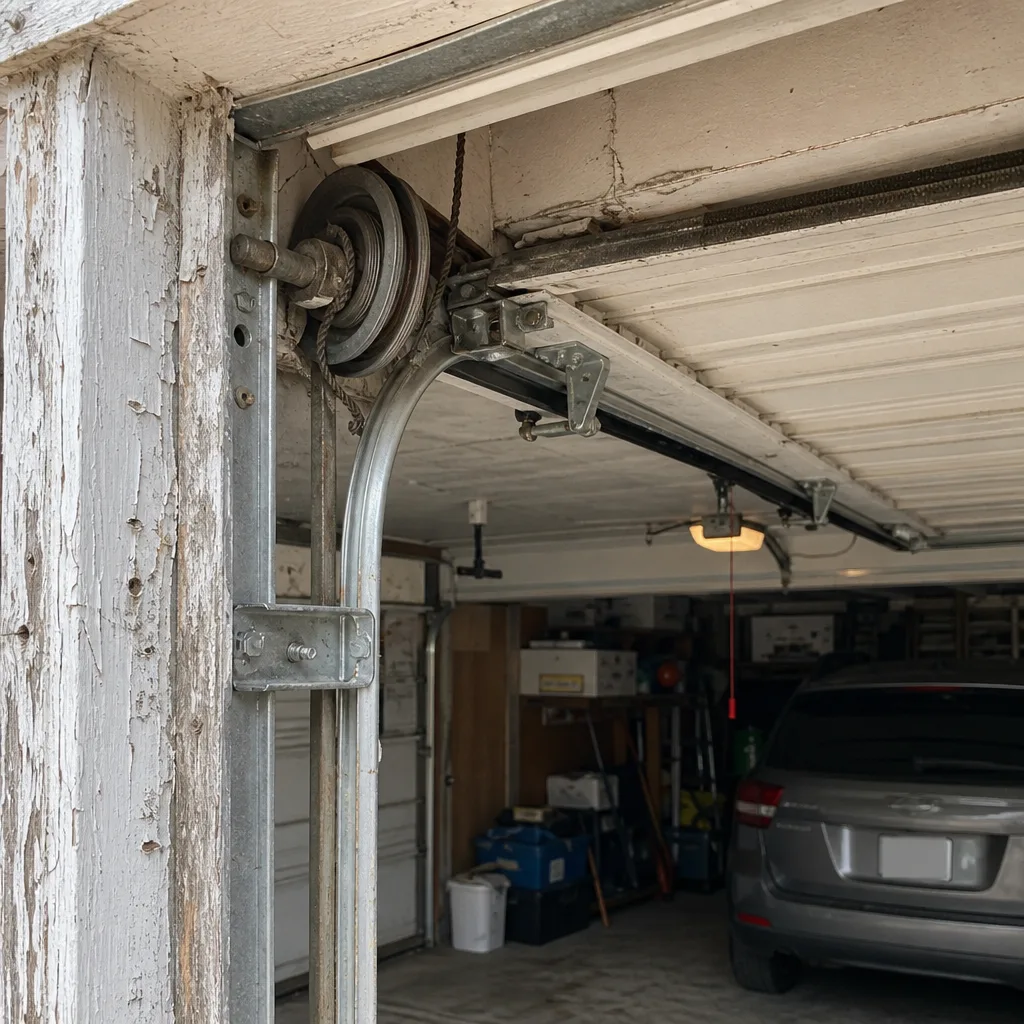
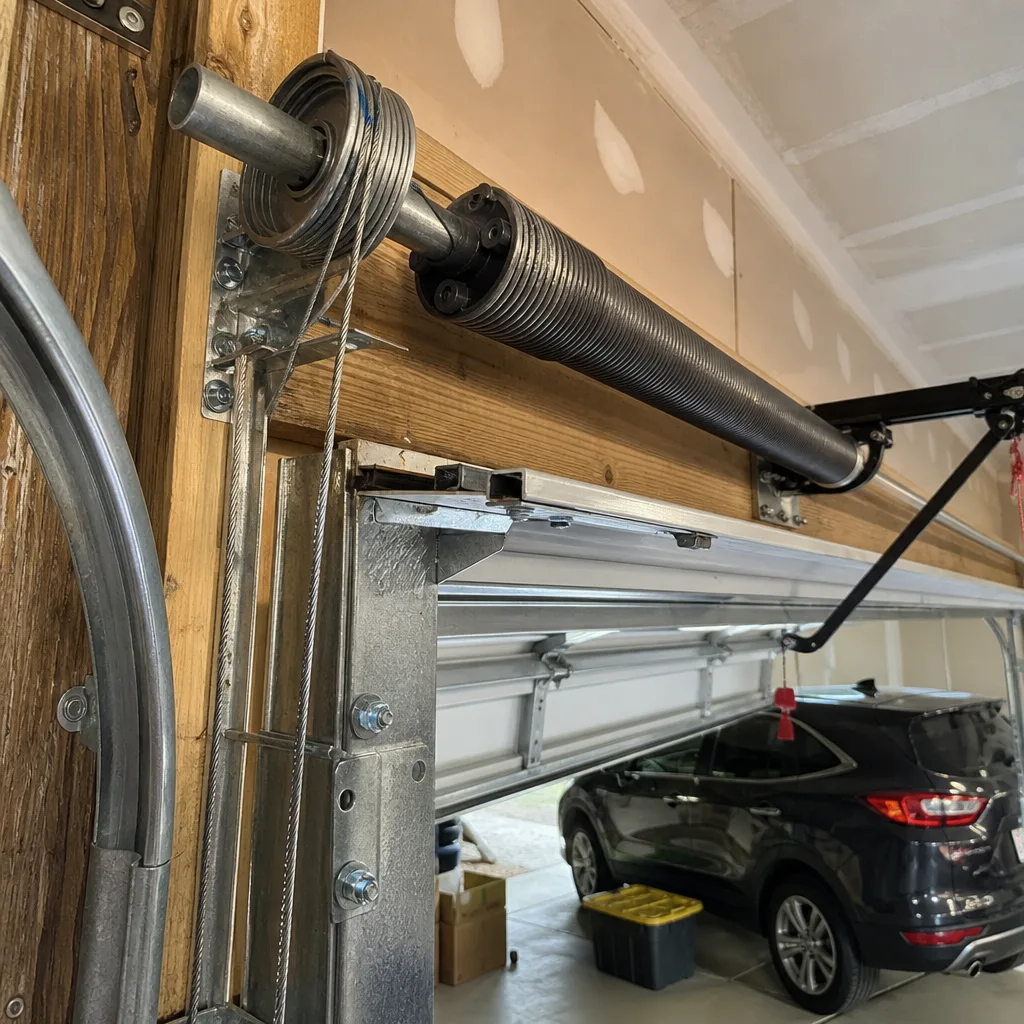
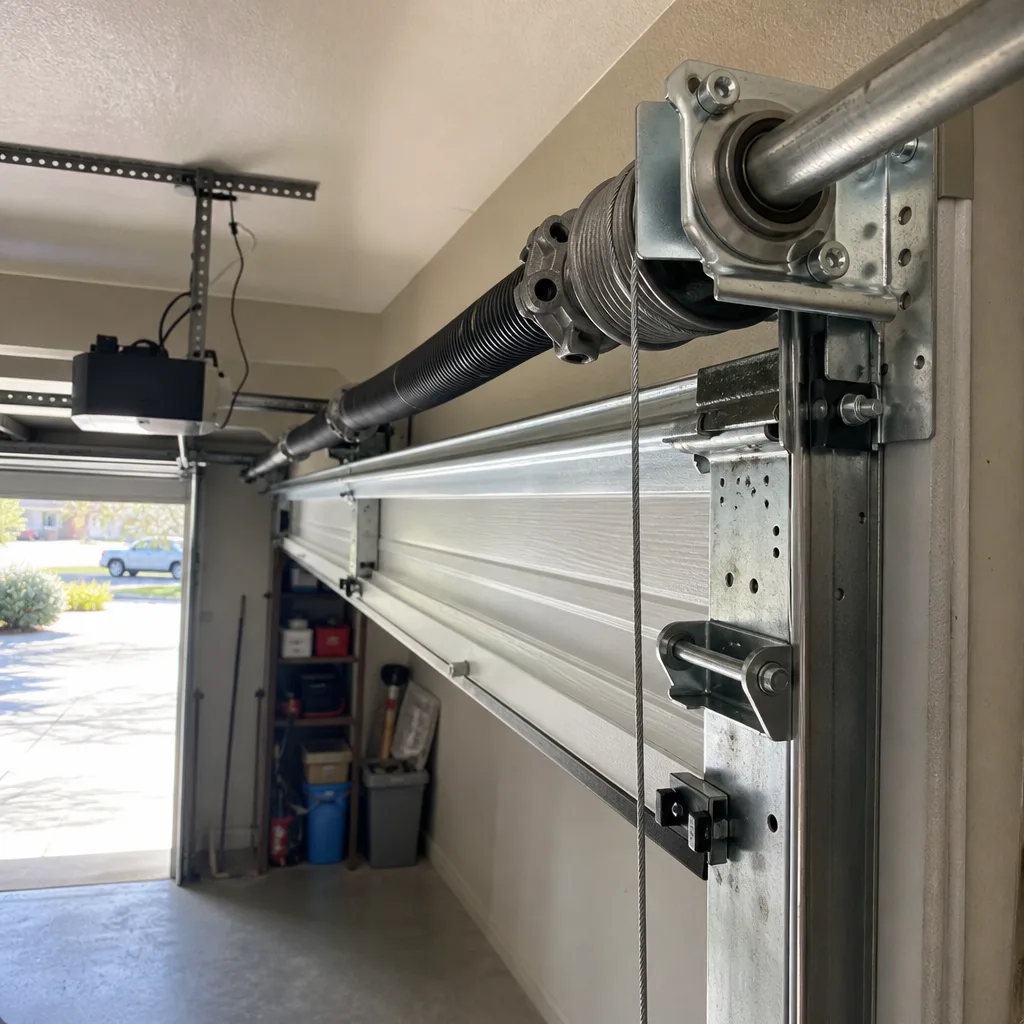
- Photograph the springs first. A clear photo of the torsion springs shows coil spacing and surface condition. When a spring starts to fail, the gap between coils widens before the spring actually breaks. A photo from March next to a photo from August tells you whether that’s happening.
- Photograph the bottom seal from outside. Kneel at the left corner, the right corner, and the center. The center photograph is the one that shows seal compression. If the seal is contacting the threshold evenly in the photo, it’s doing its job.
- Photograph the roller-to-track gap. Move the door to the halfway open position and photograph the roller where it enters the curved section of track. This is the first place misalignment becomes visible.
- Photograph the opener’s force adjustment points. Note the adjustment dial or screw positions. When the door’s behavior changes, knowing the baseline setting matters.
- Store them in a folder. Name it something functional: “Garage Door 2025.” A year of photos costs you 30 minutes total and gives you a failure timeline when something does go wrong.
This is the same principle behind Clause 4 of The Haven Standard, the documentation rule that explains why our technicians photograph the failed component before quoting a replacement. A photo record removes the ambiguity from “when did this start?”
Parts That Wear Faster in Frisco (and What That Costs)
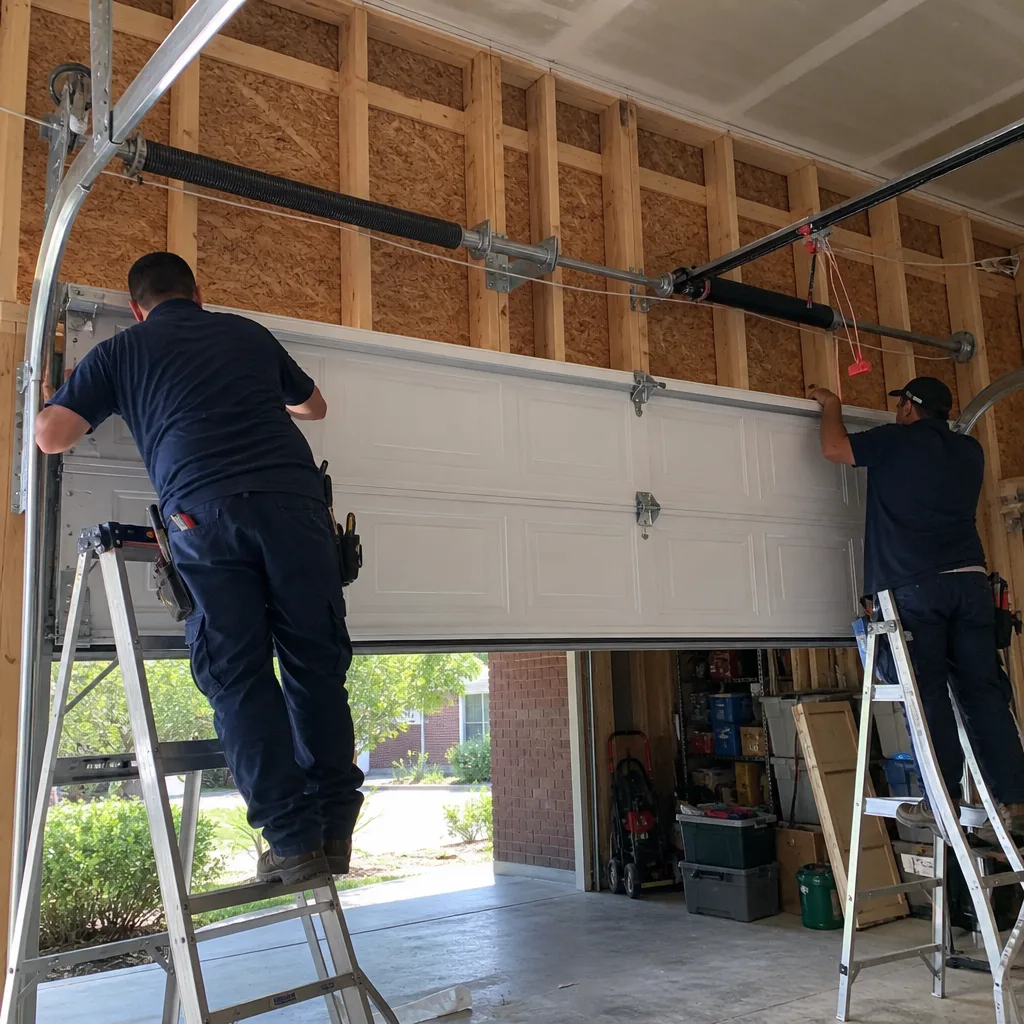
National lifespan estimates for garage door components assume a moderate climate. Frisco’s sustained heat compresses those lifespans measurably. Here are the parts that deviate most from the published estimates, with the dollar impact of catching them one season earlier.
- Bottom seal. National estimate: 5-7 years. Frisco reality: 2-3 years. UV hardening is the culprit. Cost to replace: $80-$140 installed. Catching it one season early saves the heating and cooling loss from a failed seal, which runs $40-$80 per month on a long Frisco summer.
- Torsion springs. National estimate: 10,000 cycles (7-10 years for most households). Frisco reality: 7,000-8,000 cycles, because heat-phase fatigue plus cold-snap brittleness accelerates metal wear. Cost to replace: $180-$340 for a pair. Catching spring fatigue before failure means scheduling the replacement on a Tuesday instead of discovering it on a frozen January morning.
- Roller bearings. National estimate: 5-7 years. Frisco reality: 3-4 years on standard steel rollers, because lubricant migration in heat leaves bearings running dry. Cost to replace: $10-$20 per roller for nylon, $80-$140 for the full set installed.
- Opener gears. National estimate: 10-12 years. Frisco reality: 7-9 years in uninsulated garages, where the opener’s internal plastic components bake in 130°F ambient temperatures. Cost to repair: $150-$250. Catching it early means a gear replacement instead of an Garage Door Opener Repair & Installation in Frisco.
The pattern is consistent: in Frisco, every wear component fails roughly 20-30% sooner than the national estimate. That’s not a reason to replace everything preemptively. It’s a reason to check more often, and to treat the national maintenance schedules as optimistic baselines, not deadlines.
The Twice-a-Year Maintenance Schedule
Here is the complete schedule in one place. Print it. Tape it to the inside of the garage door track, where you’ll see it twice a year. This 90-minute annual commitment catches most failures a full season before they happen.
Early May (Start of Heat Phase)
- Lubricate springs, hinges, rollers, and opener rail with silicone lubricant.
- Run the 2×4 auto-reverse test.
- Photograph springs, bottom seal, and roller-to-track gap.
- Inspect bottom seal for UV cracking.
- Check track bracket tightness with a socket wrench.
Late October (After Heat, Before Cold)
- Lubricate springs and hinges one final time before the freeze season.
- Check the down travel limit on the opener. A door that doesn’t close flush in October will show a gap in January.
- Inspect the bottom seal again for any cracking that developed during August and September.
- Photograph springs and compare against May’s photo. Coil gap changes are your early warning.
- Cycle the door once manually to feel for binding or imbalance.
Perform these checks twice a year and you’ll have a documented baseline that makes every future repair decision easier. Most garage door failures in Frisco are predictable months before they happen, if someone is looking.
Common Mistakes to Avoid
- Lubricating with WD-40. WD-40 is a solvent and water displacer, not a lubricant. It will strip existing lubricant and leave springs running dry within a week. Use silicone specifically formulated for garage doors.
- Ignoring the bottom seal in summer. Most Frisco homeowners notice the bottom seal in winter, when cold air comes under the door. But the damage that causes that gap happened in July, when UV exposure hardened the rubber. Check it in June.
- Using the opener as a diagnostic tool. Running the opener repeatedly on a door that’s binding doesn’t reveal the problem. It makes it worse. If the door binds, disconnect the opener and cycle it manually once to find the resistance point.
- Assuming a loud door just needs lubrication. A door that squeals during operation may have a roller bearing that’s already failed, and lubricant won’t bring it back. Continued operation wears the track surface, turning a $10 roller replacement into a $150 track replacement.
- Not photographing the springs. Without a baseline photo, you won’t notice coil gap changes until it’s too late. This is the cheapest diagnostic tool in the garage, and almost no one uses it.
- Tightening track bolts too aggressively. A stripped lag screw in the door frame is a more involved repair than a loose bracket. Snug, never cranked.
- Replacing one torsion spring instead of both. Both springs have lived the same life. If one has failed, the other is within weeks of the same failure. Replacing the pair costs more upfront but avoids a second service call, and a second written estimate, a month later.
When to Call a Professional
Some jobs are homeowner checks. Others require a trained technician with the right tools and the right calibration equipment. Here are the scenarios where calling is the right move.
A broken torsion spring is the most dangerous component on the door, and it should never be a DIY repair. The spring is under thousands of pounds of tension, and the winding bars required to release it safely are a specialized tool most homeowners don’t own. A door that’s off its tracks also falls into this category: the weight of the door combined with misaligned rollers can cause serious injury if handled incorrectly. The same applies to any repair involving the opener’s logic board or wiring, where a mistake can mean replacing the opener entirely.
We carry parts for all major brands including LiftMaster, Craftsman, and Wayne Dalton, and every Garage Door Repair in Frisco starts with a flat written price before any work begins. No surprises on the invoice. Servo Garage Doors Frisco offers free estimates in Frisco, call (940) 290-8313.
Frequently Asked Questions
Every 90 days during the heat phase from May through September, plus one final application in late October before freeze season. Frisco’s sustained temperatures above 90°F thin out lubricant faster than the national standard of twice a year, so the 90-day interval is what actually protects the springs. Call (940) 290-8313 if you want us to handle the full seasonal service.
A Garage Door Cost Breakdown: The Frisco Homeowner’s Reference for 2026 shows a comprehensive seasonal tune-up in Frisco typically runs $89 to $149, depending on the condition of the door and what needs adjustment. At Servo, you get a written price before any work starts, and that price includes the documented photo record so you can see what was found and what was done. Estimates are always free.
Look for a visible gap between the spring coils, a creaking noise that’s uneven or grinding during operation, or a door that feels heavier than it did a month ago when you cycle it manually. If you see any of these signs in Frisco, the spring is nearing the end of its life and should be replaced before it breaks. Call (940) 290-8313 for an exact assessment.
Yes. Sustained heat above 90°F thins lubricant, accelerates UV hardening of rubber seals, and causes metal expansion that stresses track brackets and spring coils. A door that goes through five Frisco summers without lubrication will show measurably more wear than a door that went through the same period in a cooler climate.
For repairs like broken springs, snapped cables, and most opener issues, yes. We carry parts for all major brands including LiftMaster and Wayne Dalton on the truck, and most repairs are completed on the first visit. Call (940) 290-8313 and you’ll get a live person, a named technician, and an on-the-way text.
No. The price we quote is the written price, and it’s based on the specific work described in the written scope. If the technician finds something additional, you’ll get a second flat written price for the additional work before anything else is done. You approve the number before any work begins, per Clause 1 of The Haven Standard.
The Bottom Line
Frisco’s climate doesn’t ask your garage door for four seasons of maintenance. It asks for two: a disciplined heat-phase protocol that keeps lubricant on the springs through 100-degree months, and a cold-snap protocol that catches what the clay soil and the freeze did to your threshold and your springs. If you build the photo log, run the six-point checks in May and October, and treat the national lifespan estimates as optimistic baselines, you’ll catch most failures a season early. That’s the difference between a $140 bottom seal replacement on a Wednesday and a frozen January morning with a broken spring. We’re at (940) 290-8313 when you want the next check done with a written price and a photo record.
Written by Marcus Deller, Owner at Servo Garage Doors Frisco, serving Frisco since 2015.