
Last updated September 20, 2026
Full 25-point door and opener safety check with every visit - springs, cables, rollers, tracks, and your LiftMaster or Chamberlain opener included
You get a price before we start. It does not change when the truck arrives.
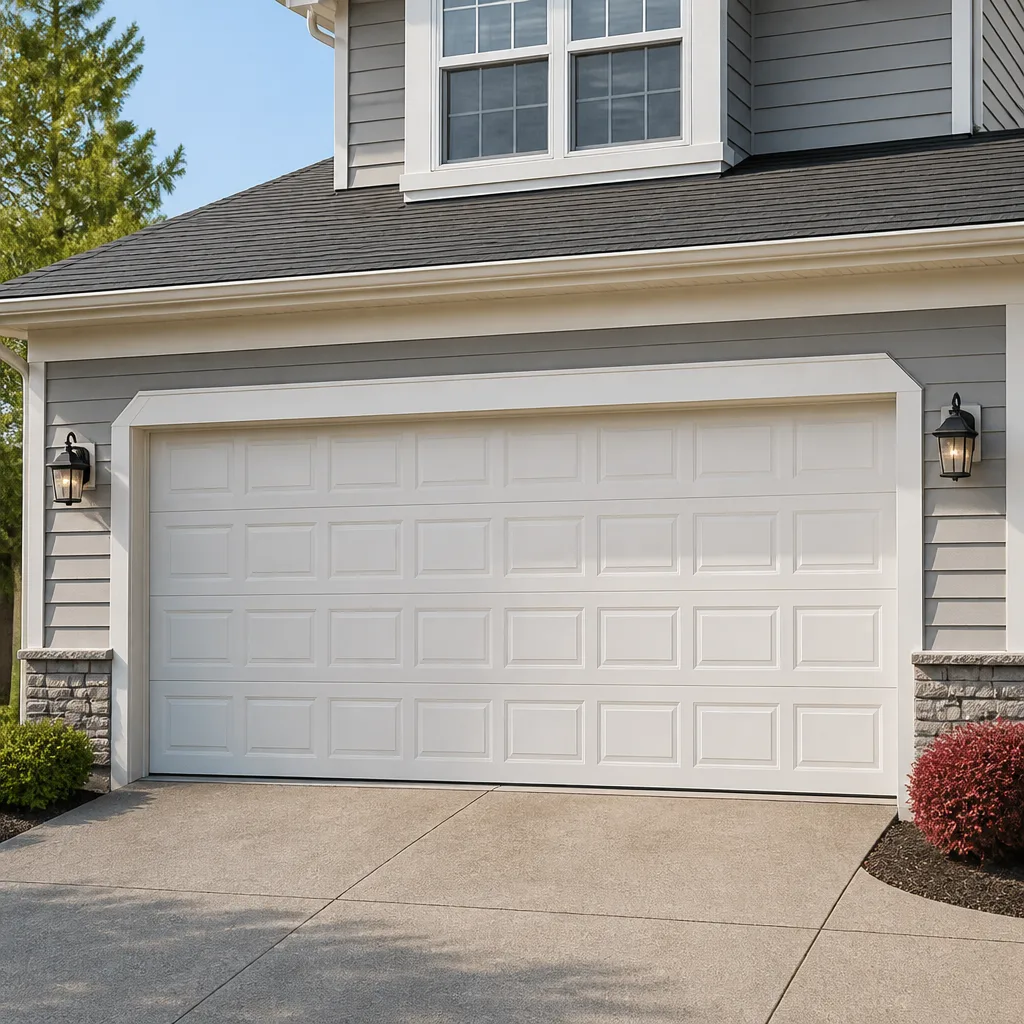



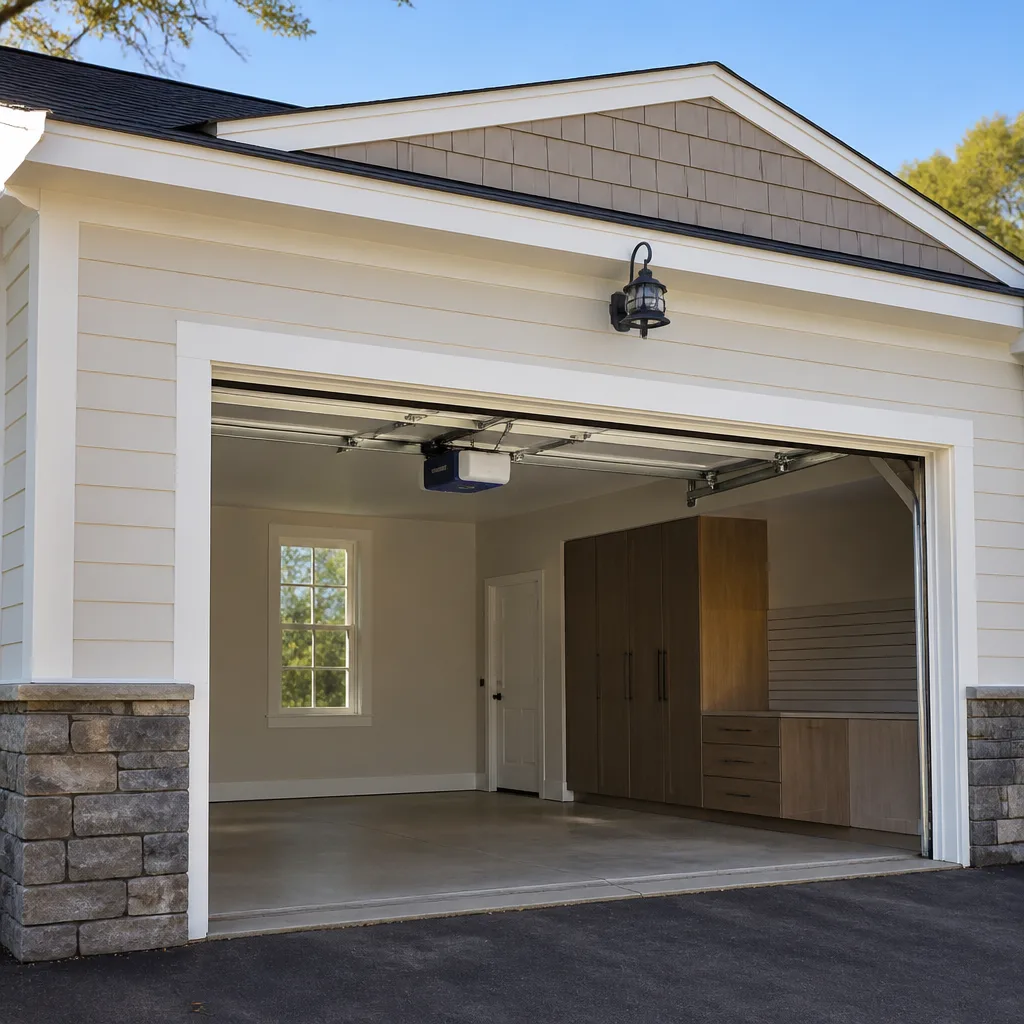
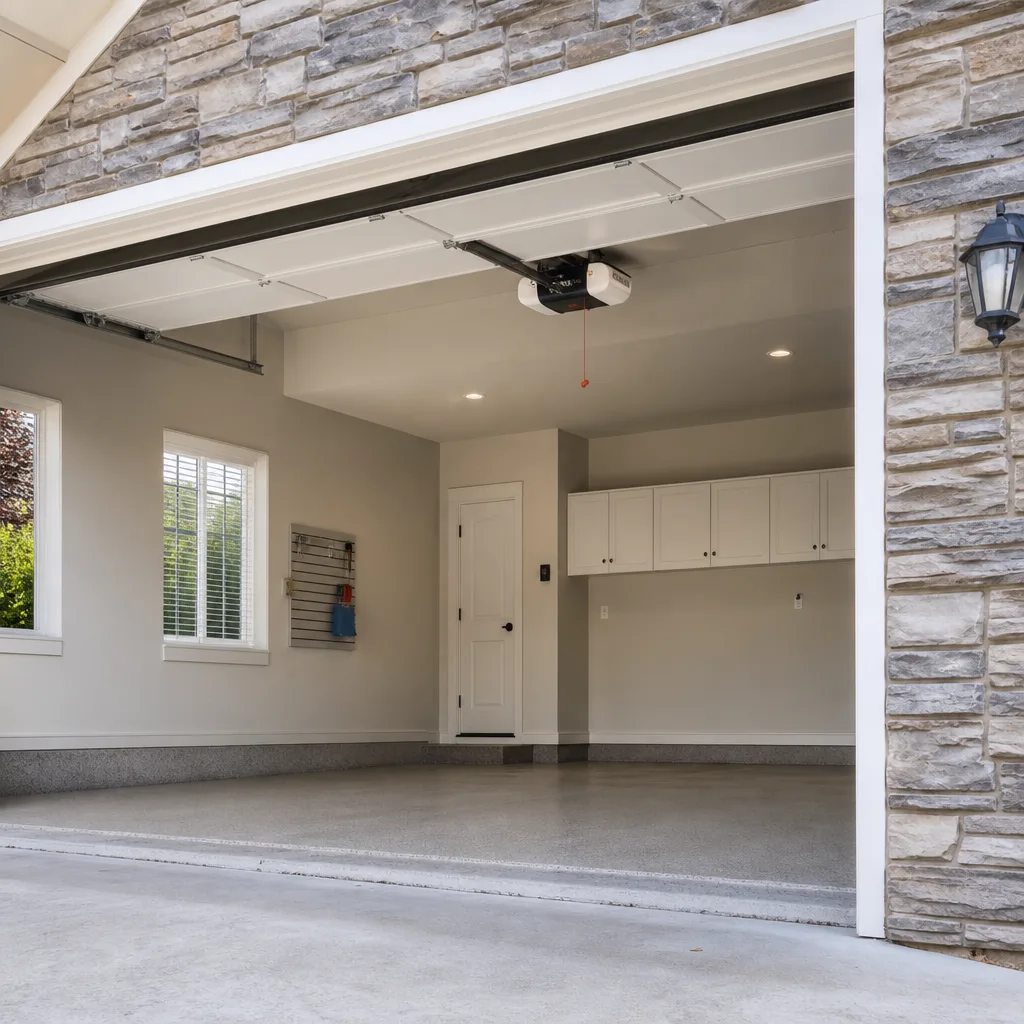
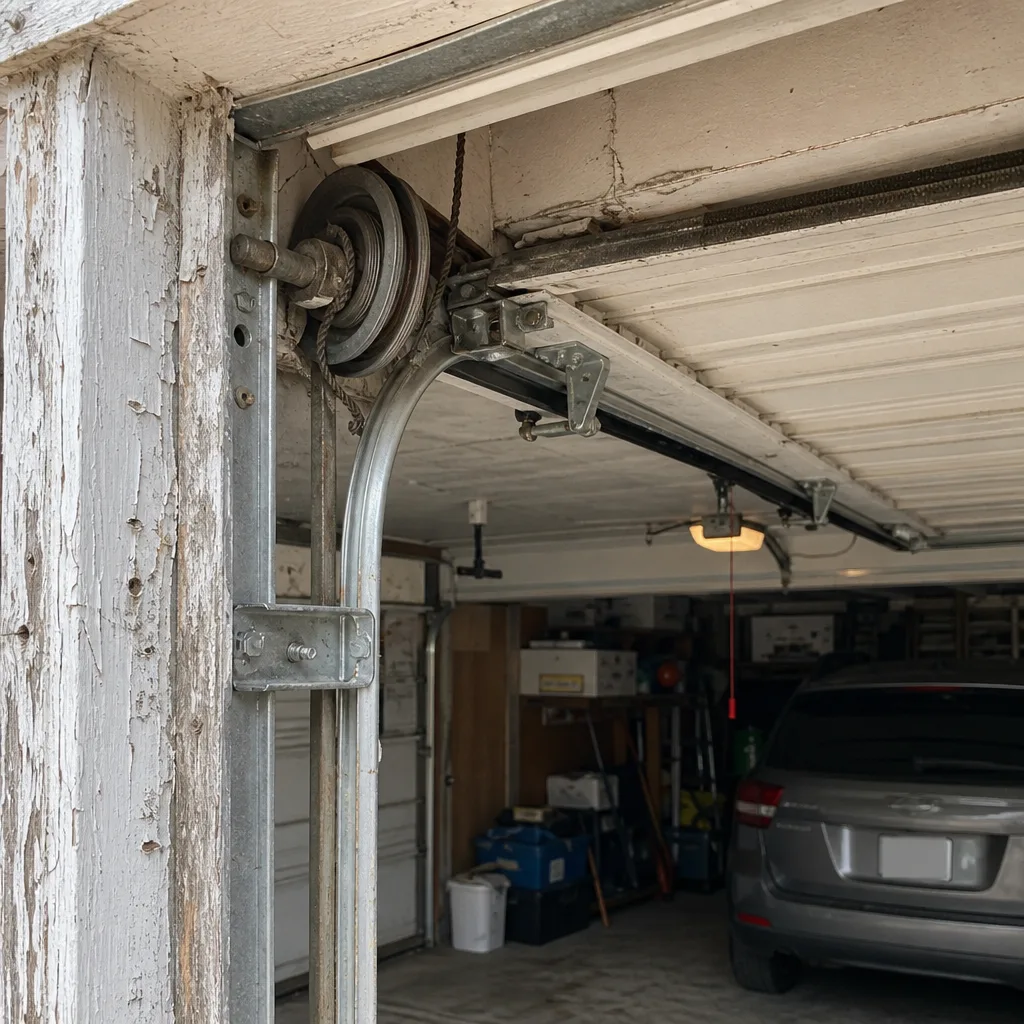 Before
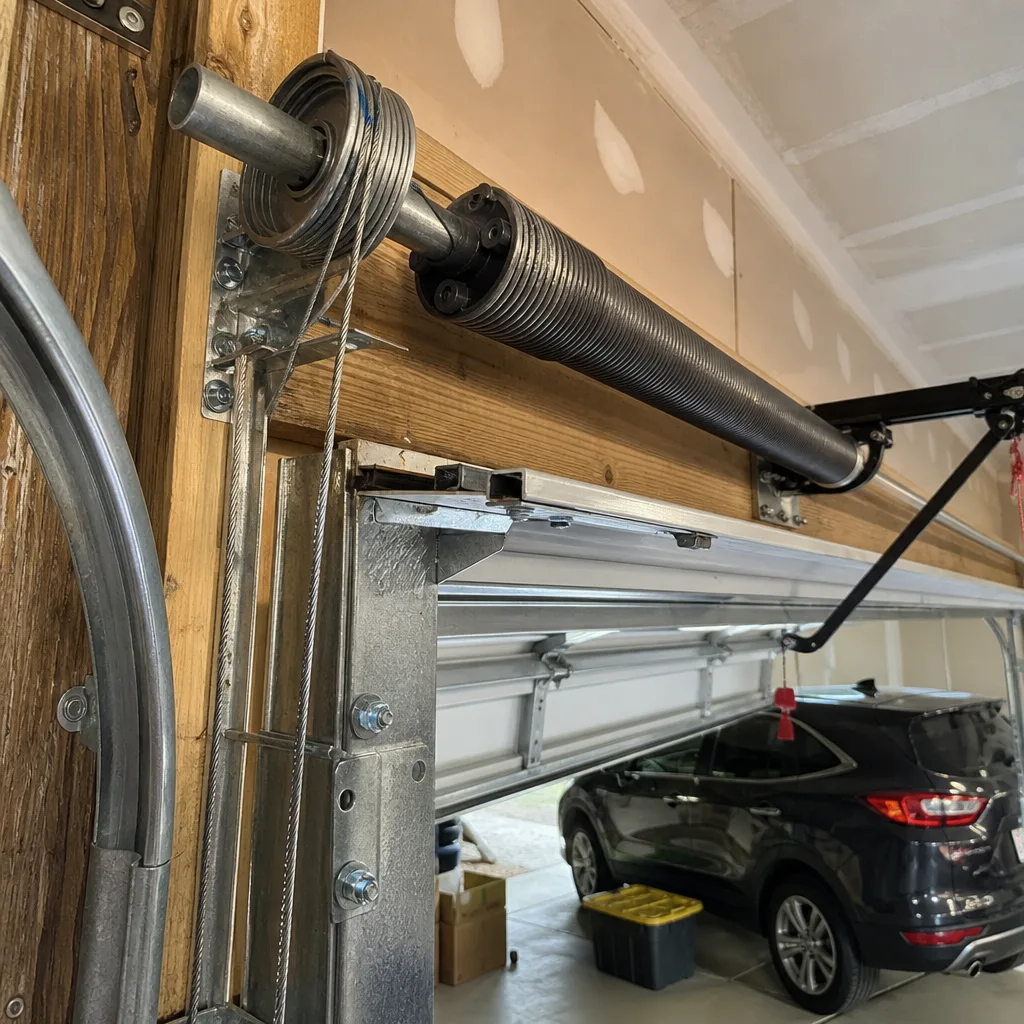 After
After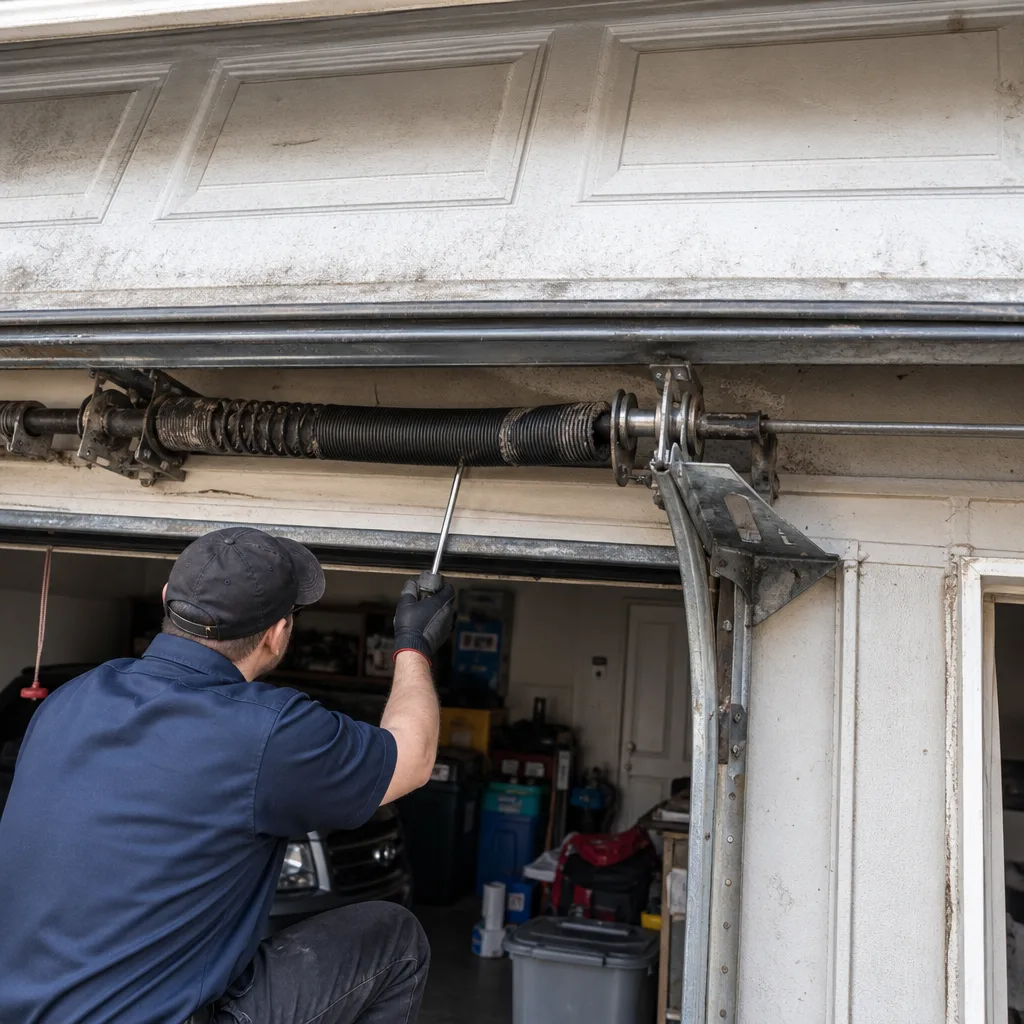 Before
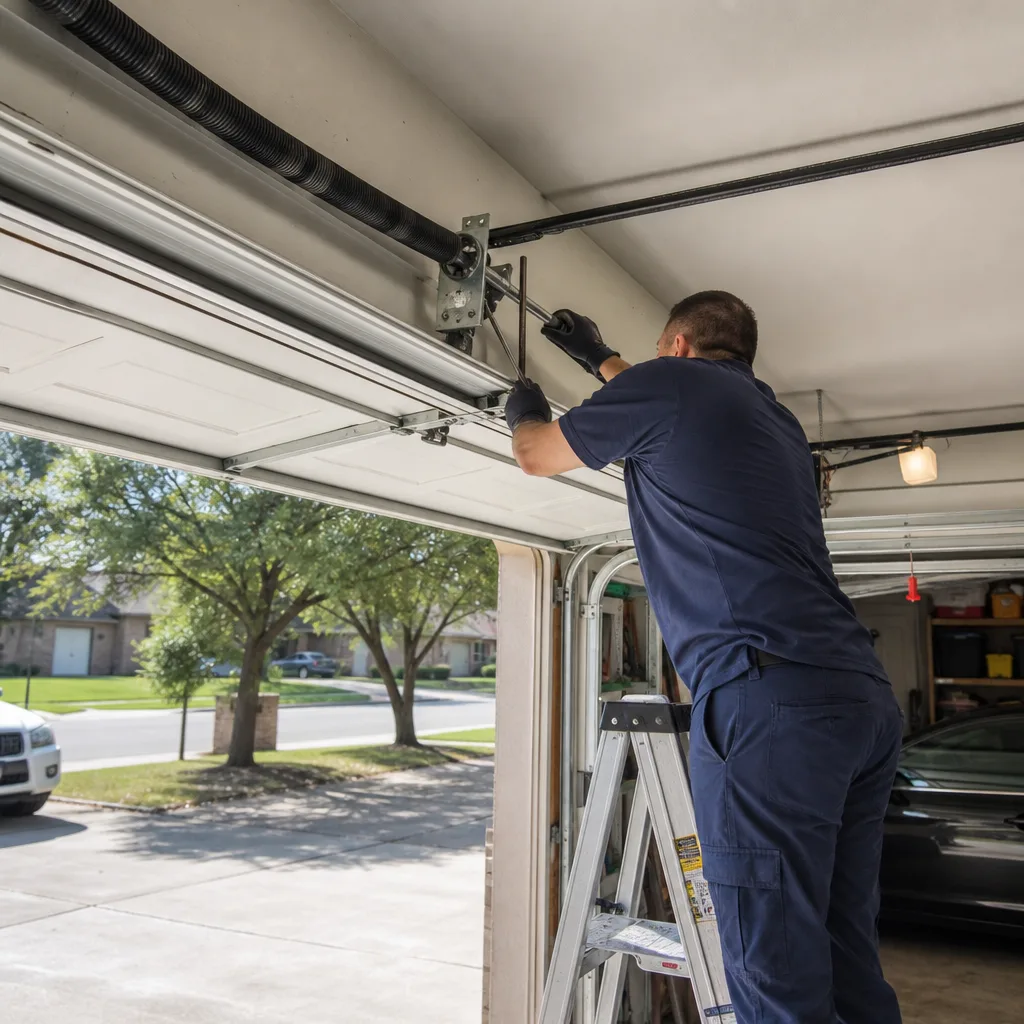 After
After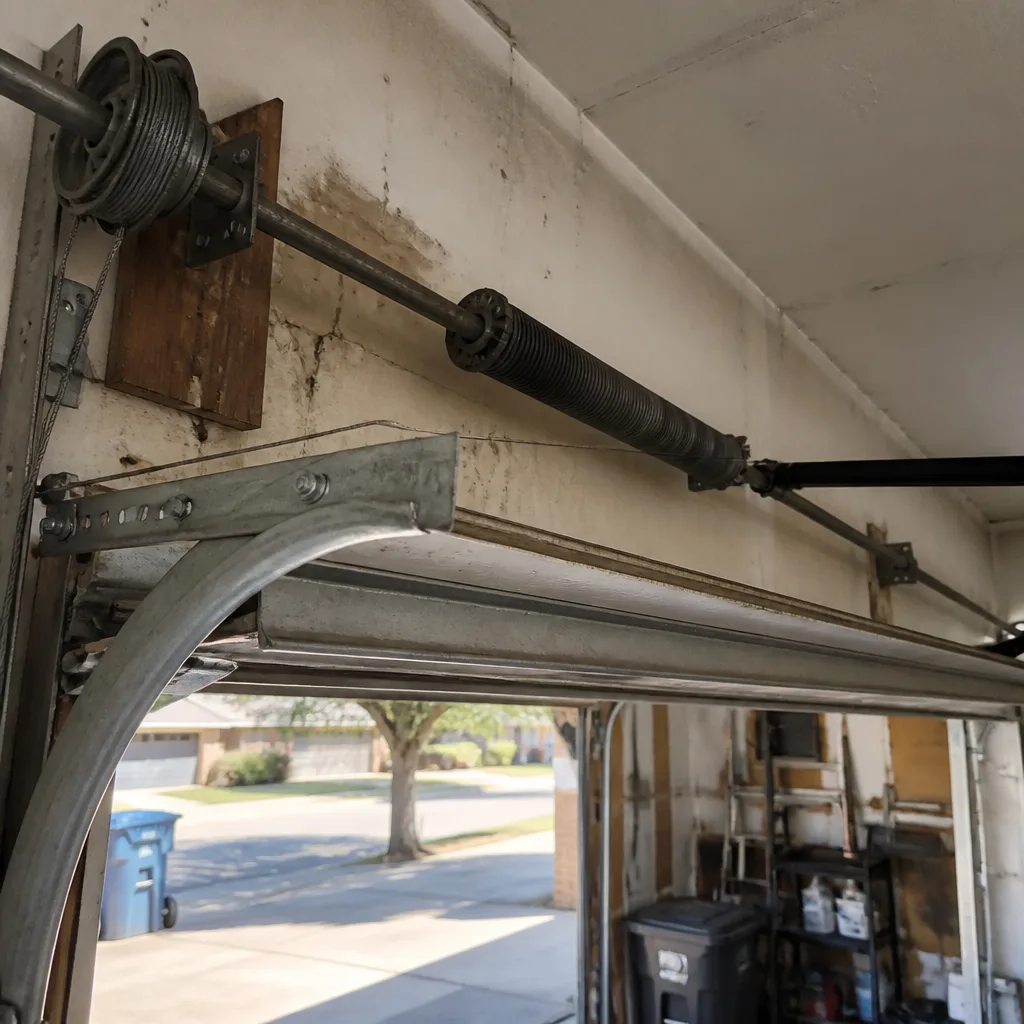 Before
 After
AfterDIY vs Professional Garage Door: The Frisco Homeowner’s Decision Guide
Here’s a number most homeowners in Frisco never hear: a residential torsion spring under full tension carries roughly 100 to 150 pounds of torque per spring, and when it snaps, that energy releases in a fraction of a second anywhere near the winding cone. The difference between a five-minute YouTube tutorial and a hospital visit isn’t skill. It’s whether the person holding the winding bar knows what the spring is doing before it does it. This guide draws the DIY line at the component level for Frisco homes, where summer heat ages springs faster than the national average and Texas clay shifts door framing enough to change how cables track. By the end, you’ll know exactly which garage door tasks belong in your hands, which belong in ours, and what each one actually costs in this market-check our Garage Door Cost Breakdown: The Frisco Homeowner’s Reference for 2026 for detailed pricing.
Quick Answer
Most garage door maintenance in Frisco is genuinely DIY-appropriate: lubrication, weather seal replacement, sensor alignment, track cleaning, and tightening loose hardware. But torsion spring replacement, cable replacement, and any work involving the high-tension system is not a DIY job, regardless of confidence or video quality. The dividing line is energy storage: if the component stores mechanical force that can release suddenly, hire a professional. If it doesn’t, and you own basic tools, do it yourself and save the labor cost.
Table of Contents
- The Component-Level Line: What’s Actually DIY in Frisco
- Torsion Springs: The Non-Negotiable Professional Job
- Cables, Drums, and Bottom Brackets: Where DIY Goes Wrong Fast
- DIY-Appropriate Tasks Under Texas Conditions
- Honest Cost Accounting: DIY Parts vs. Professional Labor in Frisco
- What Texas Homeowner’s Insurance Actually Says About DIY Garage Door Work
- How to Document DIY Work So a Future Technician Can Diagnose Accurately
- The Middle Path: Prep Work That Reduces Billable Labor Time
- Common Mistakes to Avoid
- When to Call a Professional
- Frequently Asked Questions
- The Bottom Line
BeforeAfterThe Component-Level Line: What’s Actually DIY in Frisco
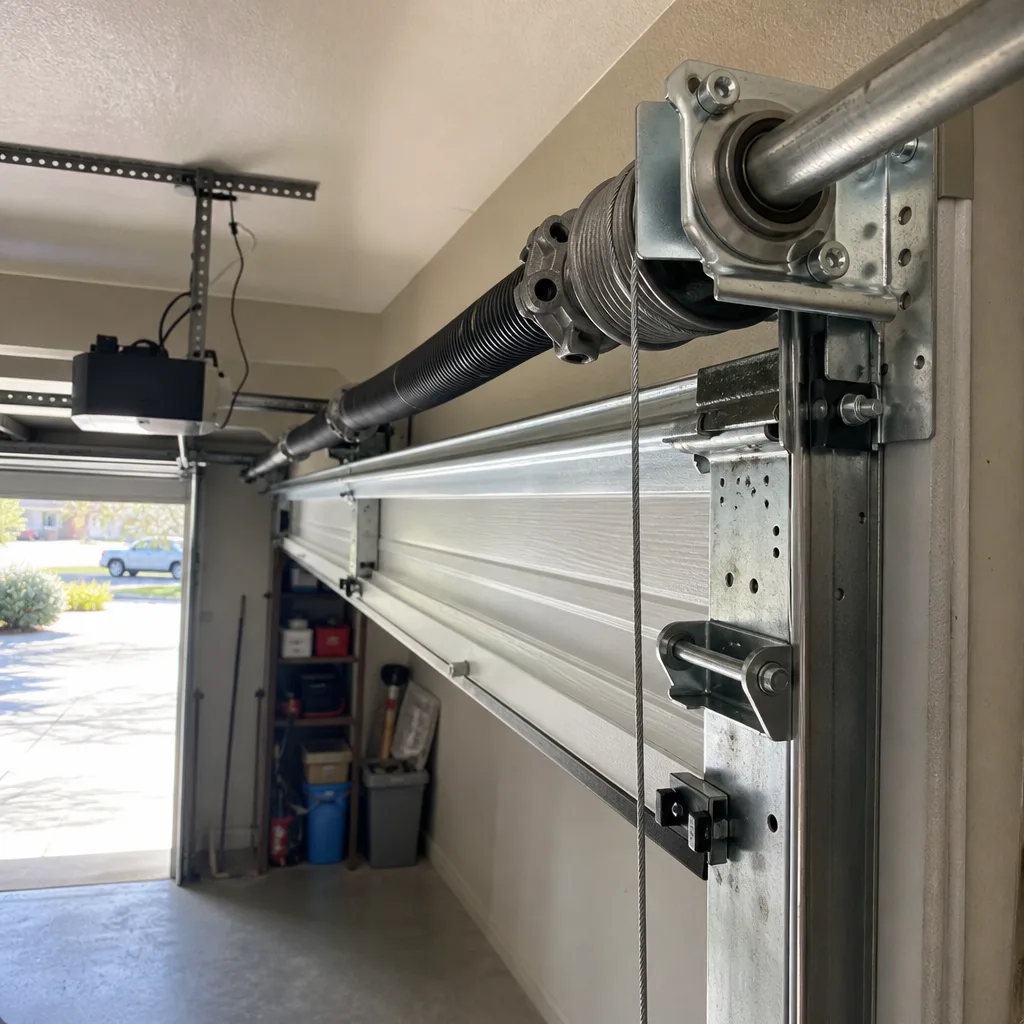
Garage doors are not one machine. They’re about 40 components working together, and they fail at different rates depending on how they’re stressed. The useful distinction for a Frisco homeowner isn’t “easy” versus “hard.” It’s whether a component stores energy or simply carries it. A roller carries weight and translates it into motion. A hinge does the same. These are passive components. When they fail, gravity does the work, and gravity is predictable. A torsion spring stores torque. A cable under spring tension stores pull. When these fail, the stored energy releases all at once, and the release is neither predictable nor survivable at close range.
In our experience across Frisco neighborhoods like Stonebriar, The Trails, and Phillips Creek Ranch, the pattern is consistent: homeowners correctly diagnose a problem, correctly identify the component, and incorrectly assess the risk. They treat a torsion spring like an oversized hardware-store spring. It isn’t. The component-level line works like this:
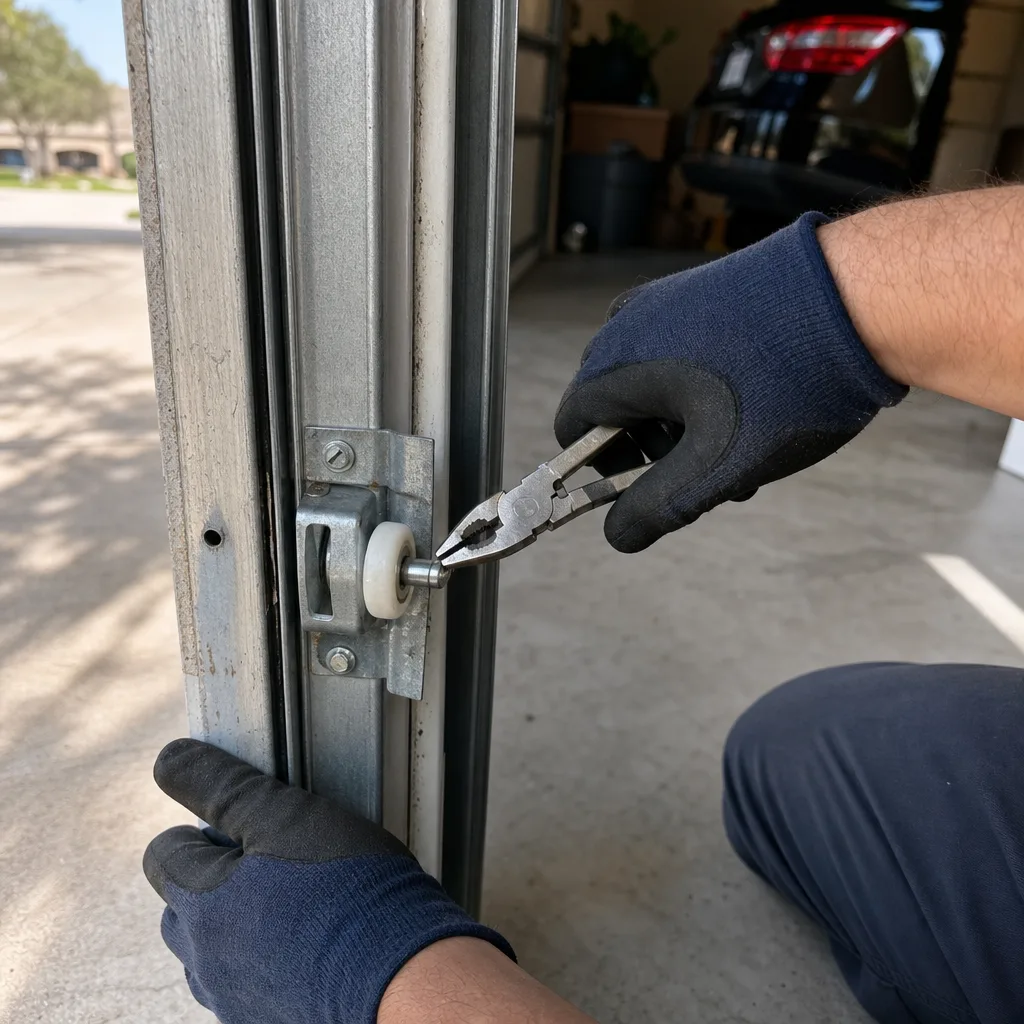
- DIY-safe: weather seals, hinges, rollers (when performed with the door open and locked in place), track cleaning, lubrication, sensor realignment, remote reprogramming, light bulb replacement, tightening visible nuts and bolts.
- Professional-required: torsion springs, extension springs, lift cables, cable drums, bottom brackets, center bearing plates, opener gear and sprocket replacement, anything requiring removal of the spring tension first.
- Gray area (call for a second opinion): panel replacement on a torsion-sprung door, roller replacement on a door with a broken spring, opener rail adjustments on a door that’s out of balance.
The gray area matters because Frisco homes built between 2015 and 2025 nearly all use torsion systems, which means even a “simple” roller swap requires releasing spring tension first on some door designs. That single fact moves roller replacement from DIY territory into professional territory faster than most homeowners expect, so it’s worth checking Garage Door Permits, Codes & Inspections in TX: What You Need to Know before starting any work.
Marcus Deller, who has owned and operated Servo Garage Doors Frisco home since 2015, puts it plainly: “We don’t decide what’s DIY based on whether someone can do it. We decide based on what happens if they can’t. Rollers, seals, sensors, lube: nobody’s ever gone to the ER from doing those wrong. Springs and cables are a different conversation entirely.”
Torsion Springs: The Non-Negotiable Professional Job
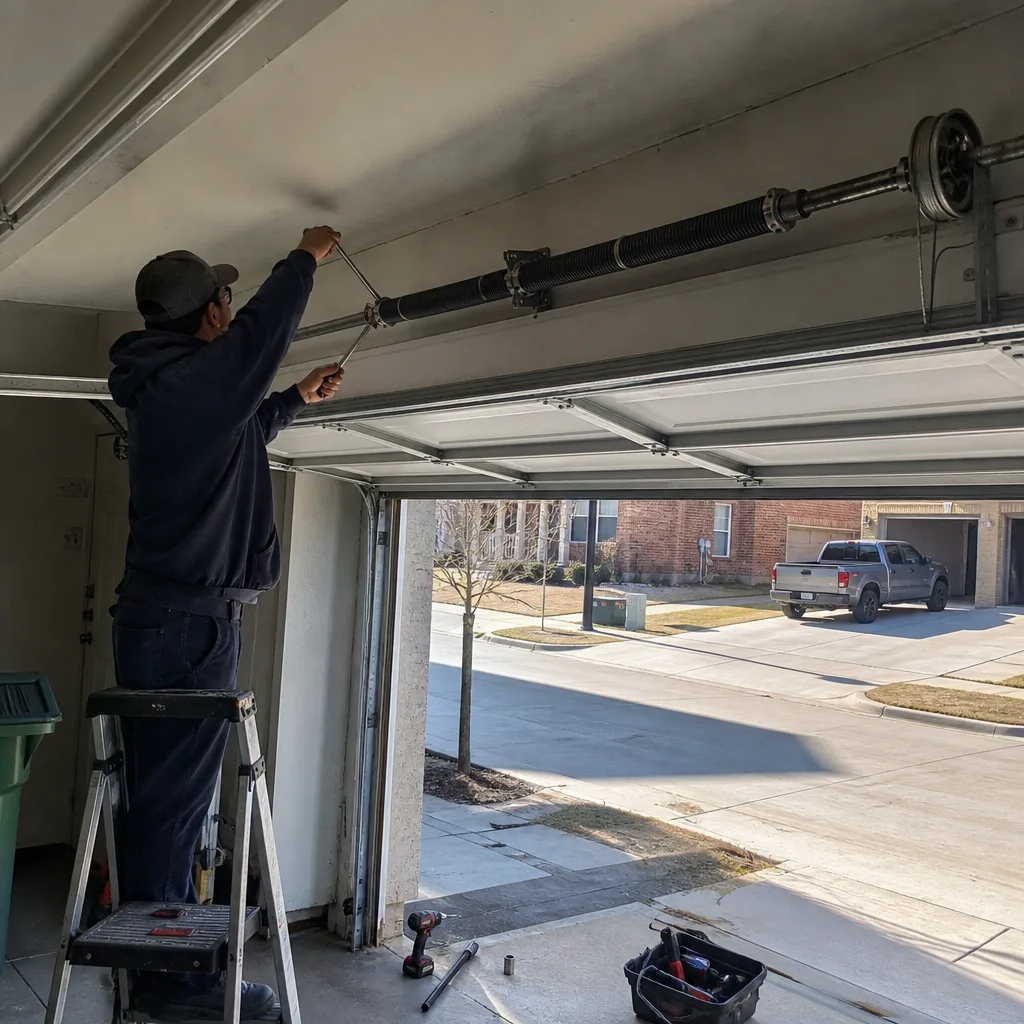
A torsion spring on a Frisco garage door is rated for a specific cycle life. Most builder-grade doors installed in Frisco developments since 2015 come with springs rated for 10,000 cycles, which translates to roughly 7 to 10 years of typical use in this market. When a spring breaks, it usually breaks at the coil, and when it breaks, it doesn’t whisper. Homeowners report hearing what sounds like a gunshot from inside the house. That sound is the stored energy releasing. If you’re anywhere near the winding cone when that happens, the cone becomes a projectile.
The problem with DIY torsion spring replacement isn’t following instructions. It’s that the instructions assume conditions a homeowner can’t verify: that the spring’s wire diameter matches the old one, that the inside diameter is exact, that the winding direction matches the door’s cable configuration, that the drum is still true, that the shaft hasn’t taken a bend. Get any one of those wrong and the door operates unevenly, the cables slack and jump the drum, or the new spring snaps within months. At that point the “savings” from DIY have converted into a second repair call, and depending on what failed, a possible injury or property claim.
Our technicians photograph every failed component before quoting a replacement. That rule didn’t come from marketing. It came from a founding rule Marcus Deller set in 2015: the customer sees the broken part before anyone asks them to pay for a new one. It’s now codified as Clause 4 of The Haven Standard, and it exists because a torsion spring quote without a photo of the failed spring is a trust exercise, not a diagnosis. We’d rather show you the break at the coil, tell you the wire diameter, and quote the replacement in writing before any work starts.
If you’re holding a broken torsion spring and wondering whether you can do it yourself, the answer we give in Frisco is consistent: this is the one component where the cost of being wrong includes your hand, your eye, or your garage door collapsing onto whatever’s under it. Call a professional. The labor cost is the cheapest part of that equation.
Cables, Drums, and Bottom Brackets: Where DIY Goes Wrong Fast
Lift cables connect the bottom brackets on each side of the door to the cable drums on the torsion shaft. They carry the spring’s counterbalance force to the door. When a cable frays, it gives visual warning: you’ll see individual wire strands separating near the bottom bracket or where the cable wraps the drum. When it breaks, the door becomes abruptly unbalanced, which yanks the remaining cable, often bends the track, and occasionally drops the door panel onto whatever’s below it.
Here’s what a Dallas-area tutorial often misses: on a torsion-sprung door, you cannot safely replace a lift cable in Frisco without first unwinding the spring. The cable is under the spring’s load. Removing it while tensioned is like removing a fan belt while the engine is running, except the belt is steel and the engine is stored torque. Homeowners who attempt cable replacement on a loaded door learn this in the worst available way.
Bottom brackets present a similar profile. They anchor the cable to the bottom panel and take the full load of the door’s weight on every cycle. Replacements require the spring to be unwound. The bracket bolts are often rust-fused into the panel on Frisco doors that have faced years of humidity cycles, and drilling them out while the door is under tension is how panels get cracked and fingers get pinched.
The professional standard on these three components is the same as the spring: release tension, replace the part, photograph the old and new, re-tension, test the balance, document the work. That’s the sequence we perform on every garage door repair in Frisco, and it’s the sequence a homeowner should expect from any professional. If a company quotes cable replacement without mentioning spring unwinding, that’s not a quote. That’s a red flag.
DIY-Appropriate Tasks Under Texas Conditions
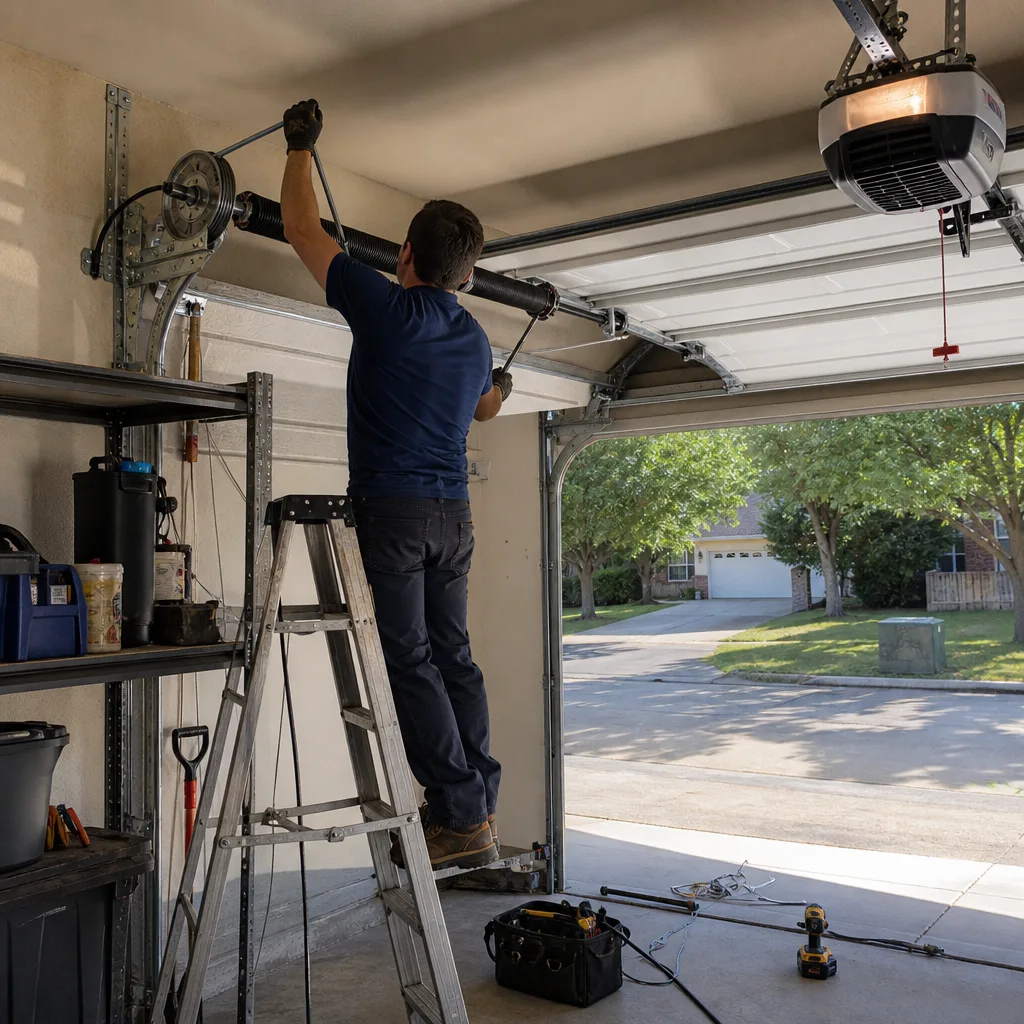
Now for the good news. Several garage door maintenance tasks in Frisco are genuinely DIY-appropriate, and doing them yourself saves real money. The key is understanding how Texas conditions change the frequency and method.
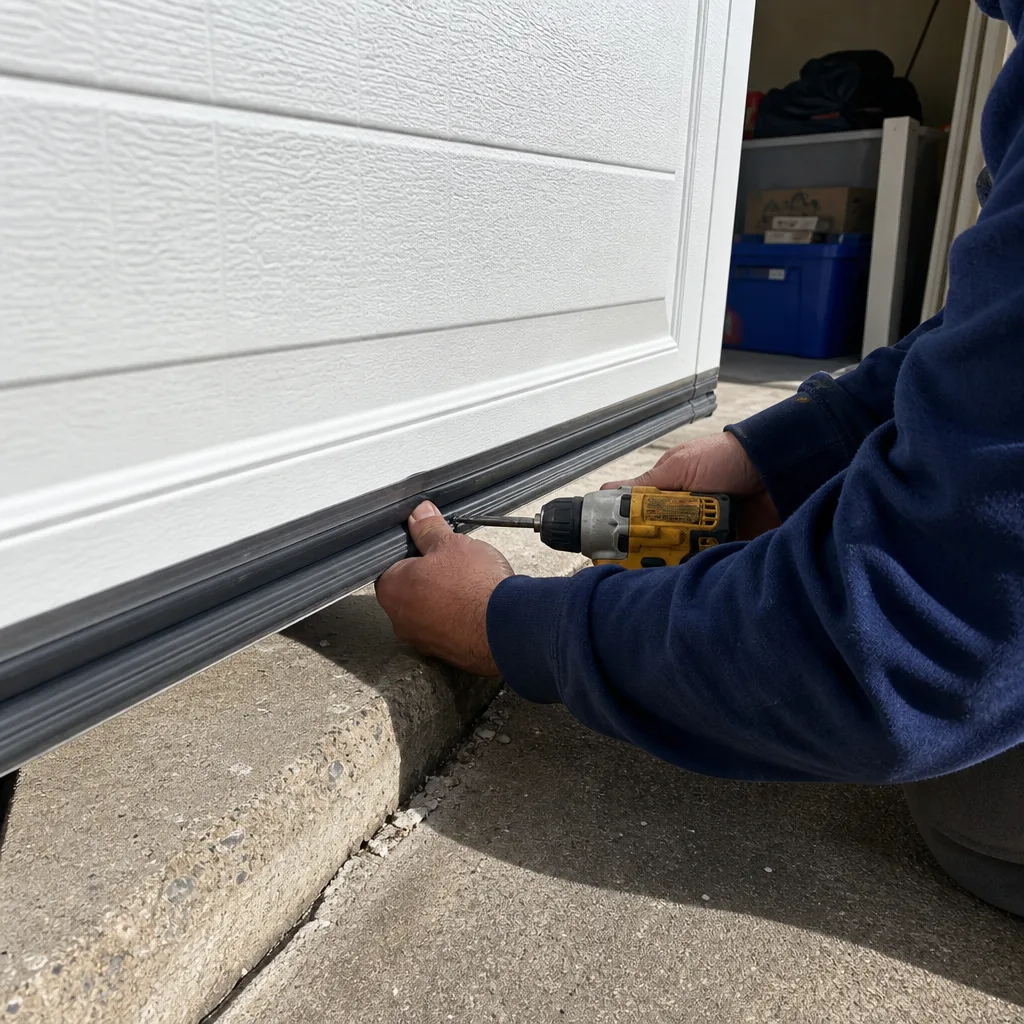
Frisco summers push garage temperatures well above 110 degrees on a regular basis, and winter dips below freezing often enough that thermal expansion cycles put real stress on seals and hardware. That means bottom seal replacement is more frequent here than in most markets, and the job itself is genuinely simple. Here’s the sequence, step by step:
- Close the door and disconnect the opener (pull the red release handle, and if your door has a manual lock, engage it).
- Measure the width of the existing bottom seal and note the channel type: T-type, P-type, or a retainer groove that isn’t branded.
- Slide the old seal out of the retainer channel. On most Frisco garage doors, it slides freely after the ends are loosened.
- Slide the new seal in, center it, and trim the ends flush with aviation snips or a sharp utility knife.
- Reconnect the opener and cycle the door once to seat the seal.
Total cost: $18 to $45 for a quality seal at a Frisco hardware store. Total time: 20 to 30 minutes. Professional labor for the same job in this market runs $85 to $150, depending on travel time and the door width. That’s a clean DIY win.
Track cleaning and lubrication is another. Over time, Frisco’s clay soil produces dust that settles into every horizontal surface in a garage, including door tracks. That dust mixes with lubricant and forms a paste that drags the rollers. Twice a year, wipe the interior of both vertical tracks with a dry rag, then apply a minimal amount of garage-door-specific lubricant to the hinges, roller bearings, and the torsion spring coil itself. Avoid WD-40; it’s a solvent, not a lubricant. A lithium-based spray or a dedicated garage door lube costs $12 to $20 and lasts years.
Sensor realignment rounds out the DIY list. If your opener’s safety sensors are blinking and the door won’t close, the fix is almost always alignment. Loosen the wing nut on the sensor bracket, adjust until the indicator lights on both sensors are solid, retighten. Five minutes, no parts, no risk. If the lights stay off after alignment, the sensor itself has failed, and that’s a $40 to $70 part plus the time to remove and rewire it. Still DIY-friendly, but now the wiring is live and the sensor is safety-critical, so we’d tell a Frisco homeowner to read the opener manual carefully before proceeding.
Honest Cost Accounting: DIY Parts vs. Professional Labor in Frisco
The “do it yourself and save” framing only holds if the comparison uses real numbers. Here’s what DIY actually costs on the tasks where we’ve established it’s safe, versus what the same work costs when a Frisco professional does it. All parts prices are current-range for this market, and labor numbers are what we see consistently across Frisco service calls.
| Task | DIY Parts Cost | Professional Labor Range (Frisco) | Realistic Savings | Time Investment |
|---|---|---|---|---|
| Bottom seal replacement | $18 – $45 | $85 – $150 | $40 – $105 | 30 minutes |
| Track cleaning & lubrication | $12 – $20 | $95 – $180 (if performed as part of a tune-up) | $75 – $160 | 45 minutes |
| Sensor realignment | $0 | $75 – $125 | $75 – $125 | 10 minutes |
| Remote reprogramming | $0 | $45 – $90 | $45 – $90 | 15 minutes |
| Hinge replacement (not under spring tension) | $8 – $16 per hinge | $110 – $190 per hinge | $94 – $182 | 30 minutes (if the door is in the open, locked position) |
The math works for these tasks. What it doesn’t work for is the moment a homeowner buys a $89 torsion spring kit, watches a video, then calls us after the door drops and bends the track. At that point the repair is no longer a $250 spring replacement; it’s a spring replacement plus a track replacement plus a door rebalance, and the bill lands somewhere between $600 and $900. The cheapest professional spring replacement in Frisco almost always beats the most expensive DIY failure.
That’s precisely why the first clause of The Haven Standard exists. Every job we quote carries a flat, written price and a written scope delivered before any work starts. There’s no “call for a quote” ambiguity on our end, and we’d argue there shouldn’t be on yours either. If a contractor in Frisco can’t tell you what a bottom seal replacement costs before scheduling, that’s an information problem, not a pricing problem.
What Texas Homeowner’s Insurance Actually Says About DIY Garage Door Work
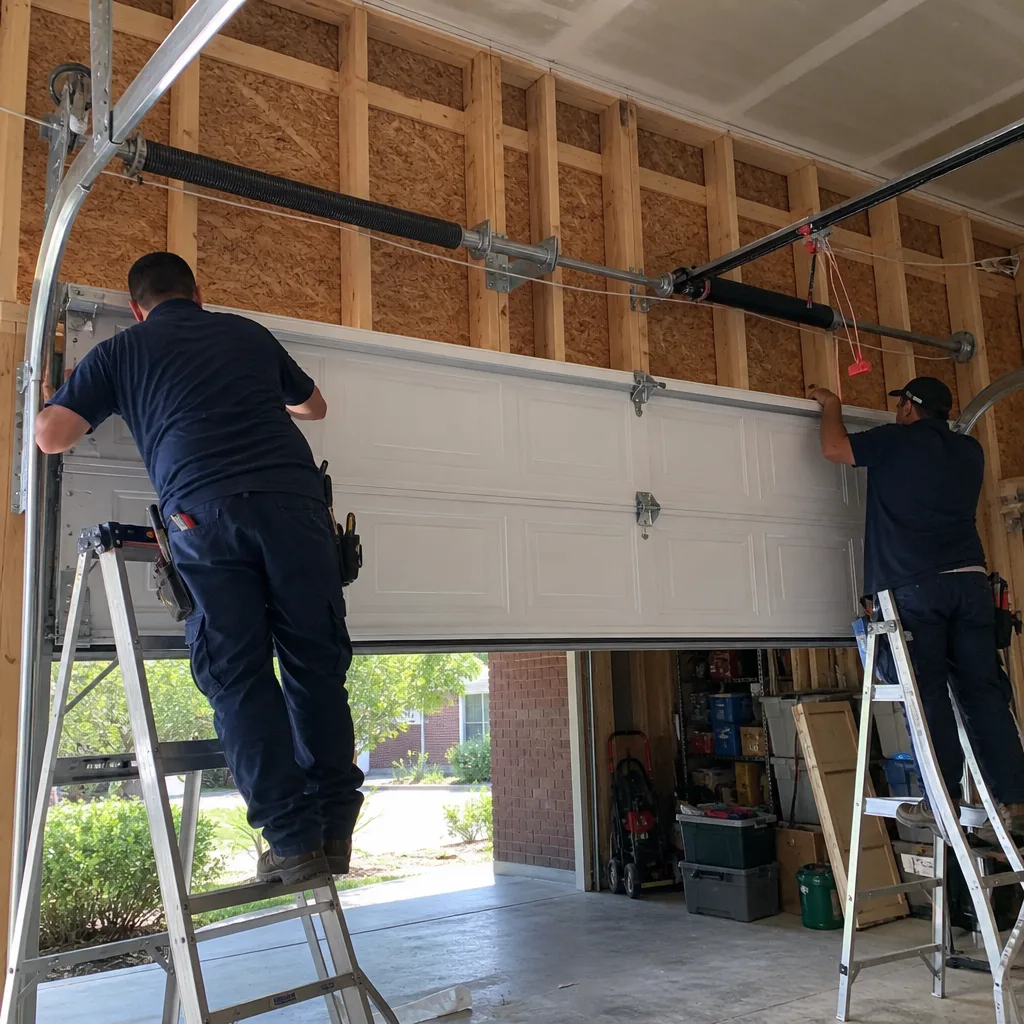
Here’s the section most DIY-versus-professional articles skip entirely, and it’s the one that matters most if something goes wrong. Texas homeowner’s insurance policies are broadly written, but they almost universally exclude damage or injury arising from “preventable maintenance failure” or “negligent repair work” performed by the homeowner. In plain terms: if you replace a torsion spring yourself, and that spring fails three months later and the door falls on your vehicle, your insurer has grounds to deny the vehicle claim on the basis that the underlying failure was caused by work you performed without the qualifications the policy assumes a repair professional would have.
The same logic applies to injury. If a guest is hurt by a falling garage door and the investigation determines the door was operated with a homeowner-installed extension spring that lacked a safety containment cable, the liability portion of the claim can be denied. Texas courts have upheld such denials consistently enough that insurance defense attorneys we’ve spoken with in the Dallas area treat DIY spring work as a material risk factor in claim disputes.
This isn’t a warning we issue to scare anyone. It’s a fact of the liability landscape in Texas, and it’s one that professional installation exists to absorb. When our technicians perform a spring replacement in Frisco, the work is documented: the old spring is photographed, the new spring’s specifications are recorded, the torque applied is logged, and the completed installation is photographed again. That paper trail is proof of professional work, and it’s exactly what an insurer asks for when a claim is filed. The $85 an hour you might save doing it yourself isn’t worth the scenario where you need that paper trail and don’t have it.
This is also why the free second opinion matters. If another Frisco company has given you a written estimate and the scope doesn’t include photos of the failed component, bring us the paperwork. We’ll review it and give you our assessment with the photo record included, because a quote without documentation is an opinion, and an opinion isn’t what your insurer will accept.
How to Document DIY Work So a Future Technician Can Diagnose Accurately
Imagine this: you replace your bottom seal yourself. Three years later, you call a Frisco garage door company because the door is suddenly noisy and off-balance. The technician arrives and asks when the springs were last replaced. You don’t know. The previous owner didn’t leave records. The technician now has to diagnose blind, which means the first hour of billable labor goes to figuring out what’s been done and what hasn’t.
That’s the problem documentation solves, and it’s a problem homeowners create far more often than they realize. But documenting your own DIY work is simple if you do it before the work, during the work, and after the work. Here’s the method we recommend to every Frisco homeowner who handles their own maintenance:
- Before: Take three photos: the door fully open, the door fully closed, and a close-up of the specific component you’re about to touch.
- During: Photograph any parts you remove, before you throw them away, and if the part has visible markings (a spring’s color code, a seal’s brand stamp, a hinge’s size stamp), photograph those.
- After: Take two photos of the completed work from the same angles as the “before” photos.
- Write a five-line note: the date, the task performed, the parts used (with brand and model if available), the tools used, and anything you noticed that seemed unusual.
- Store it: Save the photos and note to a folder named “Garage Door Maintenance” on your phone or computer, and if you sell the home, pass the folder to the new owner.
This takes 10 minutes total. The value is enormous. When a future technician in Frisco sees a documented history, diagnosis time drops significantly, which means your bill drops, and the accuracy of the diagnosis improves. We see this in homes where previous owners were meticulous, and we see the opposite in homes where the door has been repaired four times by four different approaches and nobody knows which parts are original. The documented home always costs less to repair. That’s not a coincidence; it’s how information works.
The Middle Path: Prep Work That Reduces Billable Labor Time
Between full DIY and full professional there’s a middle path, and it’s the one we wish more Frisco homeowners used. It works like this: you don’t have the skills or appetite to do the repair yourself, but you can handle the preparation work that a technician would otherwise bill for, and that means the technician’s time goes entirely to the repair itself.
Before we arrive for a repair in Frisco, here’s what a homeowner can do that genuinely reduces billable labor time:
- Clear the garage floor within the door’s swing path and at least 6 feet to either side. The technician needs room to work and access to both tracks. Moving boxes and bikes yourself saves the time a technician would spend doing it at the door’s hourly labor rate.
- Pull vehicles out of the garage and leave them out for the duration of the service.
- Test the opener before the technician arrives: does it open? Does it close? Does it reverse when you block the sensor? Write down what you observed. This is diagnostic gold at no cost.
- Check for visible damage and photograph it: frayed cables, broken spring coils, dented tracks, bent brackets. Send the photos with your service request if the scheduling process allows it. This lets the technician arrive with the right parts.
- Secure pets and children away from the work area. Every technician in Frisco will tell you that a curious dog in the garage adds time and risk to any repair.
None of these tasks are glamorous, and that’s the point. They’re the parts of the job that don’t require skill, just time, and doing them yourself means the skill time you’re paying for is used for what you can’t do. It’s the same logic as clearing a room before the painters arrive. The painting is what you’re paying for; the moving isn’t.
This is also where the documentation habit pays off in real time. If you’ve kept the folder we described earlier, the technician sees what’s been replaced and when. We keep our own records on every job we perform in Frisco, and we hand them to the homeowner before we leave. The result is a service history that spans both DIY and professional work, and it makes every future visit faster and cheaper.
Common Mistakes to Avoid
- Attempting spring or cable work without understanding stored energy. The injury risk is not a small possibility; it’s the primary failure mode of this component. A broken torsion spring in Frisco recently took a homeowner’s windshield out through the garage wall when the winding cone released during an attempted DIY replacement. The damage would have been worse at waist height.
- Using the wrong spring specifications. Matching a replacement spring by color alone is insufficient. Wire diameter, inside diameter, length, and winding direction all matter, and two springs that look identical can differ in torque output by 20 percent or more.
- Lubricating with WD-40. It’s a penetrating solvent, not a lubricant, and it strips existing lubrication faster than it adds any. Use a lithium-based or specifically-labeled garage door lubricant, and apply it sparingly.
- Replacing components on a door that’s already out of balance. If the door is heavy to lift manually, the spring tension is wrong, and replacing rollers or hinges without correcting the tension will wear the new parts prematurely. This is how some Frisco homeowners manage to replace the same roller set twice in three years.
- Ignoring the manual release rope. When the opener is disconnected but the door is still under spring tension, the door can move on its own if the spring breaks. Always lock the door or secure it with clamps on the track before working on it.
- Trusting a contractor quote that doesn’t show the failed part. This is the entire reason Clause 4 of The Haven Standard exists. If a Frisco company quotes a spring replacement without showing you the broken spring, you’re being sold a service without a diagnosis.
When to Call a Professional
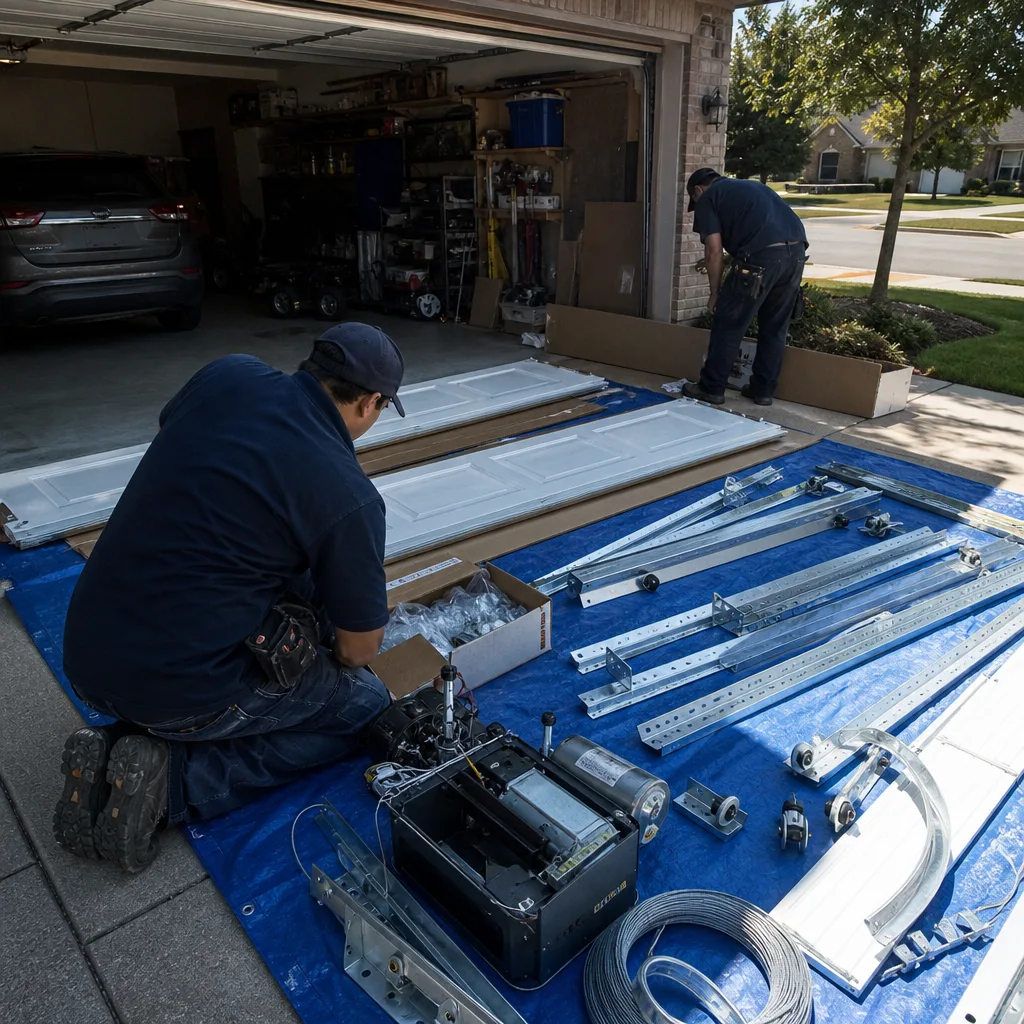
Call a professional when the component stores energy, when the door is out of balance, when cables are fraying or the drum is loose, when the opener’s logic board or gear assembly has failed, or when you simply don’t want to own the liability that comes with being wrong. The threshold isn’t confidence; it’s consequence. In Frisco, where doors cycle thousands of times a year in heat and humidity, those consequences arrive faster than in cooler climates. Servo Garage Doors Frisco offers free estimates in Frisco, and the estimate includes a photo-documented diagnosis before any work is quoted. Call (940) 290-8313.
Frequently Asked Questions
No, torsion spring replacement is not a safe DIY task because the spring stores 100 to 150 pounds of torque that releases instantly if the winding bar slips or the cone fails. In Frisco, where summer heat accelerates spring fatigue, this is the single most common garage door job that sends DIYers to the emergency room. Hire a professional who will photograph the failed spring before quoting the replacement, and who provides a written flat price before work begins.
Safe DIY garage door tasks in Frisco include bottom seal replacement, track cleaning and lubrication, sensor realignment, remote control reprogramming, and tightening loose hardware. These components don’t store mechanical energy, so the risk is limited to minor cuts and pinches. For any task involving springs, cables, drums, or brackets, call a professional at (940) 290-8313 for a free estimate.
Professional garage door repair in Frisco ranges from $75 for minor tasks like sensor realignment to $600 to $900 for a full spring and track repair after a DIY attempt goes wrong. Torsion spring replacement alone typically ranges from $225 to $400 in this market. Every quote we provide at Servo Garage Doors Frisco is flat, written, and delivered before any work starts, with a documented photo record of the failed component included.
If a DIY repair performed by a homeowner causes subsequent damage or injury, Texas homeowner’s insurance policies often deny the claim on the basis of negligent repair or preventable maintenance failure. Professional repairs create a paper trail that insurers expect, which is why every visit from Servo Garage Doors Frisco includes a documented photo record of findings and completed work. The documentation is as important as the repair itself.
Yes, emergency garage door service in Frisco is available 24/7, and every call is answered by a live person, not a recording. Emergency calls include a named technician and an on-the-way text, so you know who’s coming and when. Call (940) 290-8313 for a same-day appointment and a free estimate with written pricing before any work begins.
No. At Servo Garage Doors Frisco, the price is quoted in writing before any work starts, and it doesn’t change once the technician arrives. If the scope expands during the repair, the new scope and new price are presented in writing before the additional work begins. This is Clause 1 of The Haven Standard, and it’s the reason we don’t say “call for a quote” anywhere in this guide.
The Bottom Line
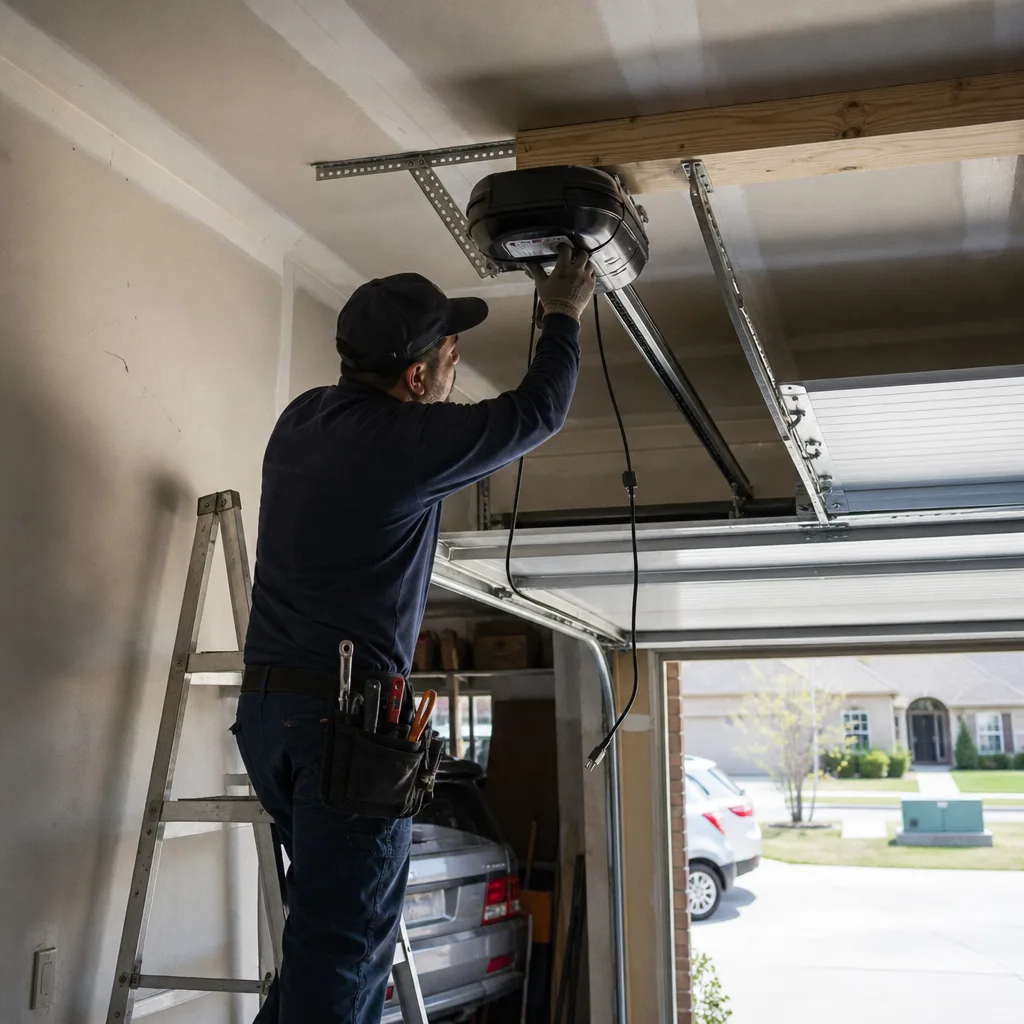
The DIY-versus-professional garage door question in Frisco isn’t a question of courage or competence. It’s a question of which component you’re touching and what happens if the worst case arrives. Seals, sensors, rollers, and lubrication: do them yourself, document the work, and bank the savings. Springs, cables, drums, and brackets: call a professional who will show you the failed part, quote a flat written price, and leave you with a photo record of what changed. Marcus Deller built garage door installation in Frisco on exactly that rule ten years ago. It’s kept people safe since. If you’re ready to hand off the dangerous work, garage door opener repair and installation in Frisco comes with the same written-price standard and the same documentation guarantee. Call (940) 290-8313 and get the estimate before you get the work. That’s how it should be done.
Written by Marcus Deller, Owner at Servo Garage Doors Frisco, serving Frisco since 2015.