
Last updated September 20, 2026
Full 25-point door and opener safety check with every visit - springs, cables, rollers, tracks, and your LiftMaster or Chamberlain opener included
You get a price before we start. It does not change when the truck arrives.
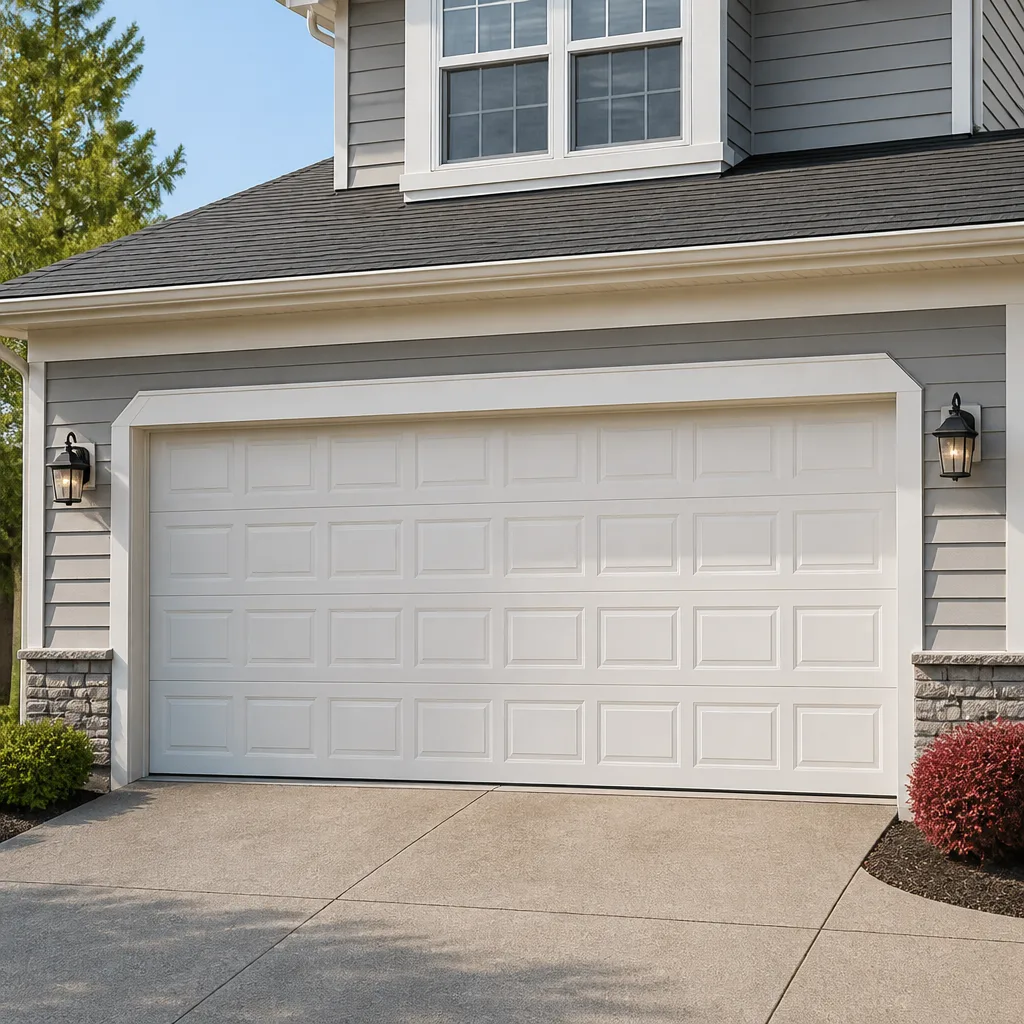
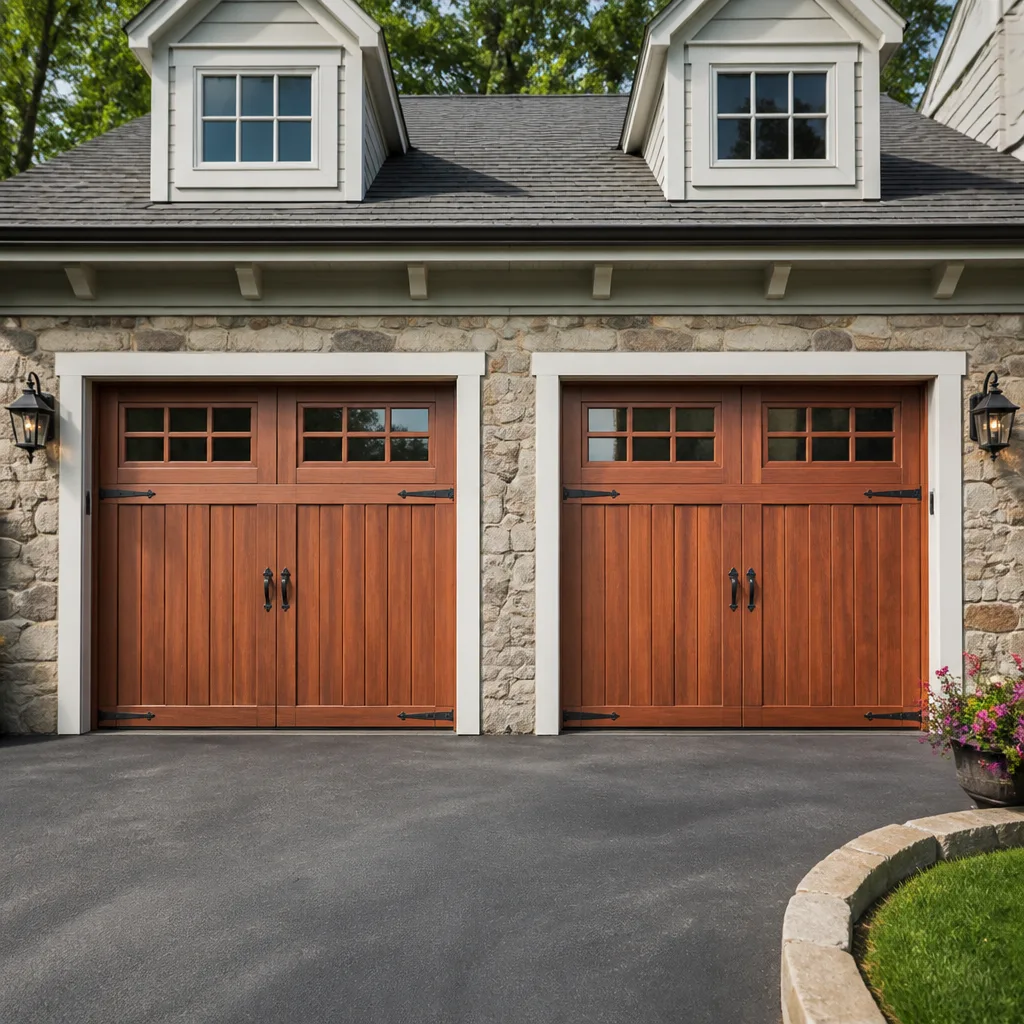

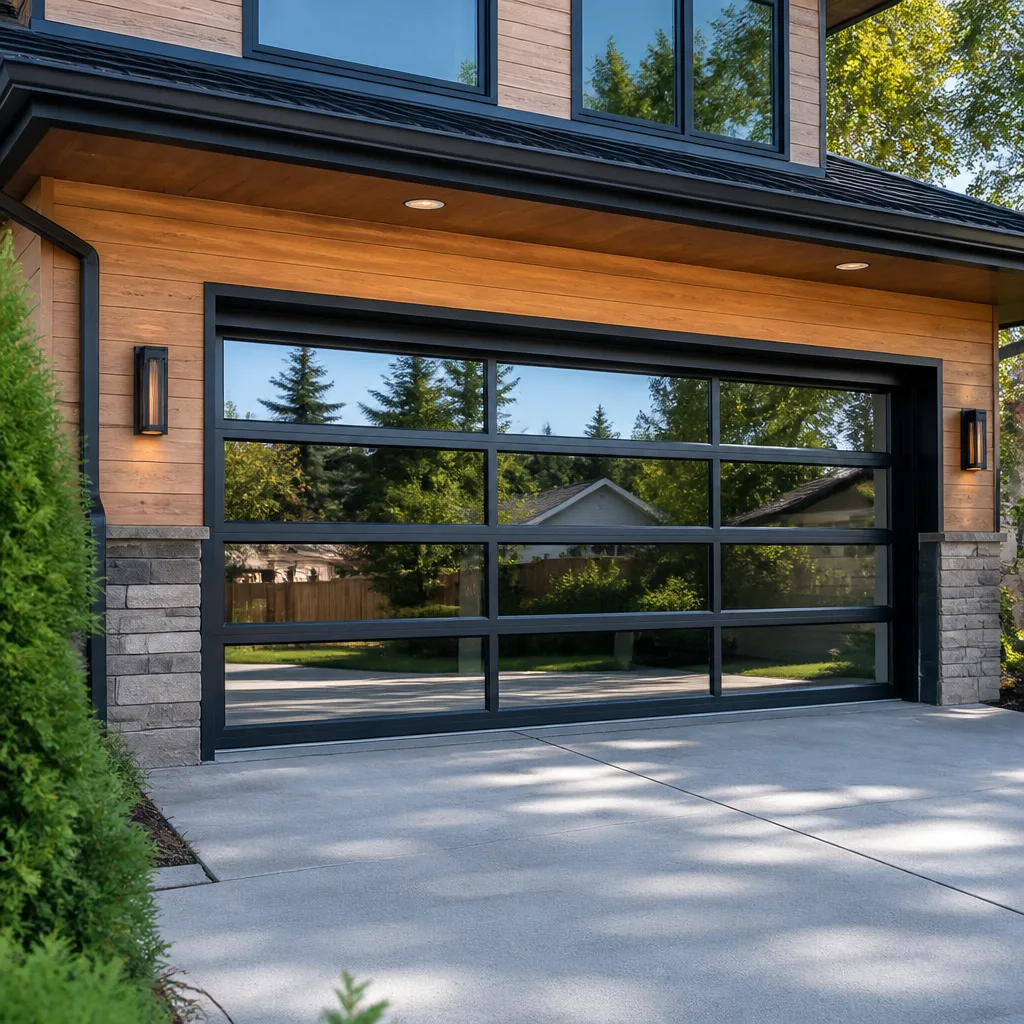
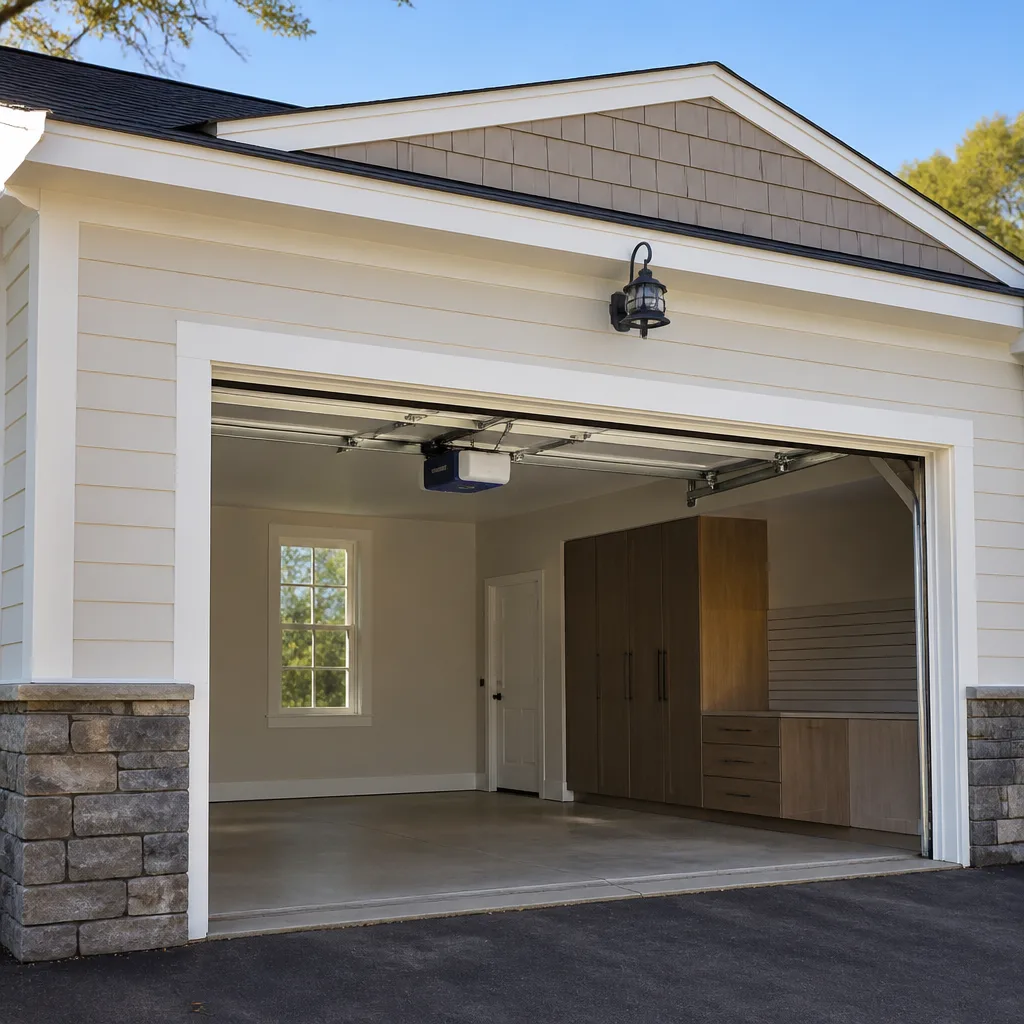
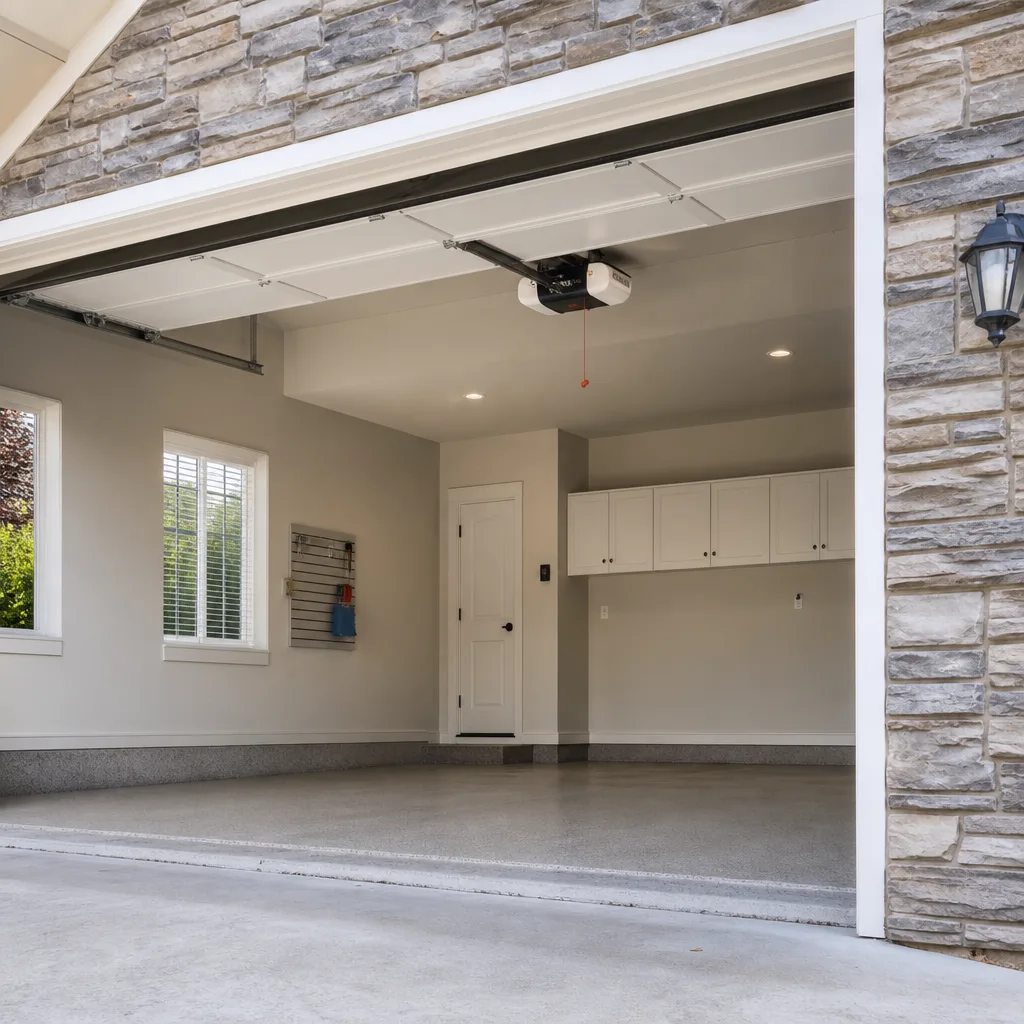
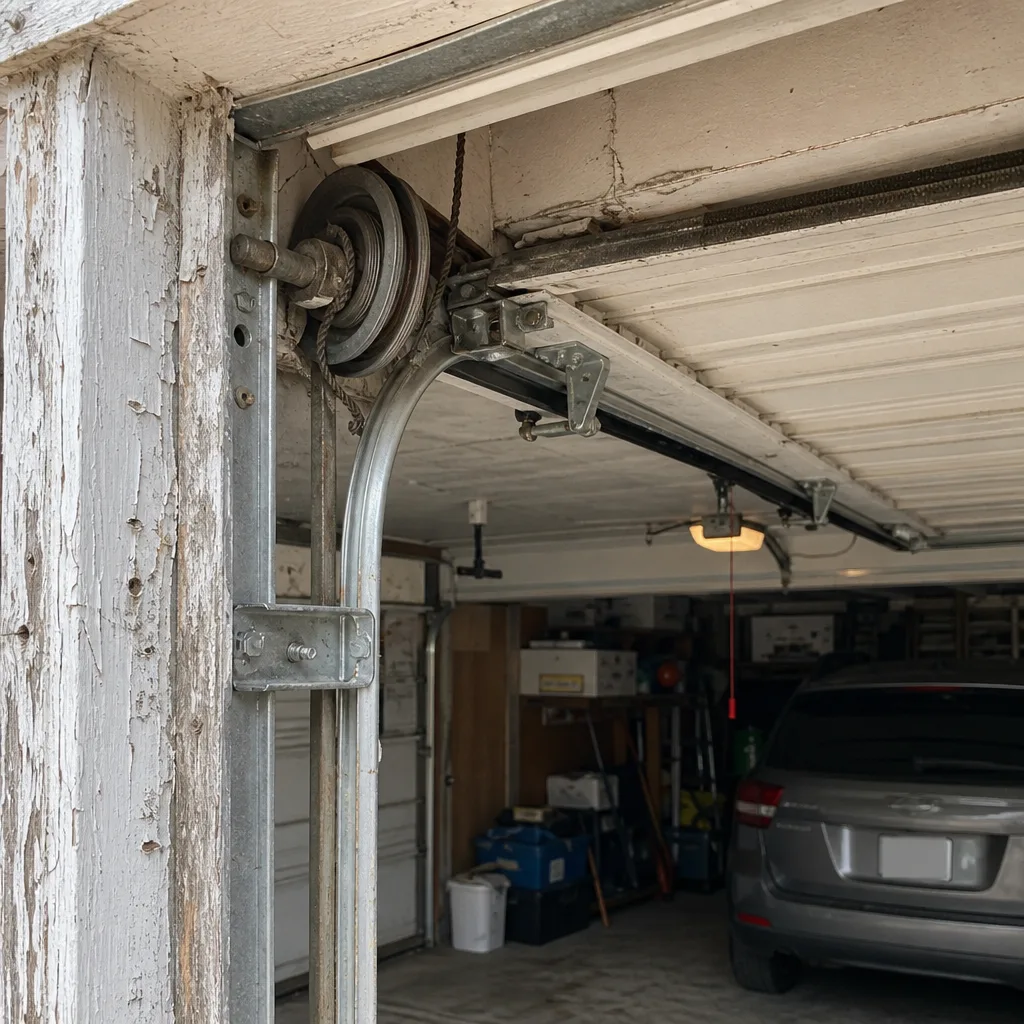 Before
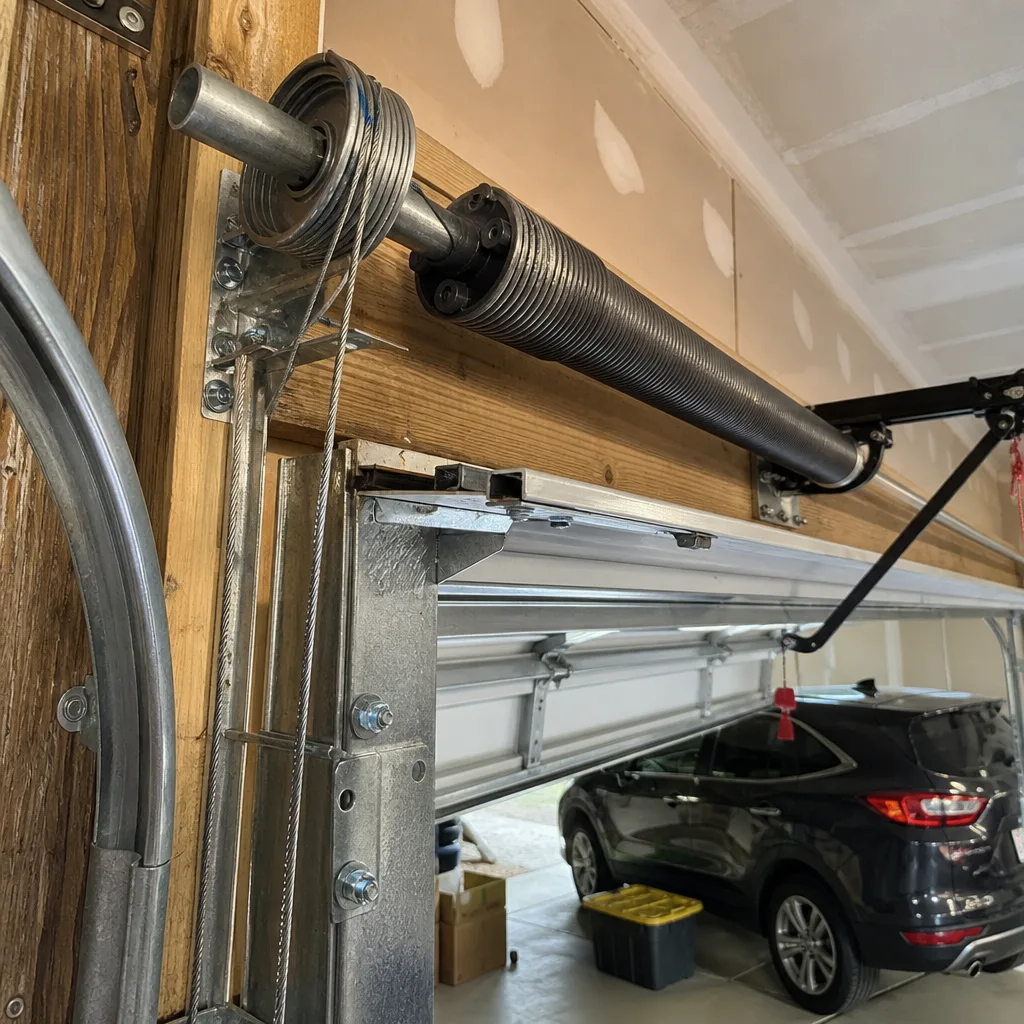 After
After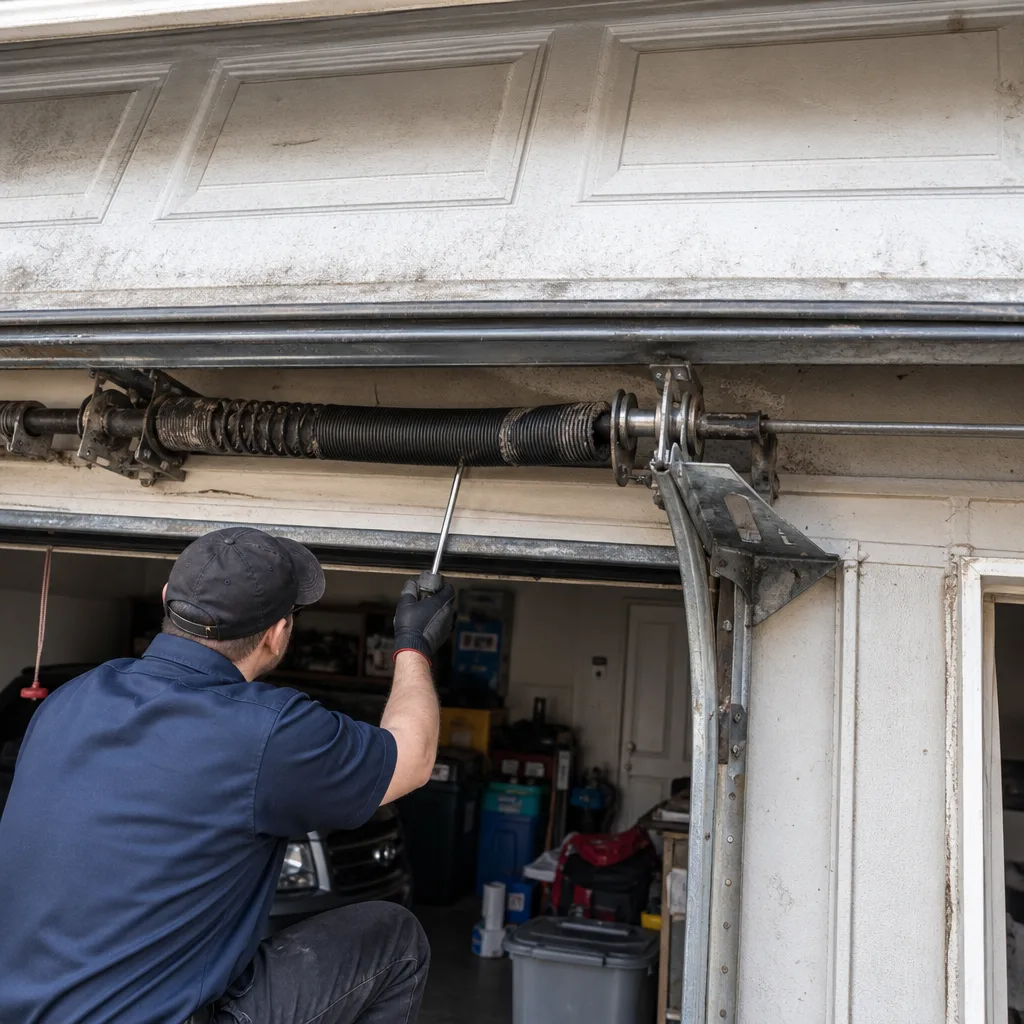 Before
 After
After Before
 After
AfterGarage Door Permits, Codes & Inspections in TX: What You Need to Know
Every year in Frisco, a homeowner replaces a garage door without pulling a permit, sells the house three years later, and discovers at closing that the buyer’s lender has flagged the unpermitted work. That discovery can delay the sale by weeks or force a retrofit inspection at the worst possible time. The irony is that the permit for a straightforward door replacement is neither expensive nor complicated. This guide maps the exact line between a maintenance call and a regulated replacement in Frisco, what the inspector actually looks at, how HOAs layer their own rules on top of city code, and what documentation you should keep for the life of the door. For more guides & resources, see our full library. You’ll learn what triggers a permit, what it costs, what fails inspection, and how an unpermitted replacement can haunt an insurance claim years after the installer’s truck leaves your driveway.
Quick Answer
A garage door replacement in Frisco generally requires a residential building permit because it is classified as a structural alteration, while repairs to existing components such as springs, rollers, cables, and openers do not. The permit is pulled before work begins, an inspection follows the installation, and the final inspection record becomes part of your home’s permanent permitting history. Expect the permit fee to run between $50 and $150 depending on project valuation, with the inspection verifying wind-load anchoring, safety sensors, and proper framing attachment.
Table of Contents
- Repair vs. Replacement: Where Frisco Draws the Line
- What a Garage Door Permit Costs in Frisco
- The Inspection: What the City Inspector Actually Checks
- How an Unpermitted Replacement Affects Insurance and Resale
- The HOA Overlay: Architectural Guidelines on Top of City Code
- Documentation to Request From Your Contractor
- Common Mistakes to Avoid
- When to Call a Professional
- Frequently Asked Questions
- The Bottom Line
BeforeAfterRepair vs. Replacement: Where Frisco Draws the Line
The distinction that matters for permit purposes is not how much the job costs or how long it takes. It is whether the door assembly itself is being removed and replaced. Frisco’s residential building code treats the garage door as part of the building envelope, which means a full door replacement is a regulated alteration, the same category as replacing exterior siding or a structural header. A repair, by contrast, is work on components within the existing assembly. The springs, rollers, cables, hinges, tracks, and the opener all live inside that existing envelope and can be worked on without a permit.
Here is the practical breakdown, based on the permitting inquiries we field from Frisco homeowners every month:
- Requires a permit: Removing an existing door and installing a new one, including a same-size swap. The city cares that the new door is anchored to current wind-load standards, not that the old door was the same width.
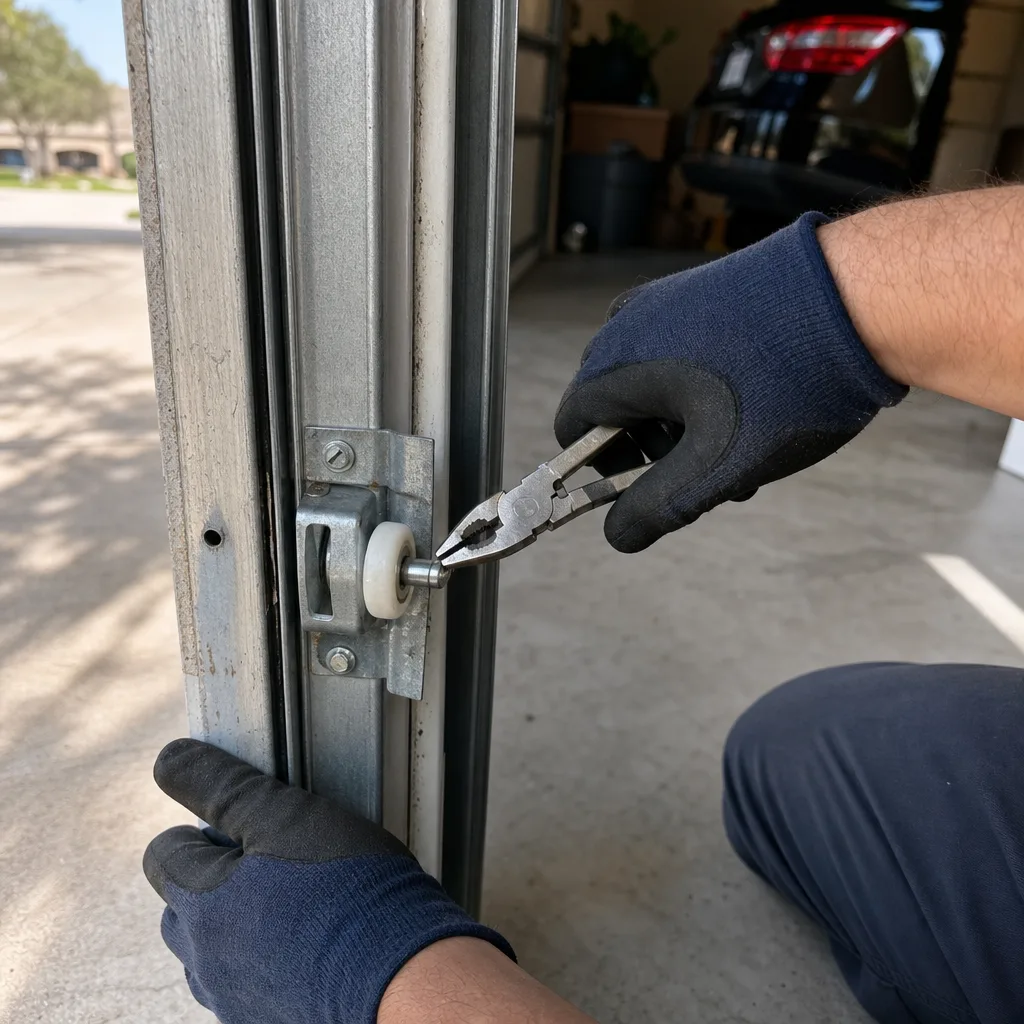
- Does not require a permit: Replacing a broken torsion spring, a snapped cable, bent rollers, a failed logic board in the opener, a stripped trolley carriage, or a worn limit switch. These are maintenance items on an existing, already-permitted assembly.
- Gray zone to verify with the city: Converting a single door to a double door, widening the opening, or adding a second door where none existed. Structural modification to the opening itself is a different permit category and may require engineering review.
In our experience, Frisco homeowners are surprised by this line because they assume anything involving a contractor’s truck and a few hundred dollars is “just a repair.” But the city’s definition runs on what the work touches, not what it costs. A $1,200 spring replacement is a repair. A $1,100 economy door replacement is a permit pull. If you’re not sure which side of the line your job falls on, the city’s permit desk will tell you in a five-minute phone call, and the answer is usually faster than a contractor’s estimate.
What a Garage Door Permit Costs in Frisco
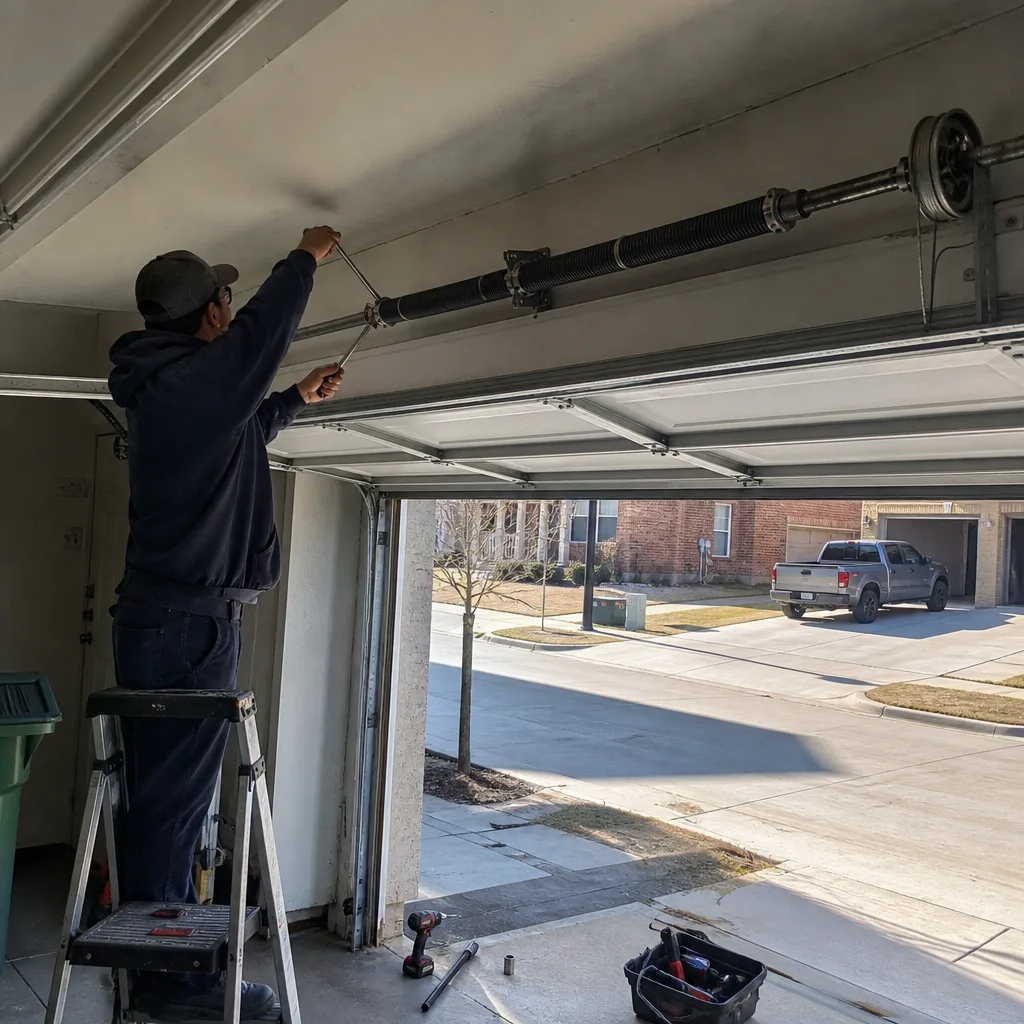
The permit fee in Frisco for a residential garage door replacement is calculated on the valuation of the work, which for a typical single or double door runs between $50 and $150. This is a one-time fee, not a recurring charge, and it covers the permit review and the inspection visit. For a job with a $2,000 to $5,000 door and installation scope, you should expect the fee to sit at the lower end of that range. Additions like a second door, structural work to the opening, or an engineered header will change the valuation and push the fee up accordingly.
That fee is separate from what your contractor charges for the door and labor. A reputable installer in Frisco will either pull the permit themselves and itemize the fee on your written scope of work, or instruct you to pull it as the homeowner. Our How to Hire a Garage Door Contractor in Frisco: A Step-by-Step Guide explains what to look for. Both approaches are valid, but they differ in one important way. When the contractor pulls the permit, the contractor’s name is on the record as the responsible party, which means the contractor has a personal incentive to show up for the inspection. When the homeowner pulls the permit, the inspection scheduling burden falls on you.
If a contractor quotes you a garage door replacement in Frisco and the word “permit” never appears anywhere in the written scope, that is a red flag. The permit is not optional and its cost should not be a surprise line item added after the door is hanging. The written price you agree to before work starts should already include the permit fee, the inspection scheduling, and the final inspection record as deliverable items, the same way it includes the door itself. That is the same standard we apply on every garage door installation in Frisco we perform: the permit is part of the written price, not a post-installation discovery.
The Inspection: What the City Inspector Actually Checks
Once the door is hung and the opener is installed, the installing contractor or the homeowner calls for an inspection. The inspector typically arrives within a few business days, and the inspection itself takes fifteen to thirty minutes. Insiders know the inspector is not there to admire the door or verify the color. The inspection checklist is specific and code-driven, and it falls into five areas:
- Wind-load anchoring. North Texas sits in a high-wind zone, and Frisco’s code requires that the garage door be anchored to the surrounding framing with fasteners rated for the door’s size and weight. The inspector checks the bolt pattern and the gauge of the mounting hardware against the door manufacturer’s installation sheet.
- Photo eye sensors. The two sensors on either side of the door, positioned no higher than six inches from the floor, must reverse the door when their beam is interrupted. The inspector blocks the beam with a test object and watches the door reverse. This is a safety check, and it fails more often than any other item on the list.
- Auto-reverse force setting. The opener’s downward force limit must be dialed in so the door stops and reverses when it meets resistance. Many openers arrive from the factory with the force setting too high, and the inspector will test it with a two-by-four laid flat under the door.
- Framing attachment. The horizontal track that carries the door must be anchored to the garage framing, not to the drywall, and the vertical track needs solid attachment at the jamb. The inspector will check for sag, shims, and gaps at the attachment points.
- Emergency release functionality. The red manual release cord must disengage the opener from the door so the door can be operated by hand during a power outage. The inspector confirms the release works and that the door can be lifted and lowered manually without binding.
Most inspections pass on the first visit when the installing contractor has done this work before. When we talk to Frisco homeowners who tell us about a failed inspection, the culprit is almost always the photo eye alignment or the force setting, both of which are five-minute corrections. The inspector will note the failure, the contractor returns to adjust, and a re-inspection is scheduled for a smaller fee. That re-inspection fee is the practical reason to hire an installer who has pulled permits in Frisco before and knows what the inspector will check. Watch for these Garage Door Warning Signs: A Frisco Homeowner’s Reference Guide to catch problems early.
How an Unpermitted Replacement Affects Insurance and Resale
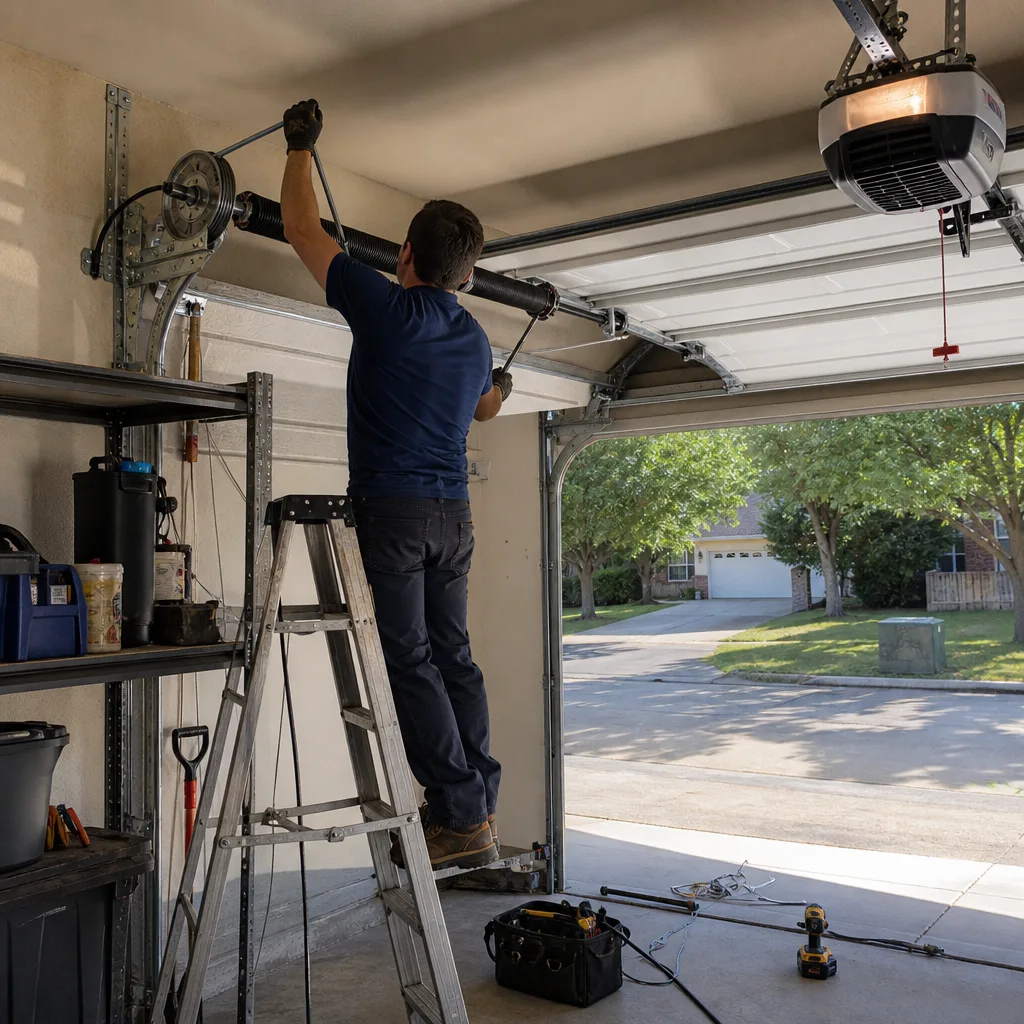
Here is the scenario that drives homeowners to pull the permit after the fact. A door is replaced without a permit in 2021. In 2025, a hailstorm damages the door or the opener is fried by a lightning strike. The homeowner files a claim. The adjuster asks for the installation date and the permit record. There is no permit record. The claim is not denied because the door was unpermitted, but the adjuster now has a documented reason to question whether the door was installed to code, whether the wind-load anchoring was adequate, whether the opener’s wiring met current standards. That question can reduce a settlement or stretch a claim by months.
The resale risk is more concrete. Frisco is a hot market and buyers in the metro core are working with lenders who run permit histories as part of the title and escrow process. An unpermitted garage door replacement is a modest title defect, but it is a defect. The buyer’s lender may require the seller to obtain a certificate of occupancy or a retrofit permit for the existing door before closing. The seller pays for that retroactive permit under time pressure. We have seen Frisco sellers pay double the original permit cost in rush fees and inspection scheduling, all for a permit that would have cost $75 if it had been pulled on the original install day.
From a pure cost standpoint, the math is lopsided. The permit is the cheapest item on the invoice. The repair cost for unpermitted work discovered at closing is the most expensive version of that same item. The timing is also worse. A permit pulled proactively happens on a project schedule. A permit pulled reactively happens on a closing schedule.
The HOA Overlay: Architectural Guidelines on Top of City Code
The city permit is not the only approval that matters for a Frisco garage door replacement. If your home sits in a Frisco HOA, which most newer construction in the city does, the association likely has its own architectural control process for exterior door changes. The HOA’s concern is not wind-load anchoring or safety sensors. It is aesthetic consistency: door material, panel style, window inserts, and color need to match the neighborhood’s design standards.
The practical sequence is HOA approval first, city permit second. You submit the architectural review form with the door specification, the HOA approves or rejects the style, and then you or your contractor pull the city permit for the approved door. Reversing the order creates a headache: you pull the city permit for a dark charcoal carriage-house door, then discover the HOA will only allow a raised-panel door in a specific white. The city permit has to be amended or repulled, and the HOA is not going to waive its rule because you moved fast.
Some Frisco HOAs publish their garage door guidelines in the community’s design handbook, and it is worth reading before you fall in love with a particular door. The handbook will specify approved materials (steel, aluminum, wood composite), approved panel profiles (flush, recessed, raised), approved window configurations (none, arched, square, full-view), and the allowed color palette. It will also tell you whether the HOA requires a physical sample or just a spec sheet. Wayne Dalton and Clopay both make doors in HOA-friendly palettes, but the model number that passes one Frisco HOA may be rejected by the HOA two streets over. The HOA rule is specific to your community, not to the brand.
We see this HOA question come up most often in the master-planned neighborhoods on Frisco’s west side, where the architectural standards are the tightest. A door that is perfectly code-compliant under the city’s permitting rules can still be an HOA violation, and the HOA has remedies the city does not: fines, demand letters, and a lien if the violation goes uncorrected. The permit keeps the city happy. The architectural approval keeps the HOA happy. You need both.
Documentation to Request From Your Contractor
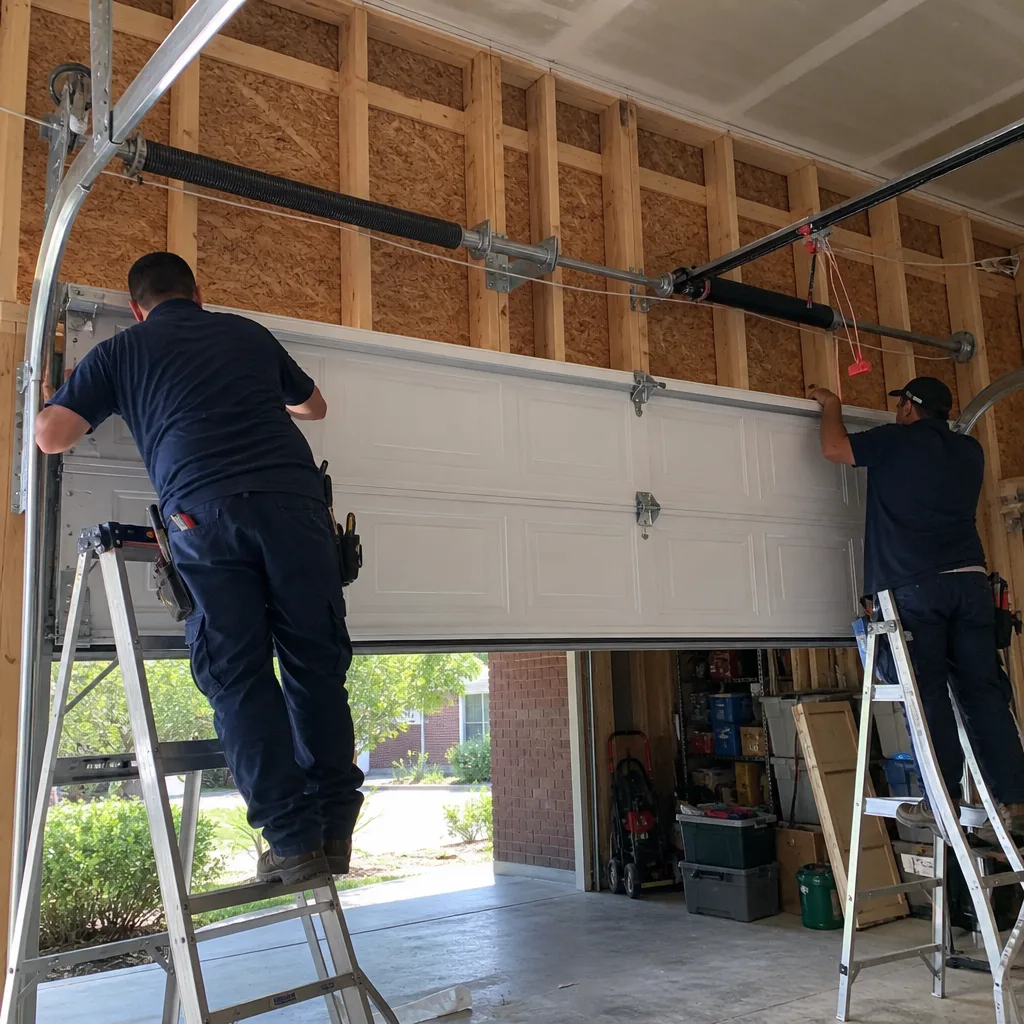
When the job is done and the inspector has signed off, the paper trail is the only proof that the work was done correctly. That paper trail is what protects you in an insurance dispute, a resale transaction, or a warranty claim on the door itself. Here is exactly what you should have in hand before you pay the final invoice:
- The written scope of work, signed and dated. This is the document that says which door was installed, which opener was installed, what the flat price was, and what that price included. If a dispute arises later, this is the document that resolves it.
- The permit number and a copy of the permit application. The permit number is your proof that the work was permitted. The application confirms who was named as the responsible party.
- The inspection record showing a pass. Frisco’s permitting system records the inspection result, and you should receive a copy or a confirmation number that you can look up. “The inspector came by” is not documentation. A passed inspection record is documentation.
- The door manufacturer’s warranty registration. Most door warranties are registered online or by mail, and the registration is what activates the warranty coverage period. A Craftsman or Raynor door warranty that was never registered is often unenforceable.
- The opener manual and the door’s installation manual. The manuals contain the torque specs, the balance adjustment procedure, and the manufacturer’s recommended maintenance schedule. They are also what a future technician needs to diagnose an issue correctly.
- Photo documentation of the finished installation. You should have photos of the finished door, the hardware, and the sensor placement. If a question comes up about how the work was done, photos answer it faster than any invoice.
This list is not aspirational. It is the minimum standard any Frisco contractor should meet without being asked. A contractor who hands you a receipt and nothing else is asking you to trust their memory of the job instead of a file you can produce in a dispute. The documentation standard we work to on every garage door repair in Frisco is the same one we apply to full replacements: the customer leaves with a written price, a written scope, and a photo record of what was found and what was done. Clause 4 of The Haven Standard exists precisely because the founding rule at Servo was to photograph the failed part before quoting a replacement. A permit and a photo record are the same idea applied to different problems: show the work, then let the work speak.
Common Mistakes to Avoid
- Assuming the contractor pulled the permit because they said they would. An alarming number of Frisco homeowners discover the permit was never pulled only when a future transaction surfaces the gap. Confirm the permit number in writing before work begins, not after the door is hung.
- Skipping HOA architectural review because the door matches the old one. The HOA reviews the new door against its current design standards, not against the door that was there before. A door that passed HOA review in 2011 may not pass in 2025.
- Letting the permit fee become a post-installation surprise. The permit is a fixed, predictable line item. If it appears on your invoice as an afterthought after the work is done, that is a contractor who did not price the job honestly up front.
- Treating the inspection as a formality. The inspection is the only independent verification that the door was installed to current code. Waiving it or skipping it, even when the contractor offers, leaves the job unverified and the permit incomplete.
- Losing the paper trail. The permit, the inspection record, the warranty registration, and the scope of work are the four documents that matter for the life of the door. Store them with your home’s title documents, not in a drawer that gets cleaned out.
- Hiring a contractor who will not put the door price on the page. If the quote is not written, itemized, and flat before work starts, you are financing the contractor’s uncertainty. Frisco is not short of garage door installers who will quote in writing. Hire one.
When to Call a Professional
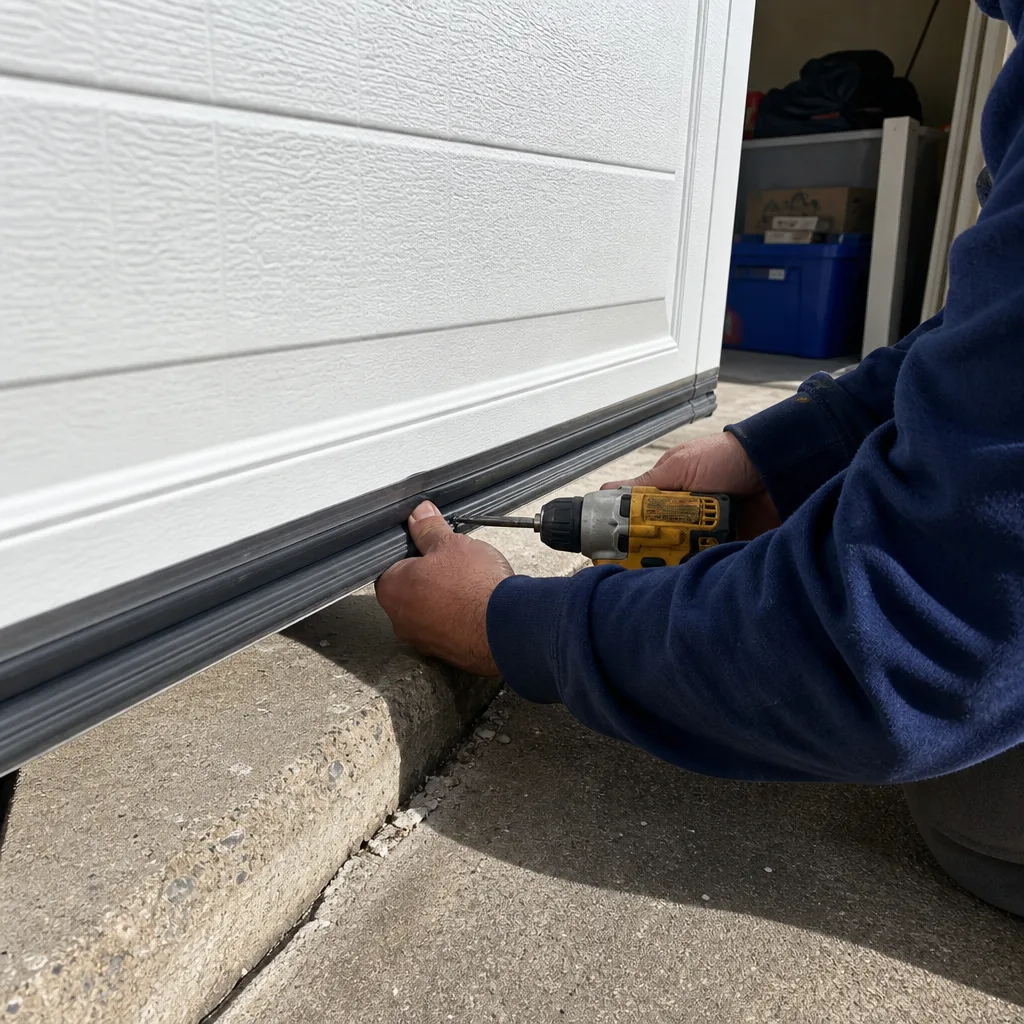
Any garage door replacement in Frisco is a professional job, and it is a professional job because the permit, the inspection, and the wind-load anchoring requirements are specific enough that a weekend install will fail them. If your job involves the torsion spring, the high-tension cables, or the lift cables under load, it is a safety-critical repair that should not be attempted without training and proper winding tools. A torsion spring under tension stores enough energy to cause serious injury if it releases unexpectedly, and we have never seen a homeowner repair one correctly without the right equipment. If your opener is making noise, the door is binding, or a spring has broken, call a licensed garage door professional rather than diagnosing it yourself. Servo Garage Doors Frisco offers free estimates in Frisco and the surrounding area, and every estimate is a written, flat-price number before any work starts. Call (940) 290-8313 and you will talk to a real person, not a recording.
Frequently Asked Questions
Replacing a garage door opener on an existing door does not require a permit in Frisco, because the opener is treated as a component within the existing door assembly. The city’s permit threshold is triggered by the door itself, not by the mechanical operator. If the opener replacement includes new wiring or a new circuit, the electrical portion of the work may fall under a separate electrical permit, but a straight opener swap on existing wiring is permit-exempt.
A residential garage door permit in Frisco typically costs between $50 and $150 depending on the stated valuation of the work. The fee covers the permit review and the inspection visit. For a standard single or double door replacement with a project valuation under $5,000, the fee usually lands at the lower end of that range. If the job includes structural modification to the opening, the valuation increases and the fee follows it.
The practical consequences surface later: an insurance claim on the door may be slowed while the adjuster confirms the installation was code-compliant, and a future home sale can be delayed if the buyer’s lender flags the unpermitted work. The city can also require a retroactive permit and inspection at a higher cost than the original permit would have been. None of these outcomes are catastrophic, but all of them are more expensive than the $50 to $150 permit pulled at the time of installation.
Yes, the photo eye sensor test is one of the five items the Frisco inspector will check on a permitted garage door installation. The inspector blocks the beam with a test object and confirms the door reverses, and they also test the auto-reverse force setting with a two-by-four under the door. Sensor misalignment is the most common reason a garage door inspection fails on the first visit.
Yes. The Frisco city permit and the HOA architectural review are separate approvals with separate purposes. The city regulates safety and code compliance. The HOA regulates design consistency. A door that passes the city inspection can still be an HOA violation if the panel style, window configuration, or color is not approved, and the HOA has enforcement remedies the city does not.
Yes. When we install a garage door in Frisco, the permit is part of the written scope of work, and the permit fee is itemized in the flat price before work begins. We pull the permit, schedule the inspection, and deliver the final inspection record to you as part of the job. No permit surprises, no post-installation add-ons, no undocumented work. Call (940) 290-8313 for a free estimate, and you will get a written number before any work is scheduled.
The Bottom Line
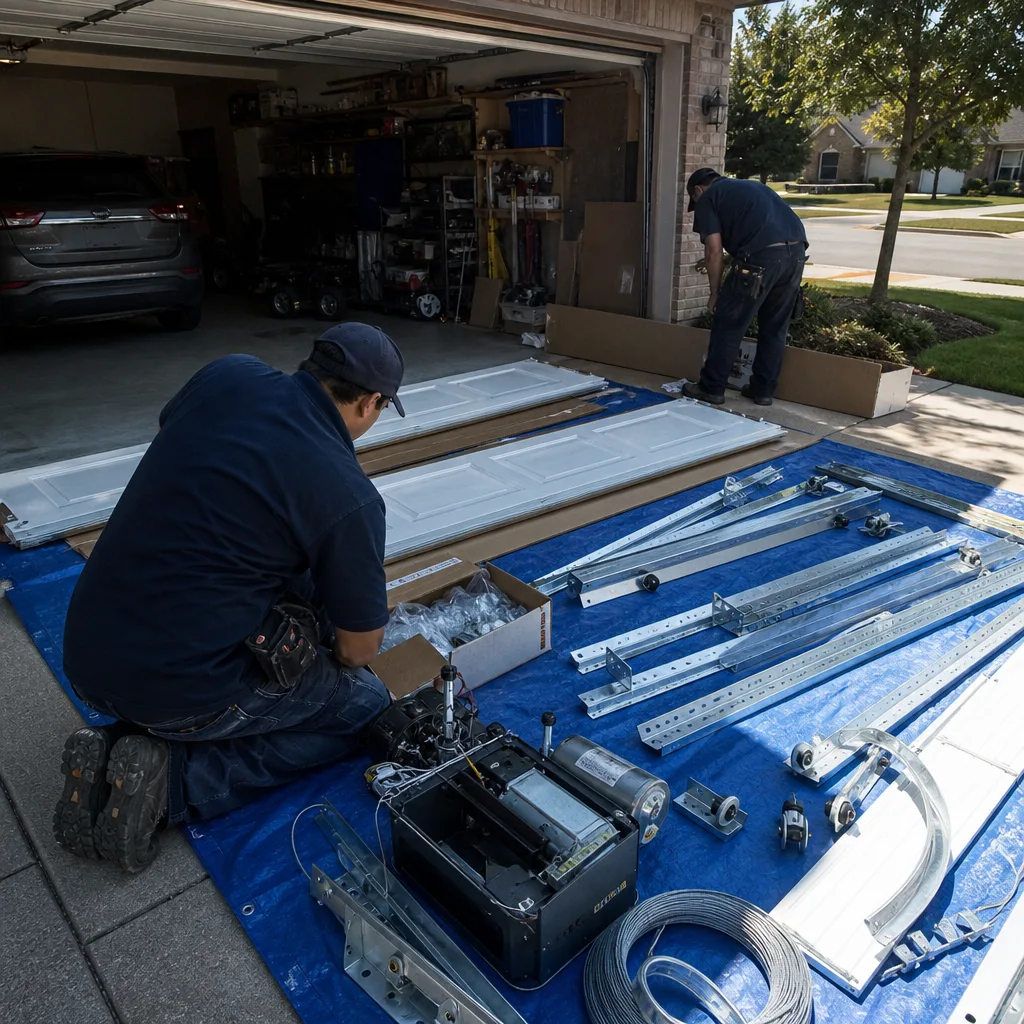
The garage door permit in Frisco is the cheapest line item on the invoice and the most expensive one to ignore. The line between a repair and a replacement is the line between a truck visit and a city record, and crossing that line without the record makes every future transaction about the door harder. Pull the permit, keep the paper trail, get the HOA approval if your neighborhood requires it, and store the documentation with your title documents. The door itself is a machine that opens and closes. The paper trail is what proves the machine was installed correctly. Call (940) 290-8313 for a free, written estimate on any garage door work in Frisco, and we will put the full scope on paper before anything gets touched. If you want to explore the full range of what we do, start with the Servo Garage Doors Frisco home page, or read about garage door opener repair and installation in Frisco if the door itself is fine and the opener is the problem.
Written by Marcus Deller, Owner at Servo Garage Doors Frisco, serving Frisco since 2015.